
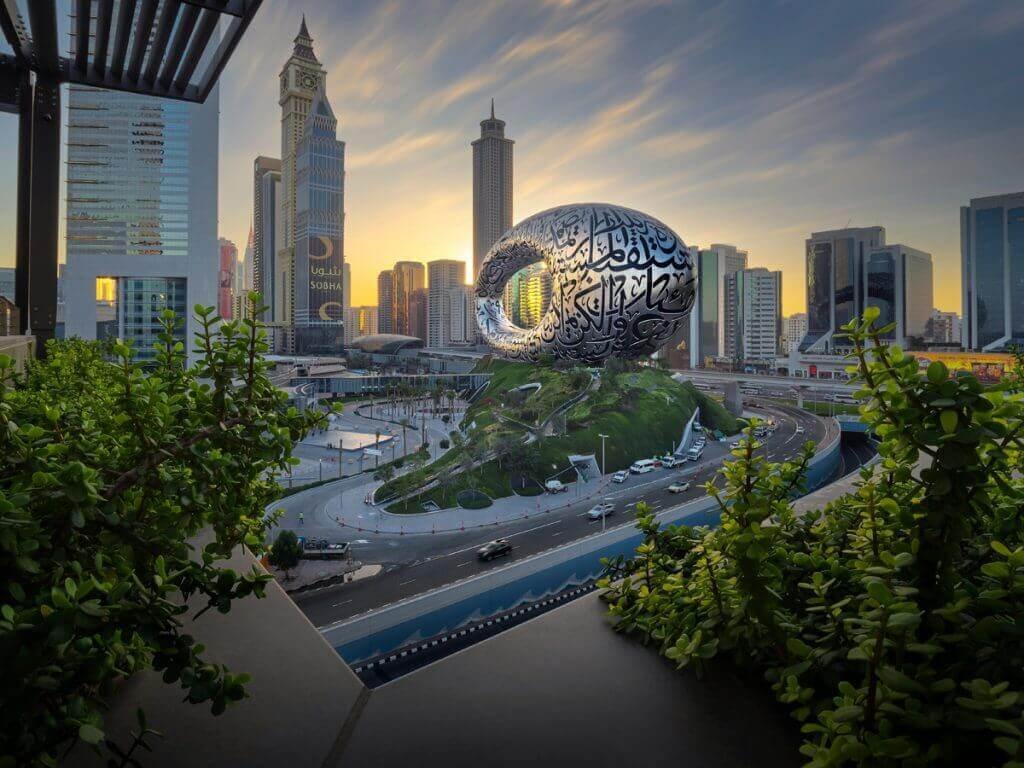

What Is the Museum of the Future Dubai?
The Museum of the Future Dubai is one of the UAE’s most significant cultural and intellectual landmarks, positioned at the intersection of technology, architecture, innovation, and urban identity. Unlike conventional museums that document the past, this institution explores possible futures for humanity, focusing on science, sustainability, health, space exploration, artificial intelligence, and societal evolution.
Launched on 22 February 2022 by the Dubai Future Foundation, the museum is often described as a “living museum” because its exhibitions evolve continuously, reflecting real-world innovation rather than static displays. From a real estate and urban planning perspective, the Museum of the Future has also become a city-defining anchor, reinforcing Sheikh Zayed Road’s role as Dubai’s symbolic and economic spine.
Search intent around this topic is primarily informational, with strong commercial and lifestyle-related intent linked to nearby property demand, tourism, and investment interest in central Dubai districts.
Museum of The Future Location & Urban Context
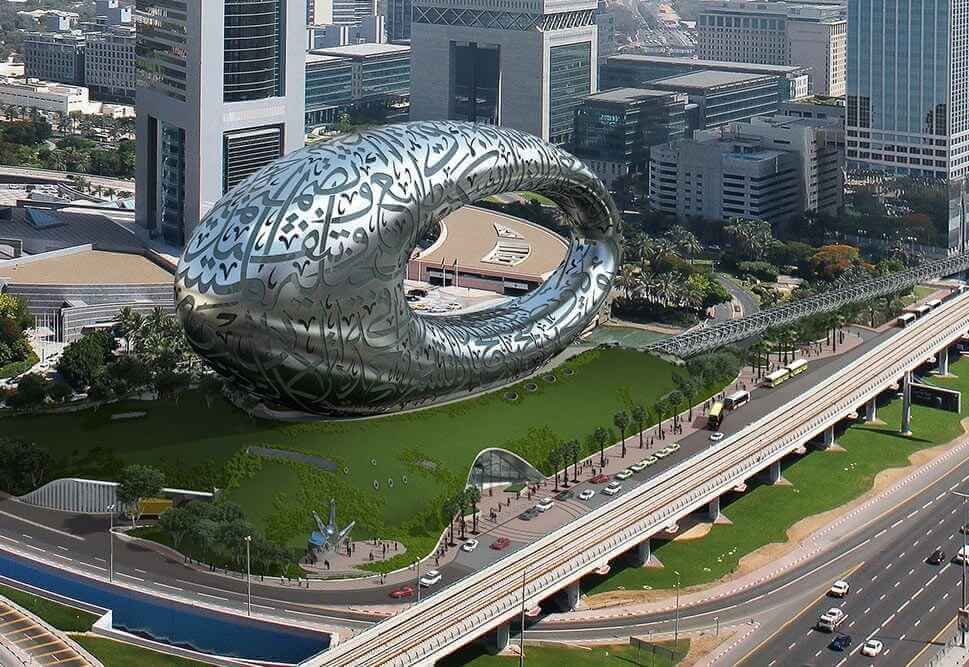
Strategic Position on Sheikh Zayed Road
The Museum of the Future is located on Sheikh Zayed Road, Trade Centre 2, between DIFC and Jumeirah Emirates Towers. This places it within one of Dubai’s most prestigious commercial and residential corridors.
Key locational advantages include:
- Direct pedestrian connection to Emirates Towers Metro Station (Red Line)
- Immediate proximity to DIFC, Downtown Dubai, and Dubai World Trade Centre
- High visibility along Dubai’s main arterial road
- Integration into a district dominated by Grade A offices, luxury hotels, and high-end residences
From an area guide perspective, this positioning significantly enhances the lifestyle appeal and real estate value of surrounding neighborhoods.
Architectural Identity & Landmark Value
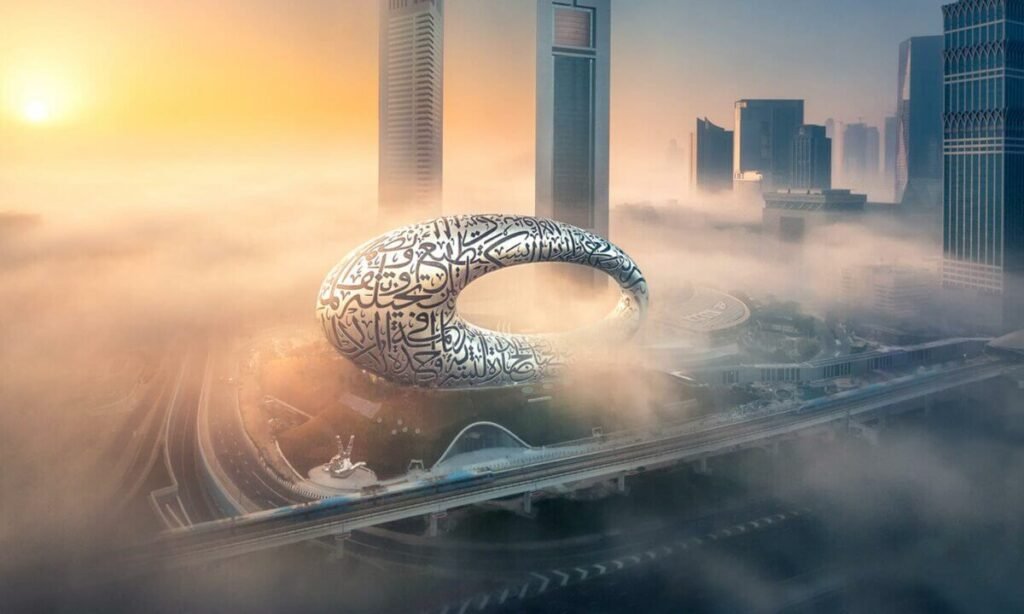
Design Concept and Symbolism
Designed by architect Shaun Killa and engineered by Buro Happold, the Museum of the Future is globally recognised for its asymmetric torus form. The structure represents three philosophical elements:
- The hill: Humanity’s foundation and grounding
- The building: Human innovation and progress
- The void: The unknown future yet to be written
The façade is clad in stainless steel and glass, etched with Arabic calligraphy designed by Emirati artist Mattar bin Lahej. These inscriptions are quotations by HH Sheikh Mohammed bin Rashid Al Maktoum, expressing Dubai’s forward-looking vision.
Beyond aesthetics, the building itself functions as an engineering and sustainability case study, making it a reference point in architectural, cultural, and urban development discussions.
Inside the Museum: Floors, Exhibits & Experiences
A Narrative-Based Visitor Journey
The Museum of the Future spans seven levels, with five main experiential floors, each designed as a chapter in a broader future narrative. Visitors typically begin at the top and move downward through interconnected themes.
OSS Hope – Space & Humanity (Top Floor)
This immersive experience simulates life aboard an orbital space station in the year 2071, exploring how space research can address challenges on Earth. It is cinematic, narrative-driven, and one of the museum’s most distinctive experiences.
The HEAL Institute – Ecology & Biodiversity
A mixed-reality rainforest environment paired with a DNA and species library, focusing on:
- Climate change
- Environmental restoration
- Human and planetary health
This zone links global ecological challenges to future scientific solutions.
Al Waha (The Oasis) – Wellness & Mindfulness
A technology-light space designed to encourage sensory reconnection through light, sound, and meditative experiences. It contrasts deliberately with the data-heavy innovation zones.
Tomorrow Today – Near-Future Innovation
This floor showcases real-world prototypes, concepts, and emerging technologies already being developed by global innovators, startups, and research institutions.
Future Heroes – Children’s Innovation Zone
Designed specifically for children under 10, this open-world environment uses play-based learning to encourage collaboration, creativity, and problem-solving.
Visiting Experience & Practical Information
Tickets, Timing & Duration
The Museum of the Future operates on a timed-entry ticket system, with 30-minute entry windows. Demand is consistently high, particularly during weekends and evenings.
- Typical visit duration: 2 to 3 hours
- Opening hours: 9:30 AM to 9:00 PM
- Last entry: 7:00 PM
- Morning slots are generally quieter and better suited for families and photography
Entry is free for children under four, People of Determination (plus one caregiver), and Emirati senior citizens, though time-slot booking is still required.
Accessibility, Amenities & Visitor Comfort
The museum is fully wheelchair accessible, with wheelchairs available on-site subject to availability. Additional amenities include:
- Free Wi-Fi
- Café and restaurant
- Retail and gift shops
- Restrooms on multiple levels
- Limited on-site parking and valet services
From an urban usability standpoint, the museum aligns with Dubai’s broader accessibility and inclusivity standards.
Lifestyle Impact on Surrounding Areas
Cultural Gravity & Urban Appeal
As a globally recognised attraction, the Museum of the Future enhances the lifestyle credentials of nearby districts. Residents and professionals working in DIFC, Downtown Dubai, and Sheikh Zayed Road benefit from:
- Proximity to a world-class cultural institution
- Increased walkability and public transport connectivity
- Elevated prestige of the surrounding urban environment
This has indirect implications for residential demand, particularly for apartments and serviced residences near Emirates Towers and DIFC.
Property & Investment Perspective
Influence on Real Estate Demand
While the Museum of the Future itself is not a residential zone, it acts as a demand catalyst for nearby property markets. Areas closest to the museum typically attract:
- Corporate tenants
- Short-term executive rentals
- Investors seeking capital appreciation in central Dubai
Key investment considerations include strong rental liquidity, long-term landmark value, and sustained tourism-driven footfall. However, higher entry prices and traffic congestion during peak hours are potential trade-offs.
Pros & Cons Overview
From a real estate and lifestyle standpoint, the Museum of the Future’s presence offers significant advantages, including global recognition, infrastructure investment, and long-term cultural relevance. On the other hand, premium pricing and visitor congestion in surrounding areas require strategic property selection rather than blanket investment.
Who Is This Area Best For?
The Museum of the Future and its surrounding districts are best suited for:
- Professionals working in DIFC and central Dubai
- Investors targeting landmark-driven locations
- Residents who value culture, innovation, and connectivity
- Families seeking educational and experiential attractions nearby
Recommended Guide: AURA SKYPOOL Dubai
FAQs
Is the Museum of the Future worth visiting?
Yes. It offers a highly immersive experience that combines education, entertainment, and visionary thinking, unlike traditional museums.
How much time is needed to visit?
Most visitors spend between two and three hours exploring the main exhibits.
Is entry to the Museum of the Future free?
Entry is free for children under four, People of Determination with one caregiver, and Emirati senior citizens. All others require a paid timed-entry ticket.
What makes the Museum of the Future special?
Its focus on future scenarios, interactive storytelling, and architectural symbolism sets it apart from conventional cultural attractions.
Conclusion
The Museum of the Future Dubai is far more than a tourist attraction. It is a symbolic and functional expression of Dubai’s long-term vision, influencing urban identity, lifestyle patterns, and real estate dynamics along Sheikh Zayed Road. As a landmark-driven anchor, it strengthens the desirability of central Dubai neighborhoods while reinforcing the city’s global positioning as a hub for innovation and forward-thinking development. For residents, investors, and visitors alike, the Museum of the Future represents both a cultural asset and a strategic urban catalyst.

Leave a Reply