
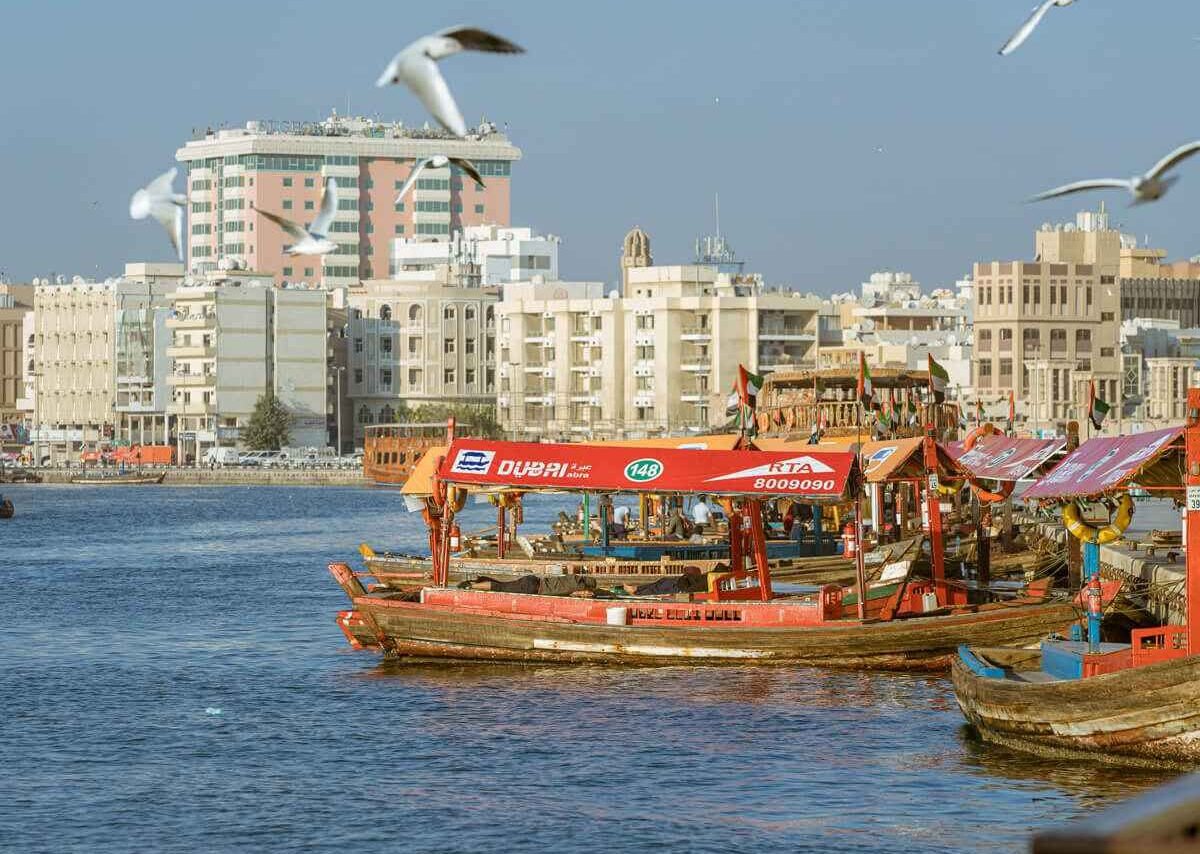
What Is Dubai Creek?
Dubai Creek (Khūr Dubayy) is a natural saltwater inlet that represents the historical, cultural, and economic foundation of Dubai. Long before skyscrapers and master-planned communities defined the emirate, the Creek functioned as Dubai’s primary port, trade route, and settlement hub, shaping the city’s identity through fishing, pearling, and maritime commerce.
Today, Dubai Creek acts as both a living heritage corridor and a strategic urban spine, connecting Old Dubai’s traditional districts with modern waterfront developments. It remains one of the few places in Dubai where heritage, lifestyle, tourism, and long-term real estate value intersect naturally.
Dubai Creek Location & Urban Context
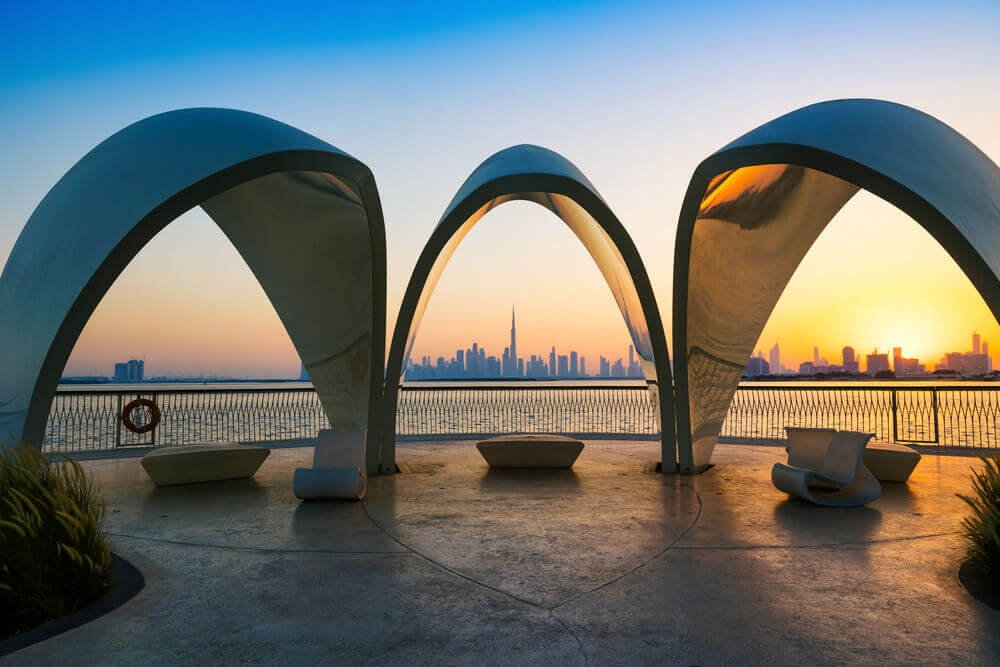
Dubai Creek runs inland from the Persian Gulf, cutting through the heart of the city before extending via Business Bay and the Dubai Water Canal and rejoining the Gulf near Jumeirah. This extension has transformed the Creek from a historic waterway into a city-wide waterfront system.
Key Geographic Divisions
- Deira (East Bank)
Traditionally the commercial heart of Old Dubai, Deira is known for its dense souks, trading activity, and proximity to the Creek’s original port functions. - Bur Dubai (West Bank)
The birthplace of modern Dubai, Bur Dubai hosts heritage districts, museums, and government institutions that reflect the city’s early settlement patterns. - Creek Extensions & Modern Nodes
- Ras Al Khor Wildlife Sanctuary (natural endpoint)
- Business Bay Canal
- Dubai Water Canal
- Dubai Creek Harbour (future-facing waterfront district)
This geographic continuity makes Dubai Creek one of the most interconnected waterfront corridors in the UAE.
Dubai Creek Historical Significance & Evolution
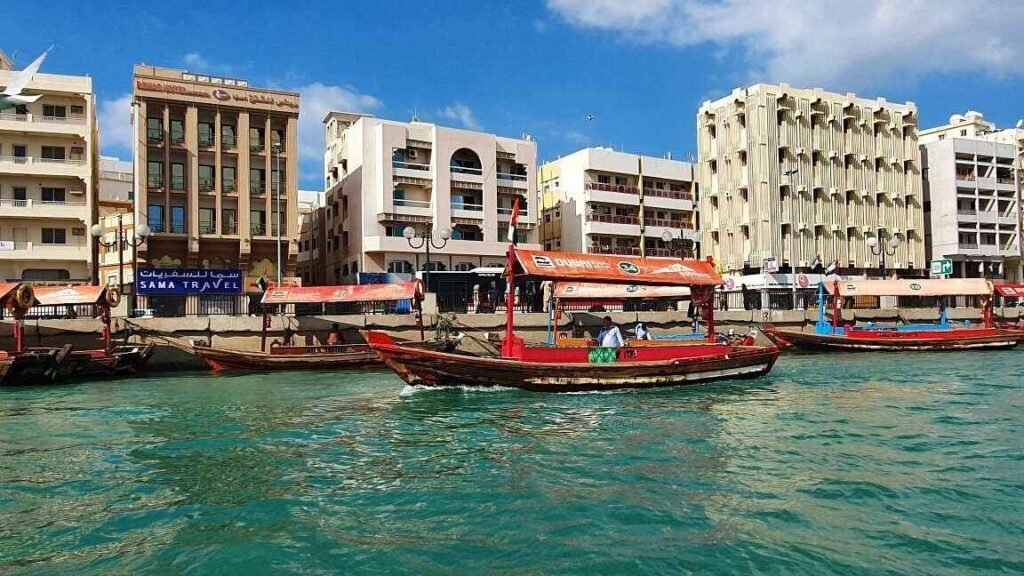
Dubai Creek is inseparable from the formation of Dubai itself. In the 19th century, the Bani Yas tribe settled along its banks, leading to the establishment of the Al Maktoum dynasty. For decades, the Creek supported:
- Pearling expeditions (Dubai’s original economic backbone)
- Fishing communities
- Dhow-based trade routes linking India, East Africa, and the Gulf
Infrastructure Transformation
From the 1950s onward, extensive dredging, bridge construction, and port upgrades enabled the Creek to handle larger vessels. Although its role as a primary cargo port diminished with the rise of Jebel Ali Port, Dubai Creek retained its commercial relevance, handling thousands of ships annually and supporting re-export trade.
The modern extensions through Business Bay and the Dubai Water Canal represent a shift from pure trade utility to mixed-use urban value creation.
Key Attractions Along Dubai Creek
Dubai Creek offers a rare blend of everyday local life and curated visitor experiences, making it equally attractive to residents, investors, and tourists.
Traditional & Cultural Highlights
- Abra Crossings
Wooden abras continue to operate as water taxis, offering one of Dubai’s most authentic daily experiences and connecting Deira and Bur Dubai in minutes. - Al Fahidi Historical District
A preserved heritage neighborhood featuring wind-tower architecture, museums, and the Al Fahidi Fort – Dubai’s oldest standing structure. - Traditional Souks (Deira)
The Gold Souk, Spice Souk, and Perfume Souk remain among Dubai’s most visited commercial landmarks.
Lifestyle & Waterfront Destinations
- Al Seef
A curated waterfront promenade combining Emirati architectural heritage with modern retail, dining, and cultural venues. - Dubai Creek Golf & Yacht Club
A premium leisure destination featuring an 18-hole championship golf course and marina. - Ras Al Khor Wildlife Sanctuary
A protected ecological reserve home to flamingos and hundreds of bird species, offering a unique natural counterbalance to urban Dubai.
Property Landscape Along Dubai Creek
Dubai Creek is not a single real estate market but a collection of micro-markets, each with distinct characteristics.
Residential Property Types
- Waterfront apartments
- Branded residences in master-planned developments
- Low-rise heritage-adjacent residences
- Serviced apartments near hospitality zones
Dubai Creek Harbour, in particular, represents the next generation of waterfront living, combining residential, retail, green spaces, and skyline views into a fully integrated district.
Market Trends & Pricing Dynamics
Property values around Dubai Creek are influenced by:
- Waterfront proximity
- Heritage adjacency
- Infrastructure upgrades
- Long-term landmark developments
While exact pricing varies by sub-area, Creek-facing locations tend to show strong resilience during market cycles, supported by tourism demand, rental yield stability, and scarcity of heritage-linked waterfront land.
Investment Potential & Strategic Outlook
Dubai Creek offers a dual investment profile:
- Stability-Oriented Assets
Established areas near Deira and Bur Dubai attract consistent rental demand from professionals and long-term residents. - Growth-Oriented Assets
Dubai Creek Harbour and canal-facing developments align with Dubai’s long-term urban expansion strategy.
Key Investment Drivers
- Ongoing infrastructure investment
- Landmark projects such as Dubai Creek Tower
- Tourism demand tied to heritage and waterfront experiences
- Improved connectivity via metro and road networks
Risk Considerations
- Older building stock in heritage zones
- Short-term construction activity in expansion areas
- Regulatory restrictions in conservation districts
Lifestyle: Who Lives Around Dubai Creek?
Living near Dubai Creek appeals to residents who value:
- Walkable waterfronts
- Cultural authenticity
- Central city access
- A slower-paced, community-driven environment
The area supports a lifestyle that blends traditional markets, waterfront dining, green spaces, and cultural events, rather than high-rise intensity.
Pros & Cons of Dubai Creek Living
Advantages
- Deep historical and cultural value
- Excellent connectivity across Dubai
- Waterfront and nature access
- Strong rental demand in key zones
Considerations
- Traffic congestion in older districts
- Limited new supply in heritage areas
- Mixed building age and quality
Who Is Dubai Creek Best For?
Dubai Creek is ideal for:
- Long-term real estate investors seeking stable returns
- Buyers interested in heritage-linked locations
- Residents who prefer authentic urban environments
- Investors targeting future growth through Dubai Creek Harbour
It is less suited for buyers seeking ultra-modern high-rise density or short-term speculative flipping.
FAQs
Why is Dubai Creek famous?
Dubai Creek is famous as the birthplace of Dubai’s trade economy and remains a symbol of the city’s transformation from fishing settlement to global hub.
Is Dubai Creek a good area to live?
Yes, especially for those who value cultural depth, central location, and waterfront living rather than high-density luxury towers.
Can you walk around Dubai Creek?
Large sections, particularly Al Seef, Dubai Creek Park, and Creek Harbour promenades, are designed for walking and leisure.
What is happening to Dubai Creek now?
Dubai Creek continues to evolve through infrastructure upgrades, waterfront developments, and landmark projects that strengthen its role in Dubai’s urban future.
Conclusion
Dubai Creek is not just a location—it is Dubai’s living narrative. From pearling boats and trading dhows to modern waterfront residences and future landmarks, the Creek reflects the city’s past, present, and long-term vision. As a real estate destination, it offers a rare combination of heritage stability and future growth, making it one of the most strategically significant waterfront corridors in the UAE.
For buyers, investors, and residents seeking depth beyond surface-level luxury, Dubai Creek remains one of Dubai’s most meaningful and enduring places to invest and live.
![Aquaventure World is the largest waterpark in the world and one of Dubai’s most powerful lifestyle and tourism anchors. Located within Atlantis The Palm on Palm Jumeirah, the park spans approximately 22.5 hectares and features over 105 record-breaking slides, attractions, and marine experiences. From near-vertical free-fall slides and the world’s longest family rafting coaster to marine animal encounters and a private beach, Aquaventure World functions as far more than a theme park. It is a destination ecosystem that blends entertainment, hospitality, marine conservation, and waterfront leisure—making it highly relevant in both lifestyle and real estate discussions around Palm Jumeirah. Location & Context Within Dubai Aquaventure World sits at the crescent of Palm Jumeirah, one of Dubai’s most prestigious master-planned waterfront developments. Its location inside Atlantis The Palm gives it direct connectivity to luxury hotels, fine dining, beach clubs, and high-end residential communities. Address Context: Atlantis The Palm, Crescent Road, Palm Jumeirah, Dubai, UAE Accessibility: By Car or Taxi: Direct access via Palm Jumeirah; dedicated Aquaventure parking with complimentary shuttle service By Public Transport: Dubai Tram → Palm Jumeirah Monorail → Atlantis/Aquaventure Station From a real estate and urban planning perspective, Aquaventure significantly enhances the destination value of Palm Jumeirah, increasing short-term rental demand, tourism footfall, and lifestyle appeal. Internal linking suggestion: [Link to Palm Jumeirah Area Guide] [Link to Dubai Waterfront Communities Guide] Opening Hours & Seasonal Considerations Aquaventure World operates year-round, with hours adjusted seasonally: Peak Season (Nov–Apr): Approx. 9:45 AM – 6:30 PM Low Season (May–Oct): Approx. 9:00 AM – 5:30 PM Weekdays generally experience lower crowd density than weekends and school holidays. January through February offers the most comfortable weather, aligning with Dubai’s peak tourism cycle. Core Attractions & Themed Zones Aquaventure World is organized around three iconic towers, each representing a distinct thrill category: Neptune Tower Focused on signature high-adrenaline experiences: Leap of Faith: Near-vertical 9-storey drop through a transparent shark lagoon Shark Safari routes: Slides intersecting marine habitats Poseidon Tower Designed for extreme thrill seekers: Poseidon’s Revenge: Trap-door freefall reaching speeds of ~60 km/h Multiple high-speed body slides with steep gradients Trident Tower Home to next-generation ride engineering: Odyssey of Terror: One of the world’s tallest waterslides, engineered for weightlessness Blackout: Enclosed darkness-based thrill slides Complementing these towers are river rides, family rafting zones, and wave-based attractions. Family, Kids & Relaxation Zones Aquaventure is not solely thrill-oriented. It also offers some of the most comprehensive family water facilities globally. Splashers Kids’ Area: The world’s largest children’s water playground Adventure River & Rapids: Over 1.6 km of connected river experiences Lazy River: Low-intensity floating ideal for downtime between rides These zones significantly broaden the park’s demographic reach, making it attractive for families, school groups, and multigenerational visitors. Marine Life & Aquarium Experiences A defining differentiator of Aquaventure World is its integration of marine ecosystems. Lost Chambers Aquarium Over 65,000 marine animals 21 immersive exhibits Ambassador Lagoon with an 11-million-liter tank Atlas Village & Dolphin Experiences Dolphin Meet & Greet Dolphin Swim and Kayak programs South African fur seals encounters Each marine experience contributes to conservation funding through the Atlantis Atlas Project, reinforcing the park’s sustainability narrative. Aquaventure Beach & Outdoor Leisure Aquaventure includes a 700-meter private beach, exclusive to ticket holders. This beachfront component elevates the park from a rides-only attraction to a full-day coastal leisure experience, with views across the Arabian Gulf and Dubai skyline. Wave-riding facilities like Surf’s Up add surf-style recreation, while shaded beach zones offer recovery space between high-energy activities. Ticketing Structure & Visitor Access Ticket pricing varies by season, demand, and package structure rather than fixed rates. Available options include: Standard Day Pass (waterpark access) Super Pass (Aquaventure + Lost Chambers Aquarium) Combo tickets with Dubai landmarks Marine experience bundles Children under 2 enter free, while height-based pricing ensures safety compliance. Internal linking suggestion: [Link to Dubai Attractions Guide] [Link to Dubai Family Lifestyle Areas] Dining, Retail & On-Site Services Aquaventure World operates approximately 15 dining outlets, ranging from quick-service counters to international casual dining. Retail stores supply swimwear, water shoes, sunscreen, and souvenirs, reducing friction for tourists and day visitors. Lockers, towel rentals, and fast-track ride passes support high-volume visitor management during peak seasons. Safety, Height Restrictions & Regulations Safety protocols are strict and professionally managed: Most major slides require a minimum height of 1.2 meters Selected family rides allow 1.07 meters with adult supervision Lifeguards positioned throughout the park Life jackets available for children Dress code policies are inclusive, accommodating standard swimwear and modest options such as burkinis. Lifestyle Impact & Real Estate Relevance From a property and investment perspective, Aquaventure World plays a critical role in: Boosting short-term rental yields on Palm Jumeirah Supporting luxury hospitality demand Enhancing long-term brand value of waterfront real estate Properties near Atlantis The Palm benefit from consistent tourist inflow, international recognition, and year-round visitation cycles. Internal linking suggestion: [Link to Dubai Property Investment Guide] [Link to Buy Apartments in Palm Jumeirah] Investment Perspective: Opportunities & Considerations Upside factors Global landmark status Continuous expansion and reinvestment Strong alignment with Dubai’s tourism-led economic model Potential risks Seasonal crowd fluctuations Premium pricing positioning Dependence on international tourism cycles Overall, Aquaventure strengthens Palm Jumeirah’s resilience as a high-demand lifestyle destination. Pros & Cons Summary Pros World’s largest and most advanced waterpark Integrated marine, beach, and leisure experiences Family-friendly with premium positioning Strong tourism and real estate synergy Cons Peak-season crowd density Higher ticket costs compared to smaller parks Full-day experience may be physically demanding Who Is Aquaventure World Best For? Families visiting or living in Dubai Tourists seeking flagship attractions Residents of Palm Jumeirah and nearby waterfront areas Investors focused on short-term rental or lifestyle-driven property demand Frequently Asked Questions Is Aquaventure World worth visiting? Yes. It offers unmatched scale, ride diversity, and marine experiences, positioning it among the top waterparks globally. What is the best time to visit Aquaventure World? Weekdays during November to February provide the best balance of weather and crowd levels. How many rides does Aquaventure World have? Over 105 slides, attractions, and experiences across multiple zones. Which waterpark is best in Dubai? Aquaventure World is widely considered Dubai’s premier waterpark due to its size, innovation, and integrated beach and marine offerings. Final Perspective Aquaventure World is not just a waterpark—it is a destination anchor that reinforces Palm Jumeirah’s status as one of the world’s most recognizable luxury waterfront developments. For visitors, it delivers a full-spectrum leisure experience. For residents and investors, it represents sustained lifestyle value and long-term demand stability within Dubai’s evolving real estate ecosystem.](https://dubaipropertyplus.com/wp-content/uploads/2026/01/Aquaventure-World-640x427.jpg)
Leave a Reply