
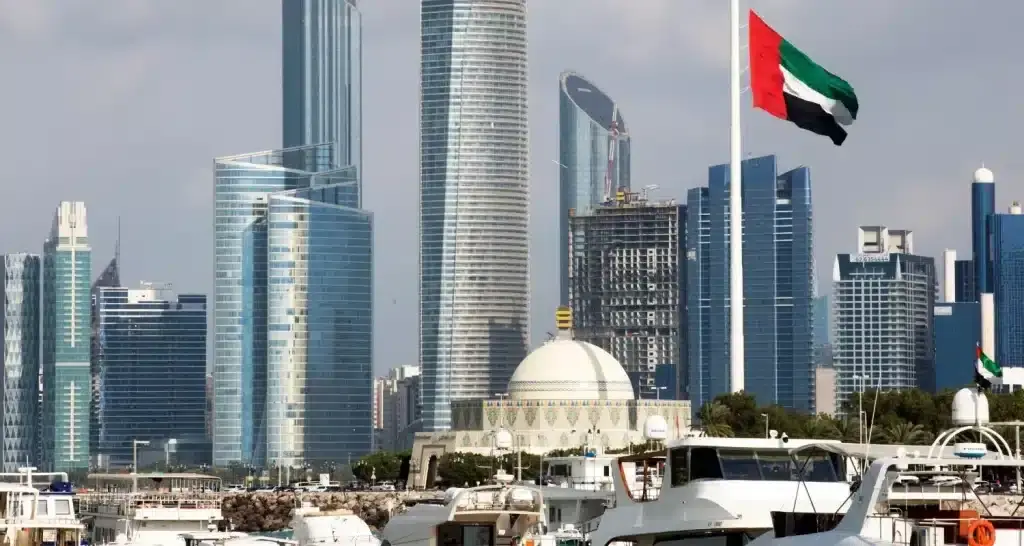

Al Bateen Palace is one of Abu Dhabi’s most historically significant royal landmarks and a former official residence of Sheikh Zayed bin Sultan Al Nahyan, the founding father of the United Arab Emirates. More than a physical structure, it functions as a symbolic governance and heritage entity within the capital’s political and cultural landscape. While the palace is not open to the public internally, it continues to host official meetings and high-level diplomatic engagements, reinforcing its active institutional role rather than being only a preserved monument.
Al Bateen Palace Historical Background and National Significance
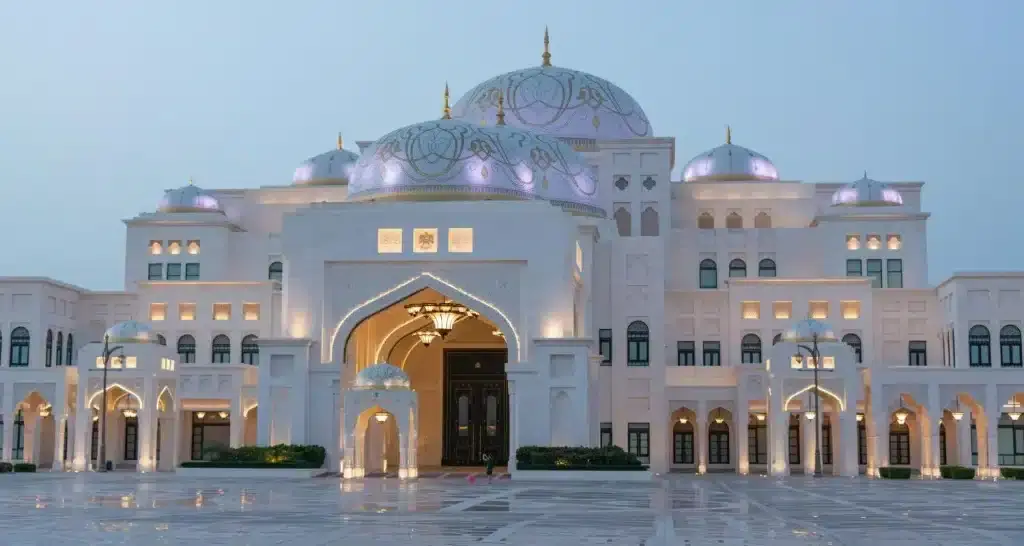
Al Bateen Palace traces its origins to the mid-20th century, when Abu Dhabi was transitioning from a coastal settlement economy into a structured governing state. Originally built in the 1940s within the wider Al Mushrif estate zone, the palace served as a private royal home and later as an official residence of Sheikh Zayed. Its continued use for state functions connects it directly with the UAE’s political formation period and early federal governance.
Unlike museum-style palaces that shift fully into tourism use, Al Bateen Palace remains functionally tied to governance. It has historically hosted cabinet-level discussions and leadership meetings, making it part of the UAE’s decision-making infrastructure. This continuity increases its heritage value because it represents an unbroken chain between early leadership, modern administration, and present-day diplomatic protocol.
Architectural Style and Design Language
The architectural character of Al Bateen Palace blends traditional Islamic and Emirati design principles with measured modern adaptations. The building uses desert-toned facades, geometric motifs, arches, and column-supported sections that reflect regional construction language. These features are not purely decorative – they also respond to climate, light control, and airflow.
The roof structures combine flat terraces with low domes, which help reduce heat gain while maintaining Gulf architectural identity. Large garden zones and controlled landscape symmetry extend the architectural narrative beyond the walls, creating a micro-environment of shade, cooling, and visual order. Even from outside the perimeter, observers can identify climate-responsive planning and heritage-influenced geometry.
Al Bateen Palace Location: Where Al Bateen Palace Sits in Abu Dhabi
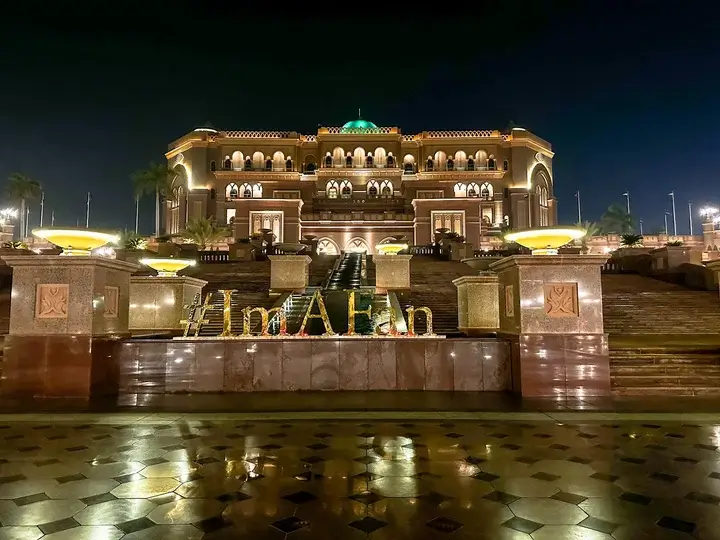
Al Bateen Palace is located in Al Manhal within the greater Al Bateen zone of Abu Dhabi, positioned between central administrative districts and coastal residential areas. This placement is strategic: it provides privacy and controlled access while staying close to government institutions, embassies, and ceremonial landmarks.
The surrounding urban fabric includes:
- Low-density villa districts
- Embassy clusters
- Marina and waterfront access
- Cultural institutions
- Government facilities
This context makes the palace part of a broader royal–civic corridor rather than an isolated structure. From a real estate perspective, Al Bateen is considered one of Abu Dhabi’s established prestige districts with long-term residential desirability.
Accessibility and Visiting Rules
Al Bateen Palace is not open for interior public tours. Visitors can only view the palace from the outside perimeter and surrounding public approaches. This restricted access is consistent with its continued government and diplomatic function.
General visitor context includes:
- Exterior viewing permitted
- No interior entry for tourists
- Typically accessible surroundings on weekdays
- Wheelchair-accessible approach areas and parking nearby
- No admission fee for exterior viewing
Because access rules can change for official events, visitors should treat it as a view-from-outside landmark rather than a walk-through attraction.
Related: Sheikh Zayed Road
Nearby Landmarks and Cultural
Since Al Bateen Palace itself is not internally visitable, its tourism value is strongly connected to nearby public landmarks. These related entities help complete the visitor knowledge graph around UAE leadership, heritage, and governance.
Qasr Al Watan functions as the publicly accessible presidential palace and provides interior palace experiences, exhibitions, and ceremonial halls. The Founder’s Memorial offers an interpretive tribute to Sheikh Zayed through art and landscape design. Zayed Heritage Center and nearby galleries add ethnographic and historical layers. Al Bateen Beach and Marina contribute lifestyle and leisure value, balancing formal heritage with coastal recreation.
This cluster effect makes the area suitable for a half-day cultural route rather than a single-stop visit.
Recommended: Al Baraha Dubai
Al Bateen District Lifestyle and Residential Profile
The Al Bateen district is known for its calm, low-rise, villa-dominant residential pattern compared to high-density tower zones like Al Reem Island. It attracts long-term residents, diplomatic households, and high-net-worth families seeking privacy and proximity to central Abu Dhabi without downtown congestion.
The lifestyle profile includes waterfront leisure, marina dining, neighborhood mosques, and established road connectivity. Community rhythm is slower and more residential than commercial business districts. This makes the palace’s placement logically aligned with privacy, protocol, and security needs.
From a property lens, the area is associated more with villas and government-adjacent housing than high-rise apartment investments.
Tourism vs Real Estate Relevance of Al Bateen Palace
| Aspect | Relevance |
|---|---|
| Tourism | Landmark viewing, heritage significance, photo stop |
| Culture | Strong – linked to UAE founding leadership |
| Government | Active diplomatic and protocol role |
| Real Estate | Area prestige indicator, not a purchasable asset |
| Public Access | Exterior only |
Al Bateen Palace is not a real estate opportunity itself, but it increases the symbolic and prestige value of the surrounding district. Proximity to royal and government landmarks typically correlates with stable long-term district desirability rather than speculative property turnover.
Pros and Limitations of Visiting the Al Bateen Palace Area
The main strength of the Al Bateen Palace area is its layered meaning – governance, heritage, coastal lifestyle, and cultural institutions intersect within a compact geography. It suits visitors interested in political history and national identity more than entertainment tourism.
The main limitation is access. Travelers expecting an interior palace tour may be disappointed. The experience is observational and contextual rather than immersive inside the building itself.
Recommended: LEGOLAND Dubai Theme Park
Who Should Visit the Al Bateen Palace Area
This area is best suited for visitors who value cultural and governance landmarks rather than interactive attractions. It fits travelers building a heritage-focused Abu Dhabi itinerary and researchers or students studying UAE political history and architecture.
It is also relevant for property researchers analyzing prestige district signals and government-zone residential patterns.
FAQs
Can tourists enter Al Bateen Palace?
No. Interior access is restricted. Visitors can only view the exterior and surrounding grounds from permitted areas.
Why is Al Bateen Palace important?
It was a former residence of Sheikh Zayed and remains a functioning government and diplomatic venue, giving it both historic and active national importance.
Where is Al Bateen Palace located?
It is located in the Al Manhal / Al Bateen zone of Abu Dhabi, near marina, embassy, and cultural districts.
Is there an entry fee?
No fee applies for exterior viewing areas.
What should I visit nearby with it?
Qasr Al Watan, The Founder’s Memorial, Zayed Heritage Center, and Al Bateen Beach are the most contextually related stops.
Conclusion
Al Bateen Palace in Abu Dhabi is a high-importance national landmark defined by royal legacy, governance continuity, and heritage architecture rather than public tourism access. Its value lies in symbolism, location context, and institutional function. When understood together with nearby presidential, memorial, and cultural sites, it becomes part of a broader heritage corridor that explains how leadership, architecture, and urban planning intersect in the UAE capital. For visitors and property researchers alike, it represents prestige, continuity, and state identity embedded within the Al Bateen district.


Leave a Reply