
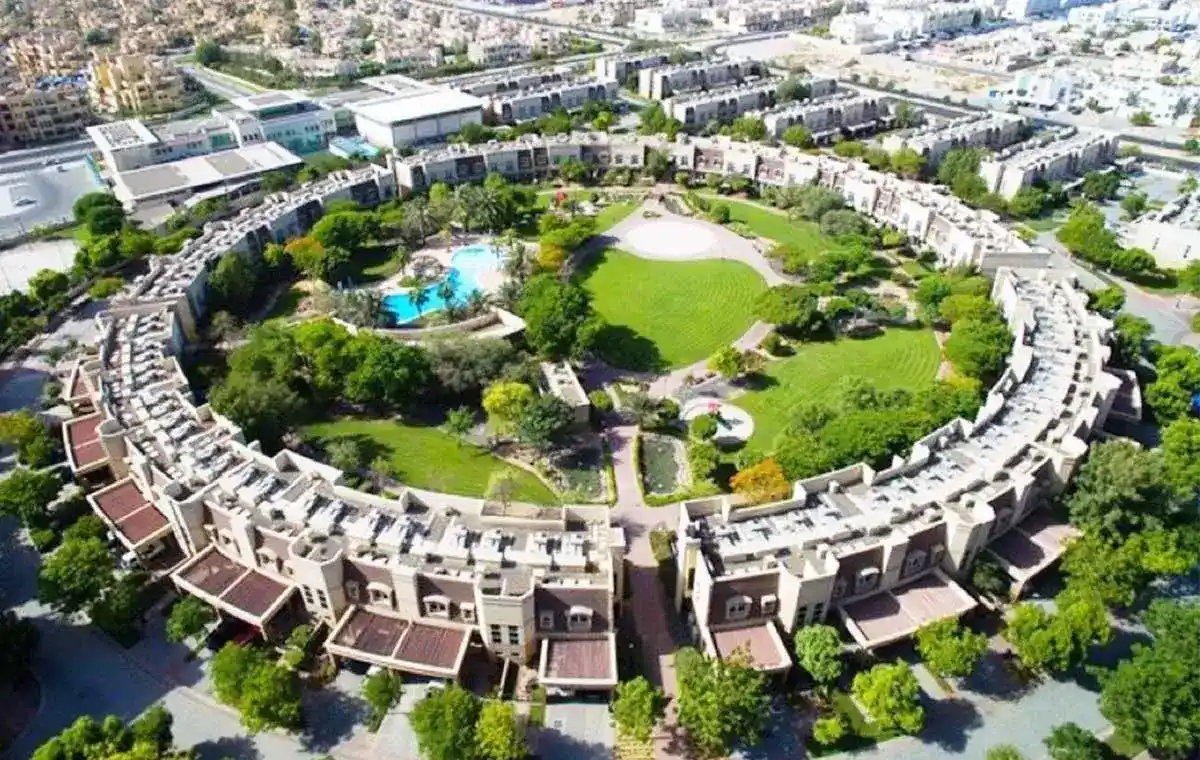

Mirdif is a well-established residential district in eastern Dubai known for its suburban character, villa neighborhoods, low-rise buildings, and strong family appeal. Unlike high-density urban zones filled with towers, this district developed around spacious plots, landscaped streets, and community-focused planning. The result is an environment that feels calm, practical, and livable, while still being connected to the main parts of the city through major road networks.
The area is widely recognized for offering a balance between space, affordability (relative to prime central districts), and daily convenience. Residents choose it for long-term living rather than short stays. It attracts families, professionals working near the airport corridor, and buyers seeking larger homes without moving far from Dubai’s core urban structure. Retail hubs, schools, clinics, parks, and recreation facilities are integrated into the district, making it largely self-sufficient for everyday needs.
From a search intent perspective, most users looking for this district want residential guidance, property insights, lifestyle suitability, and investment clarity. This guide addresses all of those dimensions in one structured reference.
Mirdif Dubai Location, Access and Urban Connectivity
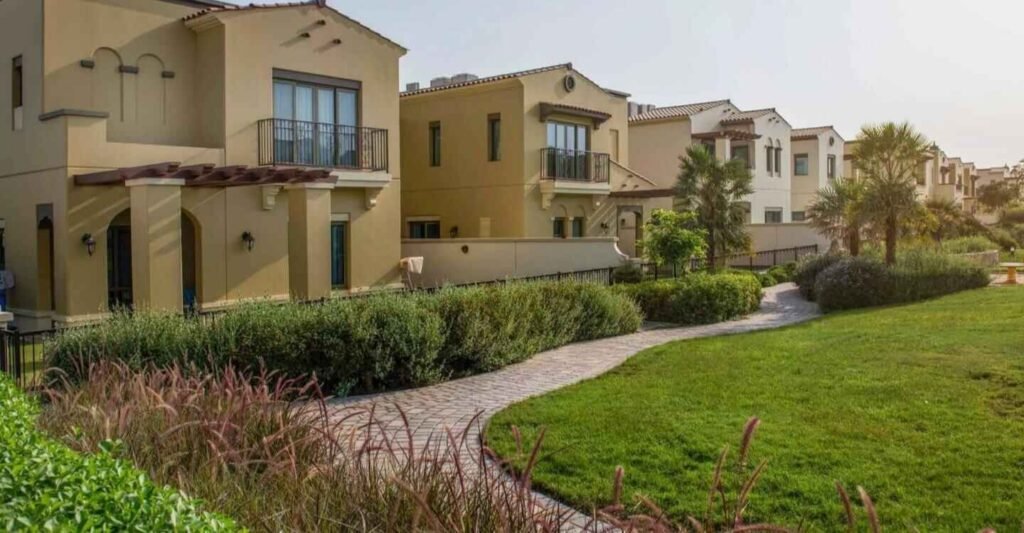
Mirdif sits on the eastern side of Dubai and is positioned near major arterial roads that connect it efficiently with the rest of the city. It lies close to Sheikh Mohammed Bin Zayed Road (E311) and is also linked through Al Khawaneej Street and Algeria Street corridors. This road access plays a major role in its residential popularity because it allows car owners to reach business and leisure zones without complicated inner-city traffic routes.
Drive times are one of the district’s strongest practical advantages. Dubai International Airport is typically within about 10–15 minutes depending on the exact cluster and terminal. Downtown Dubai and Business Bay are usually reachable within roughly 20–30 minutes outside peak congestion windows. This makes the district especially attractive for frequent travelers and aviation-related professionals.
Public transport coverage exists but is not as strong as in metro-centric districts. There is no metro station inside the community itself. Instead, residents rely on bus connections that link to Centrepoint Metro Station on the Red Line. From there, the wider rail network becomes accessible. In daily reality, the district functions best for car users. Peak-hour traffic can build around the main mall zone and exit roads, which is an important lifestyle consideration.
Residential Character and Community Atmosphere
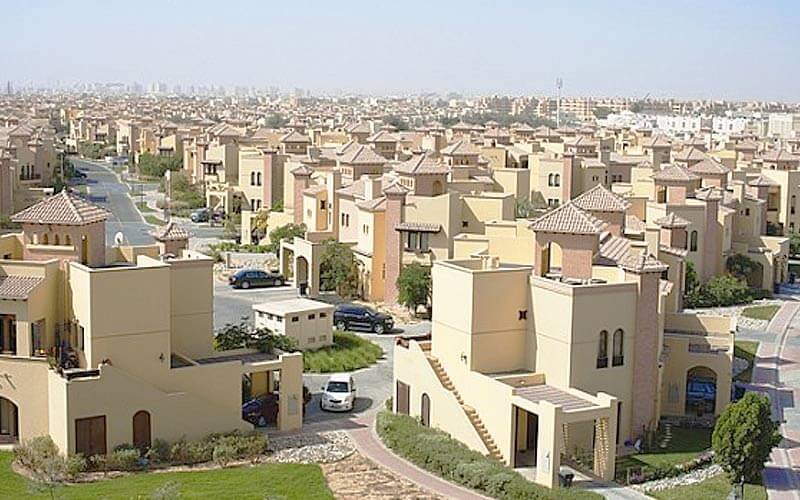
The defining feature of Mirdif is its suburban residential identity. Streets are generally quieter than high-rise districts, and the built environment is dominated by villas, townhouses, and low- to mid-rise apartment blocks. Architectural styles vary, with many homes featuring European-influenced layouts blended with regional design touches. Plot sizes are typically more generous than newer master communities built at higher density.
The atmosphere is community-driven and family-oriented. Daily life centers around neighborhood retail strips, schools, parks, and mall destinations rather than nightlife zones or tourist attractions. This shapes the resident profile toward long-term occupants instead of short-term renters. Many households stay for years due to school continuity and housing space.
Greenery is another defining attribute. Compared with many parts of Dubai, the district includes more tree-lined streets, pocket parks, and landscaped residential pockets. Proximity to a major national park further strengthens its outdoor lifestyle appeal. The absence of skyscrapers also reduces visual density and creates a more open skyline feel.
Sub-Communities and Residential Clusters
Mirdif is not a single uniform housing block. It is composed of multiple clusters and planned sub-communities, each with a slightly different housing mix and ownership structure. Understanding these pockets helps buyers and tenants choose more precisely.
Shorooq is known for gated villa and townhouse living with landscaped internal streets and shared facilities. It is largely rental-focused and popular among families wanting managed community infrastructure.
Ghoroob is more apartment-oriented, offering low-rise residential buildings with courtyard layouts and nearby retail. It attracts tenants looking for more affordable unit sizes within the same district.
Uptown Mirdif follows a themed, walkable layout inspired by spa-town concepts. It blends apartments and townhouses around an open retail courtyard. This cluster is known for pedestrian-friendly design and café culture.
Mirdif Hills represents one of the newer mixed-use developments in the district. It introduced freehold apartment options along with retail, hospitality, and medical components. This made ownership more accessible to foreign buyers compared with traditional leasehold villa zones.
Additional smaller clusters and standalone villa streets fill the rest of the district, creating variety in layout, age, and price positioning.
Property Types and Housing Options
Housing supply in Mirdif is dominated by villas and townhouses, with apartments concentrated in specific clusters. This creates a different property profile compared with tower districts where apartments dominate.
Villas range from mid-sized family homes to large multi-bedroom residences with private gardens and parking. Many include maid’s rooms, storage, and multiple living areas. Townhouses provide a more compact alternative while still preserving multi-floor layouts.
Apartments are usually found in low-rise buildings rather than tall towers. Units tend to be more spacious than similarly priced apartments in central Dubai. Newer apartment projects focus on modern finishes and integrated retail at ground level.
Parking is generally not a major constraint. Most villas include private covered parking, and apartment clusters provide dedicated or structured parking. Mall and retail destinations add additional parking capacity for visitors.
Ownership Structure and Buyer Access
Historically, much of Mirdif developed under leasehold or rental frameworks. However, certain newer projects introduced freehold ownership options. This distinction is important for international buyers evaluating eligibility.
Freehold apartment ownership is available in selected developments such as newer mixed-use residential clusters. Most traditional villa streets and some gated communities remain rental-focused or limited in ownership access. Buyers must therefore check title structure at the project level rather than assuming uniform rules across the district.
Retail, Shopping and Daily Convenience
Retail infrastructure is one of the district’s strongest lifestyle pillars. City Centre Mirdif acts as the primary commercial and entertainment anchor. It contains hundreds of retail outlets, supermarkets, cinemas, family attractions, and fitness facilities. Indoor skydiving, children’s edutainment zones, and multiplex cinemas make it a destination beyond simple shopping.
Uptown Mirdif Mall and other neighborhood retail centers complement this with cafés, salons, clinics, specialty shops, and everyday services. Smaller malls and strip centers are distributed across the district so most residential pockets remain within short driving distance of groceries and essentials.
Supermarket coverage is broad, with hypermarket and community grocery formats available. This reduces the need for long cross-city trips for routine shopping and supports the district’s self-contained living model.
Parks, Outdoor Living and Recreation
Outdoor access is a major differentiator for Mirdif. The district borders a large national park that serves as a green anchor for recreation. This park includes cycling tracks, running paths, picnic areas, BBQ zones, and adventure activities. Families use it heavily on weekends and cooler evenings.
Within residential clusters, smaller parks and playgrounds are woven into the urban layout. Walking and jogging routes are common, supporting an active daily routine without long travel.
Fitness options extend beyond outdoor areas. Large gyms, ladies-only fitness facilities, martial arts studios, and children’s activity centers are distributed across mall and community zones. This supports a health-focused lifestyle pattern that aligns with the district’s family orientation.
Schools, Nurseries and Education Access
Education access is one of the strongest reasons families select Mirdif. The district contains a wide range of nurseries and schools following different international curricula. Early childhood centers using British and Montessori frameworks are widely available inside the community.
Primary and secondary schools offering British, IB, and American curriculum pathways operate within or very near the district. This allows many students to live close to their campus, reducing commute time and simplifying daily schedules. Additional well-known schools are located in adjacent districts, expanding choice further.
Because school proximity strongly affects property demand, homes located near established campuses often maintain stable rental and resale interest. Family buyers typically evaluate catchment convenience alongside house size.
Recommended: Kite Beach Dubai
Healthcare and Medical Facilities
Healthcare coverage in and around Mirdif is robust for a residential district. Clinics, pharmacies, and medical centers are distributed across mall and community hubs. Multi-specialty clinics operate within major retail complexes, providing accessible outpatient care.
Nearby hospitals and specialty centers extend the healthcare network beyond basic clinics. This layered structure — pharmacies, clinics, and hospitals within short drive ranges — supports family living and reduces emergency response concerns.
Medical presence inside mixed-use developments also increases the practical value of newer residential clusters.
Lifestyle Suitability and Resident Profile
Mirdif is best suited to households that prioritize space, schools, and neighborhood calm over skyline views and nightlife density. Families with children, professionals working in northern and eastern Dubai, and long-term tenants form the core resident base.
It is less suitable for residents who depend heavily on metro commuting or who prefer high-rise urban living close to entertainment districts. Car ownership significantly improves daily convenience here.
Noise sensitivity should be considered in specific pockets due to flight paths linked to the nearby airport. Many buildings use sound insulation, but on-site visits at different times of day remain advisable before final decisions.
Recommended: Jumeirah Village Circle
Investment Potential and Market Positioning
From an investment standpoint, Mirdif occupies a stable, end-user driven segment of the Dubai property market. Demand is supported by families, school access, and housing size advantages. This tends to produce steadier occupancy compared with purely investor-driven micro-apartment zones.
Rental demand is consistent for well-maintained villas, townhouses, and newer apartments in managed clusters. Freehold apartment projects provide clearer entry routes for foreign buyers, while rental villa communities attract long-stay tenants.
Key investment strengths include livability, unit size value, and community maturity. Constraints include limited metro access and fewer ultra-luxury projects compared with premium districts. Investors should match asset type with target tenant profile rather than expecting uniform returns across all clusters.
Advantages and Limitations of Living in Mirdif
Mirdif’s advantages come from its suburban planning model. Homes are generally larger, streets are quieter, schools are nearby, and retail is integrated. Green space access is above average for Dubai, and airport proximity is convenient for travelers.
Limitations include weaker rail connectivity and localized traffic pressure near main retail zones during peak hours. Some locations experience aircraft noise depending on orientation. Those seeking beachfront, marina, or downtown tower lifestyles may find the environment too low-density.
FAQs
Is Mirdif a good place to live in Dubai?
It is widely considered one of the strongest family-oriented residential districts due to space, schools, parks, and community infrastructure.
Are there freehold properties available?
Yes, selected newer apartment developments offer freehold ownership, while many traditional villa areas are rental-focused.
Does the district have metro access?
There is no station inside the community, but bus links connect to Centrepoint Metro Station on the Red Line.
How far is it from the airport and Downtown?
The airport is typically within about 15 minutes by car, while Downtown Dubai is commonly reachable in roughly 20–30 minutes depending on traffic.
What property types are most common?
Villas and townhouses dominate, with apartments concentrated in specific planned clusters.
Conclusion
Mirdif stands out as a mature suburban residential district that delivers space, greenery, school access, and daily convenience within Dubai’s urban framework. Its villa-led housing stock, integrated retail hubs, and proximity to a major park create a lifestyle centered on families and long-term residents. While it does not offer dense metro coverage or high-rise glamour, it compensates with livability, value per square foot, and community depth. For buyers and tenants seeking practical comfort over skyline prestige, Mirdif remains one of the most dependable residential choices in the city.

Leave a Reply