
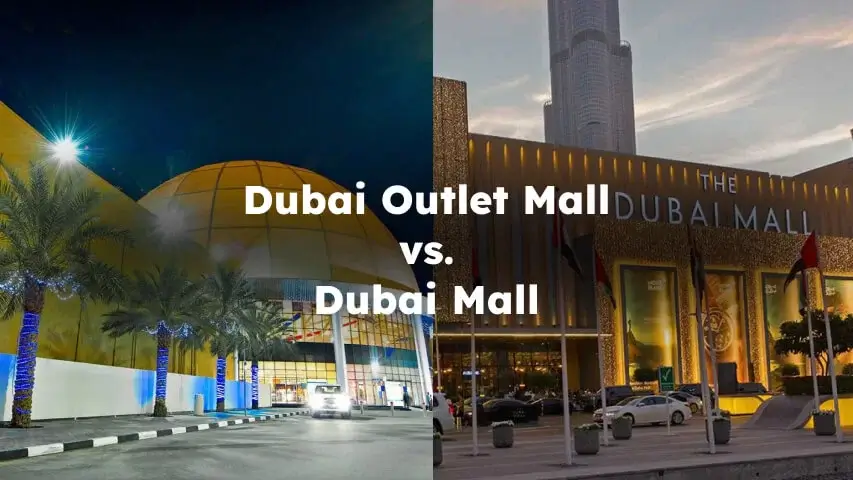

Dubai is globally known for large-scale retail destinations, luxury shopping districts, and themed malls. Within this broader retail ecosystem, outlet shopping holds a specific position: it targets value-driven buyers who want branded products at reduced prices throughout the year. When shoppers compare dubai outlet mall vs outlet village, they are usually trying to understand which destination offers better discounts, stronger brand mix, easier access, and a more suitable shopping experience for their personal goals.
Both outlet destinations serve discount-focused retail demand, but they differ in structure, tenant mix, atmosphere, and visit planning. One emphasizes scale, volume, and category breadth, while the other emphasizes curated designer presence and architectural experience. This guide provides a complete, structured comparison to help shoppers, residents, and property-focused lifestyle planners decide which outlet destination fits their needs best, while also connecting retail behavior with broader Dubai lifestyle patterns.
Search intent behind this topic is both informational and commercial: users want comparison clarity before planning a visit, budgeting a shopping trip, or aligning shopping access with residential location choices.
What Is the Real Difference Between Dubai Outlet Mall and Outlet Village?
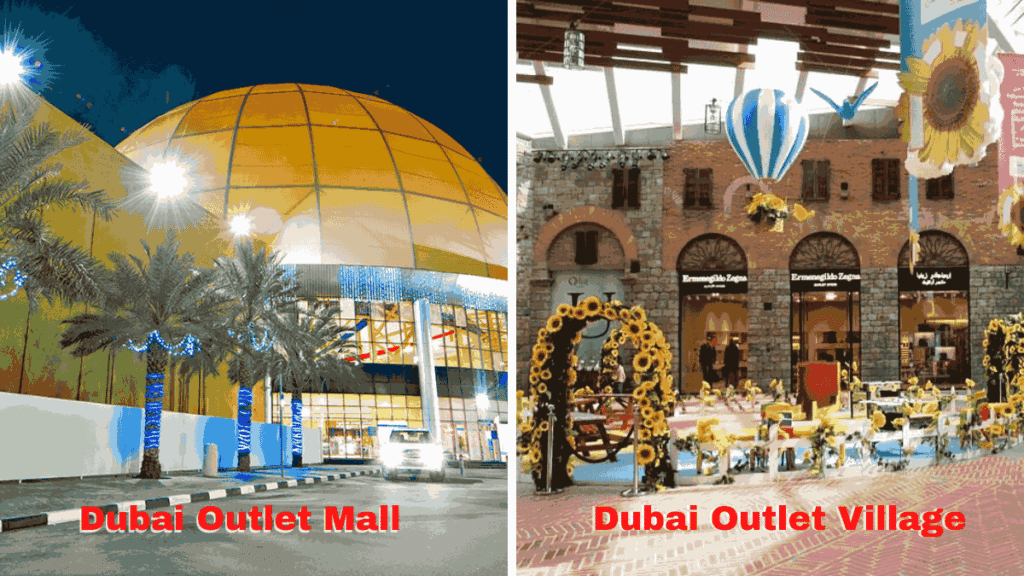
When comparing outlet destinations, the core difference is not simply size – it is retail philosophy. One outlet operates as a high-volume, category-diverse discount hub, while the other operates as a premium-focused, experience-led outlet environment. Both sell discounted branded goods, but the shopping journey and brand composition differ significantly.
The comparison between Dubai Outlet Mall and The Outlet Village is best understood through structure and intent. The former is designed for maximum brand coverage across sportswear, fashion, footwear, luggage, accessories, and family categories. The latter is designed around premium fashion labels and lifestyle boutiques within a themed architectural setting. Shoppers choosing between them are usually deciding between variety and curation rather than simply asking which one is cheaper.
From a planning perspective, both are destination trips rather than walk-in neighborhood malls. That affects visit duration, transport choices, and how shoppers combine retail with dining or leisure activities nearby.
Dubai Outlet Mall: Scale, Category Breadth, and Bargain Density
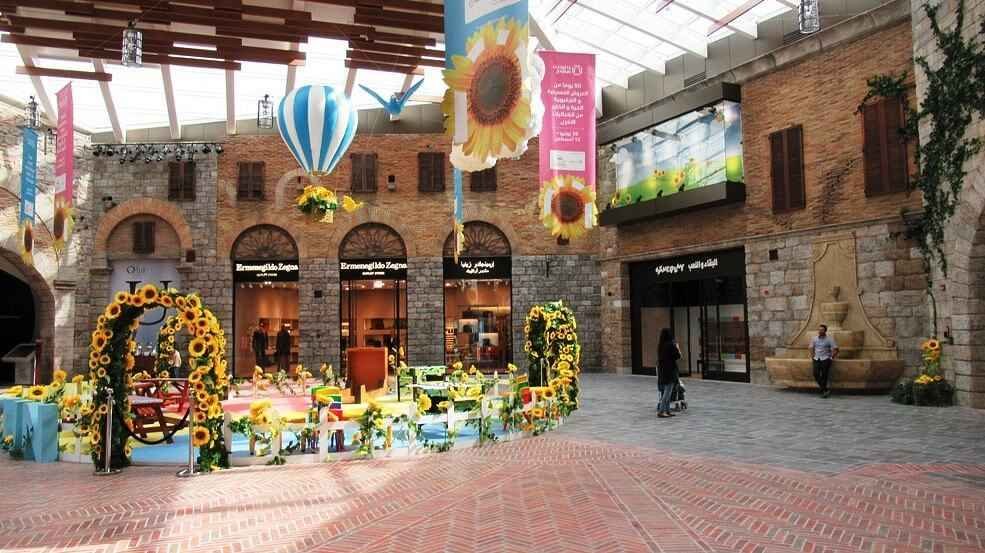
Dubai Outlet Mall operates on a large-format indoor mall model focused on discount retail across many product categories. Its layout follows a traditional enclosed mall structure with long corridors, clustered stores, and multi-brand outlets alongside single-brand factory stores. This structure supports long browsing sessions and comparison shopping across categories in a single trip.
The tenant mix typically includes sportswear, footwear, mid-range fashion, travel gear, accessories, and selected luxury labels in outlet format. Multi-brand clearance stores and sports chains increase product density, which benefits shoppers who are flexible about brand but strict about price. Inventory rotation tends to be broad, often including past-season collections, overstock items, and clearance lines.
Discount behavior here is usually more aggressive across a wider range of categories. This makes the mall particularly effective for shoppers buying for families, bulk apparel needs, travel preparation, or sports gear replacement. The environment is practical and efficiency-driven rather than experiential. Visitors often arrive with lists and leave with multiple-category purchases rather than single premium items.
Outlet Village: Premium Brand Focus and Experience-Oriented Layout
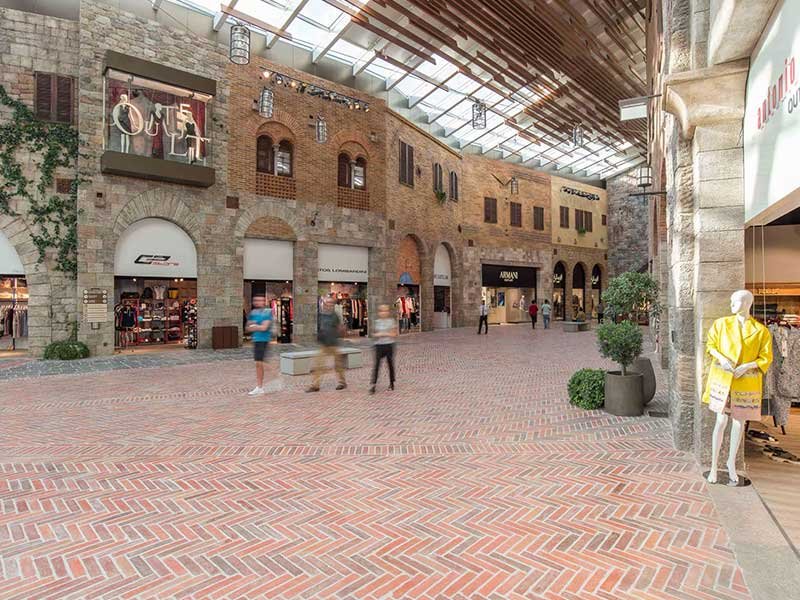
The Outlet Village follows a design-led retail concept built around a themed architectural environment inspired by European town styling. Instead of long enclosed corridors, the layout feels like a compact retail district with boutique-style storefronts and integrated café zones. This changes shopper behavior – visits tend to be slower, more selective, and more lifestyle-oriented.
Brand mix here is more concentrated around premium and designer labels. The selection is narrower than large-scale outlet malls but deeper in the luxury and upper-fashion segment. That means fewer total stores but higher average brand positioning. Shoppers often visit with brand intent – looking for a specific label or product type – rather than browsing across dozens of unrelated categories.
Discount ranges are still meaningful, but because the base price of designer brands is higher, perceived savings depend on product type. The environment supports shorter, more curated visits and pairs well with leisure-oriented day plans rather than purely functional shopping runs.
Recommended: Dubai Mall
Store Variety and Brand Positioning Differences
Store variety is one of the strongest decision factors when users search for dubai outlet mall vs outlet village. The difference is not only the number of stores but also the category spread and brand tier distribution.
Dubai Outlet Mall delivers wider category coverage. Shoppers can move from sportswear to luggage, from children’s clothing to footwear, and from accessories to home-related items within the same visit. Multi-brand discount stores amplify this breadth by aggregating inventory across labels.
Outlet Village delivers tighter brand positioning. The emphasis is on fashion-forward, designer, and premium lifestyle brands. Product categories are more fashion-centric, with fewer mass-market or utility-focused outlets. This makes it more suitable for shoppers targeting apparel, accessories, and gifts rather than full household or family restocking.
From a semantic retail perspective, one destination optimizes for breadth of attributes, while the other optimizes for brand tier consistency.
Recommended: Dubai Marina Mall
Pricing Logic and Discount Patterns
Both outlet destinations operate on the outlet pricing model, but discount patterns differ in depth distribution and frequency perception. Outlet pricing is typically derived from excess inventory, prior collections, and special production lines made for outlet channels.
Dubai Outlet Mall is widely associated with broader discount ranges across more stores at any given time. Because of the higher number of tenants and multi-brand outlets, the probability of finding extreme markdowns in at least some categories is higher. This supports bargain-hunting behavior where shoppers are willing to search across stores to find the best deal.
Outlet Village generally presents more stable but slightly narrower discount bands across premium brands. Savings remain significant relative to original retail pricing, but absolute ticket prices may still be higher due to brand positioning. Value perception here is brand-driven rather than purely percentage-driven.
Seasonal campaigns and citywide shopping festivals amplify discounts at both locations. During major retail events, the difference between them narrows as temporary promotions increase across the board.
Recommended: Mall of the Emirates
Shopping Environment and Visitor Experience
Shopping environment influences dwell time, fatigue level, and spending behavior. The two outlet destinations create different psychological shopping experiences.
Dubai Outlet Mall offers climate-controlled indoor continuity with predictable navigation. This is especially relevant during hotter months, when fully indoor retail environments support longer visits. The trade-off is higher perceived crowd density and a more functional visual experience.
Outlet Village offers a visually distinctive environment with open-style walkways and plaza-like spacing between stores. Even when climate-controlled, the design reduces visual congestion and encourages slower movement. Dining and café stops feel more integrated into the journey rather than separated in a food court cluster.
Shoppers sensitive to crowding, noise, and visual overload often prefer the village-style layout. Shoppers focused on efficiency and maximum store coverage often prefer the large enclosed mall format.
Location Context and Accessibility Planning
Location plays a practical role in outlet choice because both destinations sit outside central urban retail zones. Visits are usually planned rather than spontaneous.
Dubai Outlet Mall is positioned along the Dubai–Al Ain corridor in the inland development belt. It is more convenient for residents living in inland communities and academic or suburban residential clusters. Travel is typically car or taxi based, with bus connectivity available from major transport nodes.
Outlet Village is positioned in the Jebel Ali leisure corridor near major theme park attractions. This makes it easier to combine with entertainment visits and leisure trips. It is often included as part of a full-day outing rather than a standalone retail errand.
For property lifestyle planning, proximity to either outlet can influence weekend activity patterns but is rarely a primary residential decision factor. Still, it contributes to overall lifestyle convenience mapping.
Amenities, Services, and Shopper Support Features
Both destinations provide essential shopper services, but emphasis differs slightly in scope and positioning. Large outlet malls typically invest heavily in service infrastructure to support long visits and family shoppers.
Dubai Outlet Mall generally provides extensive support services such as valet options, customer desks, stroller access, prayer rooms, rest areas, and multiple shopper assistance functions. This aligns with its role as a long-duration, high-footfall retail hub.
Outlet Village provides core amenities including parking, accessibility support, shopper information, and family-friendly facilities, but with more emphasis on convenience than scale. Services are sufficient for planned visits but less infrastructure-heavy than mega-format malls.
Gift voucher programs and short-term discount cards are more strongly associated with the larger outlet mall format, supporting repeat visits and gifting use cases.
Dining and Break Patterns During Outlet Shopping
Dining patterns influence how long shoppers stay and how they structure their visit. Outlet retail is rarely just about buying – it is also about pacing and recovery between store visits.
Dubai Outlet Mall typically uses the mall food court model plus scattered cafés. This supports fast breaks and group dining during extended shopping sessions. The focus is functional variety rather than culinary experience.
Outlet Village integrates cafés and restaurants more closely with the retail layout. Dining becomes part of the atmosphere rather than a separate zone. This supports slower visits and social shopping trips where conversation and breaks are built into the plan.
Shoppers combining retail with social time or photography tend to value this integrated dining layout more highly.
Which Outlet Works Better for Different Shopper Profiles?
Shopper intent determines which outlet performs better in practice. Decision logic should be based on purchase goals, time availability, and brand priority.
Dubai Outlet Mall is generally better suited for shoppers who want maximum category coverage, deeper bargain probability, and family-focused purchasing in one trip. It aligns with bulk buying, sportswear replacement, travel preparation, and mixed-brand comparison.
Outlet Village is generally better suited for shoppers focused on premium fashion, gift buying, designer labels, and atmosphere-driven visits. It aligns with targeted brand shopping and leisure-oriented outings.
Many experienced shoppers alternate between both depending on the purchase mission rather than treating them as competitors with a single winner.
FAQs
Are outlet stores really cheaper than regular malls?
Outlet stores usually offer lower prices because they sell past-season goods, excess inventory, or outlet-specific production lines. Discounts vary by brand and timing, but savings are structurally built into the model.
Which outlet is faster to cover in one visit?
Outlet Village is typically faster to cover due to smaller scale and fewer stores. Dubai Outlet Mall requires more time for full exploration.
Which outlet is better in hot weather?
Fully enclosed mall environments generally feel more consistent during extreme heat, which favors Dubai Outlet Mall’s format.
Do both outlets work for tourists and residents?
Yes. Tourists often combine Outlet Village with nearby leisure attractions, while residents often use Dubai Outlet Mall for planned bargain trips.
Conclusion
The real decision in dubai outlet mall vs outlet village is not about which is universally better – it is about which is better for your shopping objective. One delivers scale, density, and cross-category bargain potential. The other delivers designer focus, curated retail, and a more atmospheric experience. Both fulfill the outlet promise of discounted branded goods, but through different retail models.

Leave a Reply