
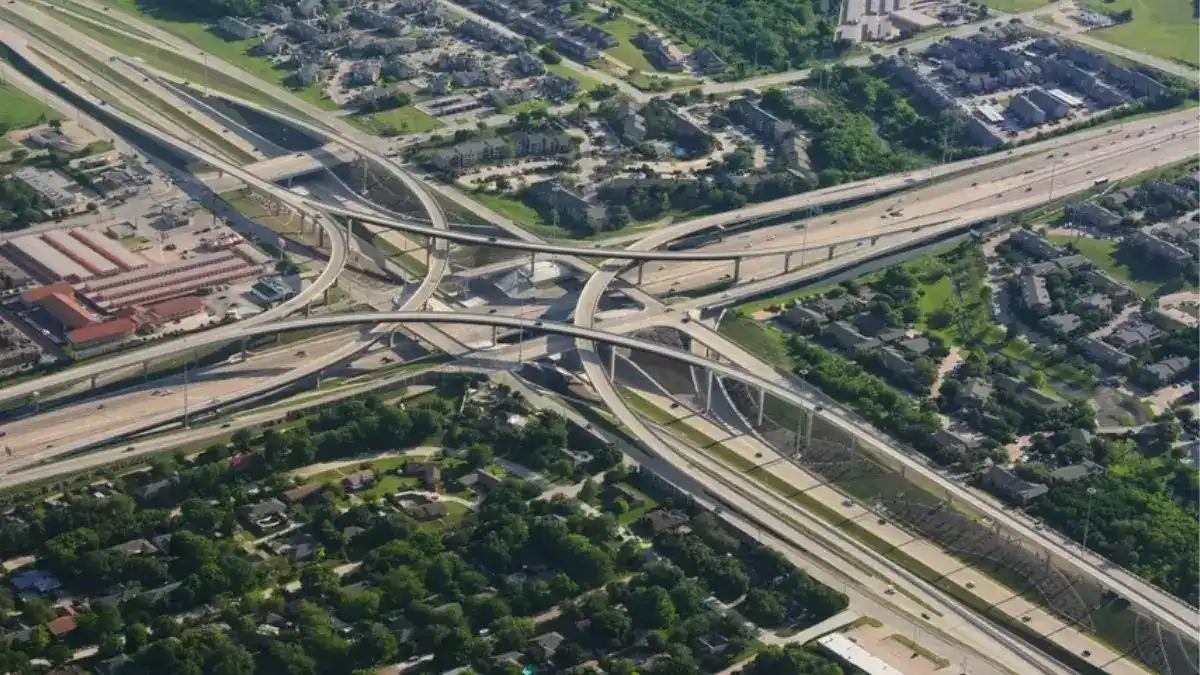

Ras Al Khor Road (E44) is one of Dubai’s oldest and busiest arterial routes, running between Al Rebat Street near Downtown Dubai and Nad Al Hamar, where it meets Sheikh Mohammed Bin Zayed Road (E311). Far more than a stretch of tarmac, it forms the connective spine for a cluster of communities that have quietly become some of the most talked-about property destinations in the city – from the industrial workshops and wholesale markets of old Ras Al Khor to the golf-course towers of Sobha One and the master-planned district of Meydan.
If you are researching where Ras Al Khor Road actually goes, which neighbourhoods sit along it, or whether property here makes sense for you, this guide covers the location, connectivity, lifestyle, and real estate picture as it stands in 2026.
Where Is Ras Al Khor Road Located?
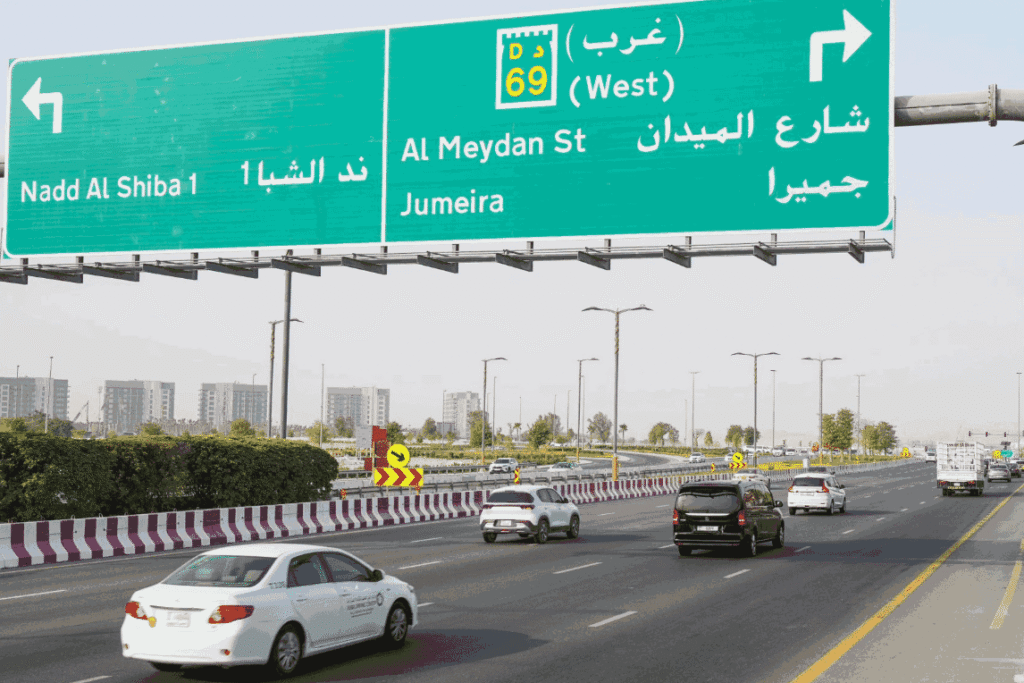
Ras Al Khor Road sits in the eastern part of Dubai, hugging the southern bank of Dubai Creek as it curves inland. The road takes its name from the surrounding Ras Al Khor district – Arabic for “Cape of the Creek” – a reference to the point of land where the creek widens into the tidal flats now protected as the Ras Al Khor Wildlife Sanctuary.
The corridor links two very different worlds. To the north and west, it feeds into Sheikh Rashid Road and Al Rebat Street, putting Downtown Dubai, Business Bay, and Dubai Creek Harbour within a short drive. To the south and east, it connects to Sheikh Mohammed Bin Zayed Road, opening up access to Nad Al Sheba, Al Aweer, Al Warqa, and eventually Dubai Investments Park and the wider emirate. This dual character – old-Dubai industry on one side, new-Dubai master planning on the other – is what defines the entire Ras Al Khor Road corridor.
Connectivity: Why Ras Al Khor Road Matters for Commuters
Ras Al Khor Road is a designated truck and freight route as well as a commuter artery, which explains why it carries such heavy daily traffic between Dubai’s ports, industrial zones, and residential communities. For residents and investors, though, the appeal lies in the travel-time math:
- Downtown Dubai and Burj Khalifa – roughly 12 to 15 minutes via Al Khail Road or Ras Al Khor Road itself.
- Business Bay – around 12 to 15 minutes.
- Dubai International Airport (DXB) – approximately 10 to 15 minutes, making the corridor genuinely convenient for frequent flyers.
- Dubai Festival City and Al Garhoud – 10 to 12 minutes north along the creek.
- DIFC – roughly 20 minutes.
The road also intersects with Al Khail Road, one of Dubai’s principal north–south highways, giving residents fast access to Al Quoz, Al Barsha, and Dubai Marina without needing to enter Sheikh Zayed Road traffic. For anyone weighing up a home or investment near Ras Al Khor Road, this central, multi-directional connectivity is consistently the single biggest draw.
Communities and Neighbourhoods Along Ras Al Khor Road
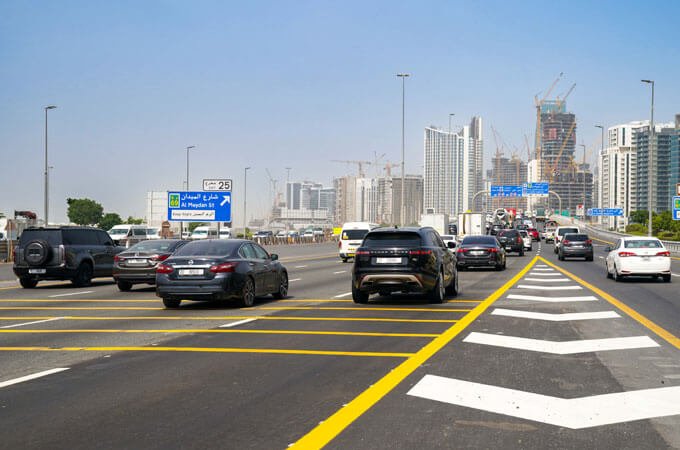
“Ras Al Khor” is not one uniform neighbourhood – it is a corridor made up of several distinct pockets, each with its own character and property profile.
Ras Al Khor Industrial Area
The original heart of the district, home to Dubai’s Auto Market, wholesale fruit and vegetable souks, and a dense concentration of workshops, warehouses, and labour accommodation. Increasingly, this zone is also where large-scale residential towers are being layered in, most notably Sobha One and Amaal 8, bringing a wave of new apartment stock to what was historically a commercial and industrial pocket.
Nad Al Sheba
Bordering Ras Al Khor Road to the south, Nad Al Sheba is a well-established, family-oriented community known for villa compounds, the Meydan Racecourse, and quick access to both Ras Al Khor Road and Al Ain Road. It offers a quieter, more suburban alternative for buyers who still want proximity to the corridor.
Meydan and Mohammed Bin Rashid City (MBR City)
Immediately adjacent to the northern stretch of Ras Al Khor Road, Meydan and the wider MBR City masterplan host some of Dubai’s most prominent recent developments, including Sobha Hartland, Meydan One, and Meydan Racecourse itself. Many new Ras Al Khor–area launches, including Sobha One, are technically positioned within this MBR City umbrella while marketing themselves around their Ras Al Khor Road address and Creek-facing views.
Al Aweer and Al Warqa
Further southeast along the corridor, Al Aweer is known for its central fruit and vegetable market and logistics facilities, while Al Warqa offers established villa communities that use Ras Al Khor Road as a direct route into the city centre.
Dubai Creek Harbour and Dubai Festival City (Nearby)
Although technically separate communities, both sit within a short drive of Ras Al Khor Road via the creek-side routes, and both frequently appear alongside Ras Al Khor in property searches because of their shared waterfront identity and comparable connectivity profile.
Ras Al Khor Wildlife Sanctuary: The Corridor’s Defining Landmark
No guide to this area is complete without the Ras Al Khor Wildlife Sanctuary, a 6.2-square-kilometre protected wetland that runs directly alongside the road. It is one of the few urban wildlife reserves in the world sitting this close to a major highway and skyline, and it draws birdwatchers, photographers, and families year-round to observe flamingos, herons, and migratory species from the Flamingo Hide and Mangrove Hide.
For residents of nearby towers such as Sobha One, the sanctuary is not just a weekend outing – it is the view from the balcony. Developers along Ras Al Khor Road increasingly market “sanctuary-facing” or “wetland-facing” units as a premium feature, similar to how sea-view or golf-view units command a premium elsewhere in Dubai.
Getting Around: Metro, Bus, and Road Access
Ras Al Khor does not have a metro station within its own boundaries, so most residents rely on private cars, taxis, or ride-hailing. The nearest Dubai Metro stations are Creek Metro Station, roughly a 10-minute drive away, and Dubai Healthcare City Metro Station, around 20 minutes away, with Al Jaddaf station also within reasonable reach.
Public buses do serve the corridor, with routes such as 55, 61, 63E, and X23 stopping near the Ras Al Khor Industrial Area and connecting through to Deira and Dubai Festival City. The Roads and Transport Authority has also added pedestrian bridges and cycling crossings along Ras Al Khor Road, linking cycle tracks from Mushrif, Al Khawaneej, and Al Warqa through to International City, part of a broader push to make the corridor more accessible beyond private vehicles. For most households, though, this remains a car-first area, and that is an important practical consideration for anyone relocating here.
Lifestyle, Schools, Healthcare, and Everyday Amenities
Despite its industrial reputation, day-to-day life around Ras Al Khor Road is more comfortable than many expect, largely because it borders established, amenity-rich neighbourhoods.
Schools: Families have access to a mix of nearby options including Al Mizhar American Academy, Al Warqa’a Primary School, and international schools within Sobha Hartland and Meydan, several of which are a 10-minute drive from the Ras Al Khor corridor.
Healthcare: Aster Medical Clinic is one of the closest facilities, reachable via Ras Al Khor Road in around 10 minutes, while Dubai Healthcare City – with a wider range of hospitals and specialist clinics – is roughly 20 minutes away. Berlin Hospital, Clemenceau Medical Center, and Prime Hospital also sit within a reasonable driving radius.
Shopping and dining: Dubai Festival City Mall is one of the more significant retail destinations nearby, offering a full mix of retail, dining, and entertainment. Locally, the area is well known for its wholesale fruit and vegetable souks and the Ras Al Khor Auto Market, giving the district a distinctly working character alongside its residential pockets.
Recreation: Beyond the wildlife sanctuary, residents can access the Dubai Creek Golf & Yacht Club for golf and marina facilities, along with the 18-hole golf course integrated into the Sobha One masterplan itself.
Places of worship: The area is reasonably well served, with the Nad Al Sheba Mosque a common reference point, and a Gurudwara available in the Al Aweer area for the Sikh community, alongside temples in nearby Al Warqa for Hindu residents.
Overall, the corridor suits people who value quiet, functional living with quick highway access over a dense, walkable, retail-heavy lifestyle. It is a practical base rather than a lifestyle-first address, though that is changing as new residential towers bring more on-site amenities directly into the mix.
Property Types Along Ras Al Khor Road
Property along the corridor falls into three broad categories:
Established rental apartments, largely concentrated in the Ras Al Khor Industrial Area, typically mid-rise buildings offering one to three-bedroom units with amenities such as covered parking, swimming pools, gyms, and 24-hour security. These tend to attract long-term tenants who prioritise value and connectivity over branded luxury.
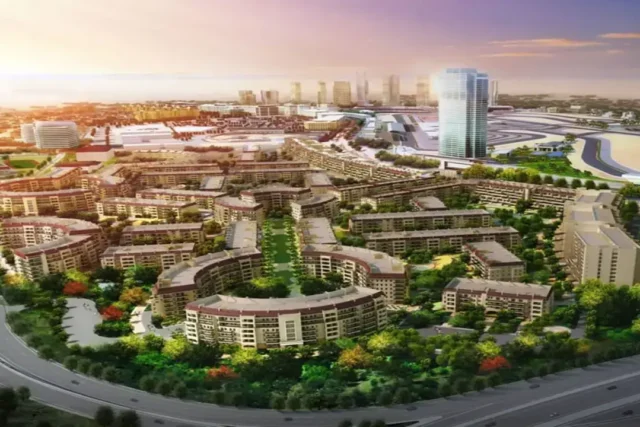
New-build, developer-led towers, led by Sobha Realty’s Sobha One – a five-tower, 2,700-unit mixed-use development built around an 18-hole golf course, positioned between Downtown Dubai and Dubai Creek Harbour with views over both the skyline and the wildlife sanctuary. Nearby, Amaal 8 is another active off-plan launch offering one to four-bedroom apartments in the same stretch of Ras Al Khor. These projects represent the corridor’s shift from a purely industrial identity toward a genuine residential and investment destination.
Industrial and commercial plots, which remain a core part of the local economy, including warehouses, workshops, and labour accommodation clustered around the Auto Market and wholesale markets. Investors specifically interested in logistics or light-industrial assets continue to find opportunity here given the road’s role as a freight corridor.
Villas and townhouses are limited within Ras Al Khor itself but become widely available just across the road in Nad Al Sheba and Al Warqa, making the corridor a practical dividing line between Dubai’s apartment-led and villa-led markets.
Ras Al Khor Property Prices: Rent and Sale Trends
Based on current market listings and recent transaction data, here is a general picture of pricing along the Ras Al Khor corridor. These figures move with the market, so always confirm current numbers with a licensed agent before making a decision.
Rental apartments: Two-bedroom units in the established Ras Al Khor buildings average around AED 85,000 per year, with three-bedroom units in developments such as Wasl Green Park typically ranging from roughly AED 78,000 to over AED 110,000 per year depending on size, finish, and building age.
Apartments for sale: Listed asking prices across the area currently range from approximately AED 1.4 million to just under AED 4 million, with recent average asking prices sitting around AED 2.1 million. Actual recorded transaction data from the Dubai Land Department shows average sale prices closer to AED 1.66 million, reflecting the gap that often exists between listing prices and closed deals.
Off-plan pricing: Sobha One launched with prices from roughly AED 1.68 million to over AED 4 million depending on unit size and configuration, with per-square-foot pricing in the newer towers averaging above AED 2,200. Amaal 8 has launched at a comparatively accessible entry point, with one-bedroom units starting from around AED 1.3 million.
Rental yields: Reported gross returns in Ras Al Khor sit in the region of 3% based on recent Bayut market data, though yields on newer, amenity-rich towers with waterfront or sanctuary views are generally expected to trend higher once fully leased, in line with comparable new-build stock elsewhere in Dubai’s creek-side communities.
Investment Potential: Why Buyers Are Watching This Corridor
Ras Al Khor Road’s investment case rests on a few converging factors rather than any single headline draw.
First, the location itself is becoming scarcer as land closer to Downtown and Business Bay is built out – Ras Al Khor represents one of the last significant creek-adjacent development corridors with direct highway access to the city centre. Second, the entry of major master developers like Sobha Realty signals a long-term repositioning of the area, similar to how Business Bay and Al Jaddaf transitioned from transitional zones into established residential markets over the past decade. Third, the combination of the wildlife sanctuary, Dubai Creek, and skyline views gives new developments a differentiated selling point that purely inland communities cannot replicate.
That said, this remains a corridor in transition. Parts of it are still active industrial land, and buyers should weigh the trade-off between earlier, lower entry prices in an evolving area against the more established, higher-priced but lower-uncertainty stock in neighbouring Dubai Creek Harbour or Downtown Dubai. Off-plan buyers in particular should factor in construction timelines – Sobha One, for example, has a phased handover extending toward the end of 2026 – alongside the payment plan structure before committing.
Who Should Consider Buying or Renting Near Ras Al Khor Road
This corridor tends to suit a specific set of priorities rather than being a universal fit. It works well for professionals and families who want fast, multi-directional highway access to Downtown, Business Bay, and the airport without paying Downtown or Business Bay prices. It also appeals to nature-minded residents drawn to the wildlife sanctuary and Creek views, and to investors looking at early-stage pricing in a corridor undergoing visible transformation.
It is a less natural fit for anyone who relies heavily on the metro for daily commuting, or for buyers who want a fully built-out, retail-dense neighbourhood feel from day one – parts of the area are still industrial in character, and that will take time to fully evolve.
FAQs
Where does Ras Al Khor Road start and end?
Ras Al Khor Road (E44) runs from the Al Rebat Street area near Downtown Dubai, along the southern edge of Dubai Creek, through to its intersection with Sheikh Mohammed Bin Zayed Road (E311) near Nad Al Hamar.
Is Ras Al Khor a good place to live?
It suits residents who prioritise fast highway access and proximity to nature over metro connectivity or a dense retail scene. Newer developments like Sobha One are shifting the area toward a more rounded, amenity-led lifestyle, while the older industrial pockets remain more functional than residential in feel.
Does Ras Al Khor have a metro station?
No, there is no metro station within Ras Al Khor itself. The nearest options are Creek Metro Station, about 10 minutes away by car, and Dubai Healthcare City Metro Station, around 20 minutes away.
How far is Ras Al Khor Road from Downtown Dubai?
Roughly 12 to 15 minutes by car via Al Khail Road or Ras Al Khor Road, depending on traffic and the specific starting point along the corridor.
What is the Ras Al Khor Wildlife Sanctuary?
It is a protected 6.2-square-kilometre wetland reserve along Dubai Creek, home to flamingos, herons, and migratory birds, with public viewing hides open to visitors and residents.
What types of properties are available near Ras Al Khor Road?
The mix includes established mid-rise rental apartments, new-build towers such as Sobha One and Amaal 8, and industrial or commercial plots and warehouses, with villas and townhouses more available in neighbouring Nad Al Sheba and Al Warqa.
What is the average rent for an apartment in Ras Al Khor?
Two-bedroom apartments currently average around AED 85,000 per year, while three-bedroom units in established buildings typically range from roughly AED 78,000 to over AED 110,000 annually.
What is the average price to buy an apartment in Ras Al Khor?
Listed asking prices generally range from about AED 1.4 million to close to AED 4 million, with recorded Dubai Land Department transactions averaging closer to AED 1.66 million.
Is Sobha One located in Ras Al Khor?
Yes. Sobha One is positioned along Ras Al Khor Road within the wider MBR City and Sobha Hartland masterplan, offering views over the wildlife sanctuary, Dubai Creek, and the Downtown skyline.
What is the rental yield in Ras Al Khor?
Recent market data points to gross yields in the region of 3%, though newer waterfront and sanctuary-facing developments are generally expected to perform closer to the higher end of Dubai’s creek-side communities once fully occupied.
Is Ras Al Khor close to Dubai International Airport?
Yes, most points along the corridor are approximately 10 to 15 minutes from Dubai International Airport (DXB) by car.
What schools are near Ras Al Khor Road?
Nearby options include Al Mizhar American Academy, Al Warqa’a Primary School, and several international schools within Sobha Hartland and Meydan, most within a 10-minute drive.
Is Ras Al Khor an industrial or residential area?
Both. It has historically functioned as one of Dubai’s key industrial and wholesale trading zones, and it is now layering in significant residential development, particularly around its Creek-facing and MBR City-adjacent stretches.
What is the best way to travel around Ras Al Khor?
Private car, taxi, or ride-hailing services are the most practical options, since the area is not directly served by the metro. Several bus routes also connect the district to Deira and Dubai Festival City.
Is now a good time to invest in property near Ras Al Khor Road?
The corridor is in an active transition phase, with major developers entering the market and prices still comparatively accessible next to Downtown and Dubai Creek Harbour. As with any transitional area, buyers should weigh earlier pricing against the longer timeline for the surrounding infrastructure and amenities to fully mature, and should speak with a specialist to assess current opportunities against their own goals.
This guide reflects market information available as of 2026. Property prices, rental values, and project timelines change regularly — for the latest listings, off-plan availability, and personalised investment advice on Ras Al Khor Road and surrounding communities, connect with the DubaiPropertyPlus.com team.

Leave a Reply