
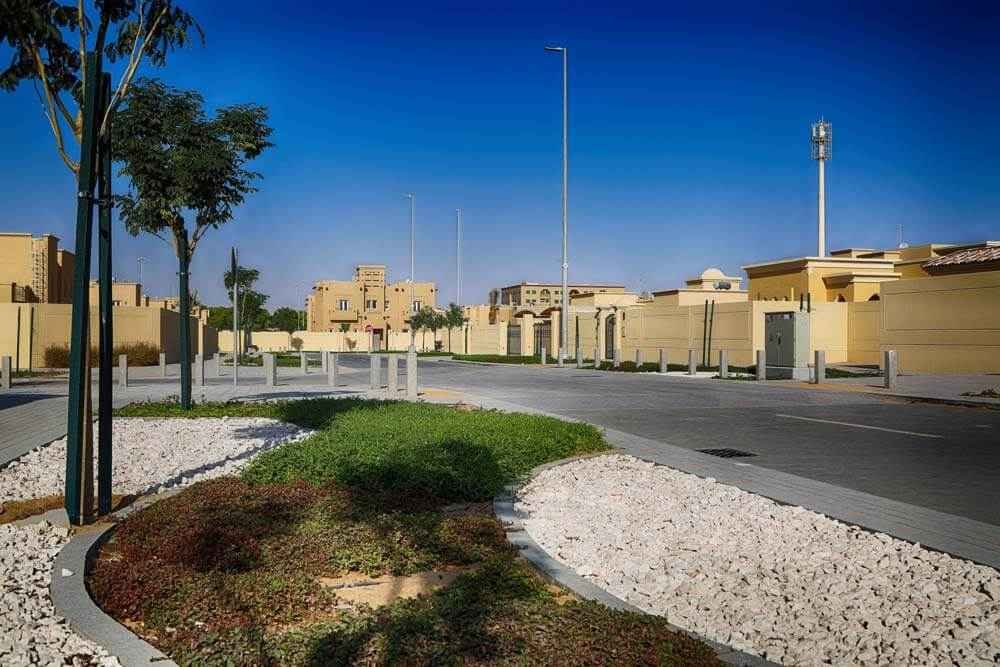

Baniyas East is a residential suburb south-east of Abu Dhabi island, on the Abu Dhabi–Al Ain Road (E22). It was developed by Baniyas Investment & Development Company (BIDC) and is known for large standalone villas, older low-rise apartment buildings, and Bawabat Al Sharq Mall as its retail anchor. Rents are well below island levels, daily needs are close by, and the trade-off is a car-dependent lifestyle and a long commute at peak hours. One rule matters more than any price: Baniyas East is generally not an area where non-GCC foreigners can buy freehold, so check eligibility before you fall in love with a listing.
What is Baniyas East?
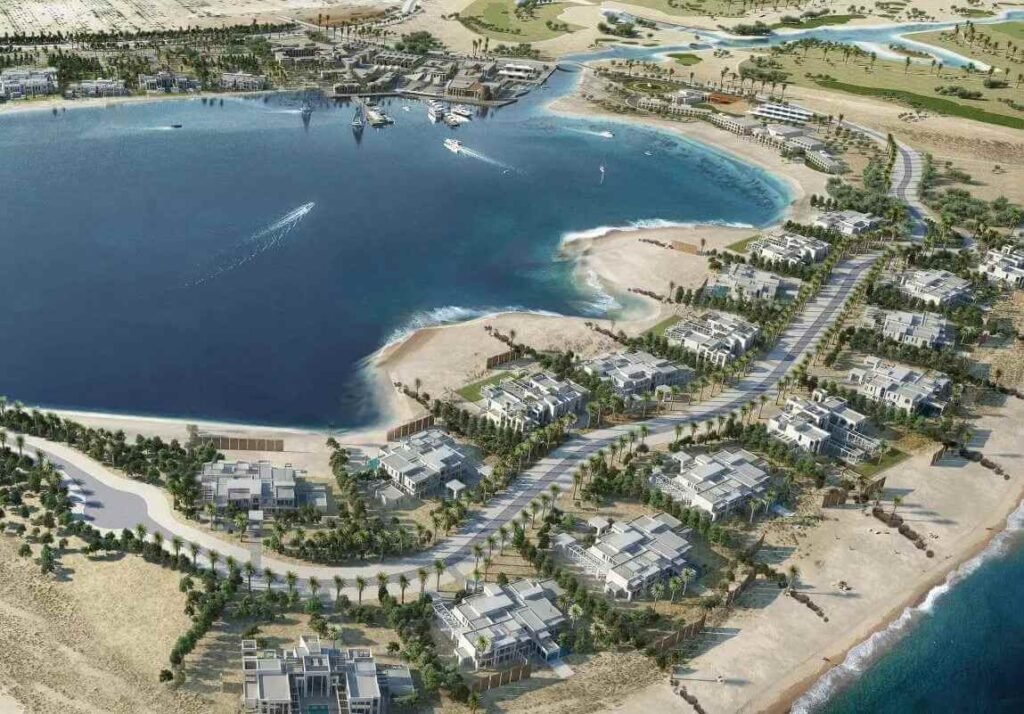
Baniyas East is one of the two long-established halves of Baniyas, alongside Baniyas West, with Baniyas North still developing further out. The district was master-planned by BIDC, a company founded in 2005 and majority-owned by the Baniyas Sports and Cultural Club, which explains why the club, its lake and its stadium are part of the local identity.
The community sits among Al Wathba, Al Shamkha, Shakhbout City, Mohammed Bin Zayed City, Al Mafraq and Al Shawamekh. Its centre of gravity is Bawabat Al Sharq, a master-planned development of roughly 108 hectares that combines homes, retail, entertainment and a football stadium.
Where is Baniyas East, and how far is it from the city?
Baniyas East lies along the Abu Dhabi–Al Ain Road, about 25 to 35 km from the Abu Dhabi island depending on where you start counting. Portals quote anything from 25 km to 42 km, because some measure from the Corniche and others from the city’s edge. Off-peak, expect roughly 30 minutes by car to the centre. Zayed International Airport, formerly Abu Dhabi International, is around 20 minutes away, which is one of the suburb’s quiet advantages for frequent flyers and airline or airport staff.
Baniyas East versus Baniyas West
The two halves feel different. Baniyas East is the denser and more mixed half, with apartment buildings, clusters of shops and the mall. Baniyas West leans more heavily toward independent villas. If you want to walk to a coop and a bakery, East is easier. If you want a quieter street and a bigger yard, West often is.
What is it like to live in Baniyas East?
Life here is calm, family-oriented and built around the car. The streets are mostly low-rise, with villas on generous plots, mosques on many corners, and a local souq and cooperative society within a short drive. Residents are a mix of Emirati families and long-term expatriates, with a strong South Asian community drawn partly by the Indian-curriculum school in the area.
It is not a nightlife suburb. Fine dining, cinemas outside the mall and a wide café scene are limited here, and the property portals’ own guides say the same. What you get instead is space, lower rent and a slower pace.
Shopping, food and daily errands
Bawabat Al Sharq Mall is the main retail stop. It has a Carrefour hypermarket, a cinema, a food court and restaurants, and family entertainment spaces, and it has become the weekend default for the area. For smaller errands, Sarab Mall (also called Sarab Community Market) at the junction of Al Muwaiji Street and Beirut Street has a Baniyas Cooperative Society supermarket, fast-food outlets and a local restaurant, Sofra Baniyas. LuLu Hypermarket in Baniyas and Royal Gulf Hypermarket serve day-to-day grocery shopping, and small baqalas fill the gaps between them.
Parks, sport and outdoors
The Baniyas Sports and Cultural Club runs football and other sports facilities, and the area guides list Baniyas Lake and Baniyas East Park as local green spaces. Baniyas East has no beach. Yas and the city beaches are a 30 to 45 minute drive, so treat beach days as a planned outing rather than a spontaneous one. For a different kind of outdoors, Al Wathba Wetland Reserve is a short drive away in the direction of Al Wathba.
Schools, nurseries and healthcare
Families are well served for a suburb of this price level. Global Indian International School follows a GMP curriculum in the early years and CBSE from Grade 1, which is rare in this part of Abu Dhabi. Reach British School is described by Bayut as one of the area’s leading IB schools, and Future Leaders International Private School prepares students against national and international standards. Al Ekhlass Private School and Al Wathba School also appear along local bus stops, and there are nurseries such as IQ Kids Nursery.
For healthcare, the suburb has clinics and neighbourhood health centres. For hospital care and emergencies, residents generally drive into other parts of the capital. Before signing a lease, confirm the nearest emergency department and check that it sits within your insurance network. For higher education, universities in Mussafah and elsewhere in the capital are reachable by car.
Getting around: roads, buses and commuting
The Abu Dhabi–Al Ain Road is Baniyas East’s lifeline. From it you can reach Mussafah, Khalifa City, Shakhbout City, Mohammed Bin Zayed City and the airport without touching the island. The downside is congestion. Both Bayut and Property Finder point out that peak-hour traffic builds up around Baniyas Bridge and Shakhbout City, so a 30-minute drive can become 50 minutes or more at rush hour.
Public transport is bus-based. Abu Dhabi has no metro, so residents rely on services run by Abu Dhabi Mobility (formerly the Integrated Transport Centre) and paid with a Hafilat card. Routes that serve the area include:
- B45, a local service between Al Wathba and Bawabat Al Sharq Mall North.
- 447, which links Baniyas East and Bawabat Al Sharq Mall with Al Wathba.
- 401, a regional route connecting the capital with Baniyas Souq.
- B43, a midi bus that also reaches Bawabat Al Sharq Mall North.
Bus numbers and stops have been reshuffled several times, and different sites list different numbers, so check Abu Dhabi Mobility’s live map or the Darb app before you commit to a bus-based commute. In practice, a car is the realistic choice for most households.
Homes in Baniyas East: what you can actually rent or buy
The housing stock is villa-led, older and more varied than the photos on a typical listing suggest. The building was done in phases by BIDC and private owners, so finishes range from tired to freshly renovated within a single street.
Villas and bungalows
Independent villas range from three to as many as ten bedrooms, often with a majlis, maid’s room, driver’s room and a private yard. Many are two-storey properties on plots of 4,000 to 10,000 square feet or more. A number of older bungalows have been subdivided into several apartments, and some owners advertise a villa as “commercial/residential” along the main road.
Apartments
Apartment supply is smaller and concentrated near Bawabat Al Sharq and the older low-rise blocks. Studios, one-, two- and three-bedroom units are available, mostly in buildings of a few floors with ground-floor units in demand among families.
The informal monthly-rental market
Look at rental classifieds for Baniyas East and you will see a large volume of “monthly” studios and one-bedroom units, typically AED 1,700 to 3,800 a month, carved out of villas. These are cheap and flexible, and popular with couples and small families working in Mussafah. They also carry more risk. Ask whether the unit is covered by a registered Tawtheeq contract, confirm who owns the villa, and never pay a deposit before seeing the paperwork.
Commercial, plots and off-plan
Commercial space is mainly retail within Bawabat Al Sharq and shopfronts on the main roads, and there is no dedicated office district. Plots do appear for sale, for example a 3,875 sq ft plot listed at AED 3.25 million, but land purchase is governed by the same ownership rules described below. In our research we found almost no off-plan supply in Baniyas East. Most stock is ready and resale.
Rents in Baniyas East (2026)
Rents in older guides, such as studios at AED 25,000 or one-bedrooms at AED 30,000 a year, are stale. Recent asking figures on the portals look like this:
| Property | Typical asking rent (annual) | Notes |
|---|---|---|
| Studio (about 550 sq ft), Bawabat Al Sharq | About AED 56,000 | Modern building |
| 1-bedroom apartment | About AED 38,000–40,000 | Older buildings, often near LuLu |
| 2-bedroom apartment | About AED 75,000 | Ground-floor example, negotiable |
| 3-bedroom villa | About AED 125,000–170,000 | Wide range by size and condition |
| 4-bedroom villa | About AED 165,000–170,000 | Some gated, vacant now |
| 6-bedroom standalone villa | About AED 200,000 | Driver’s room, large plot |
These are asking prices from a handful of listings in mid-2026, not transaction data, so treat them as a guide and check them against Tawtheeq-registered comparables when negotiating. One or two extreme outliers, such as an AED 800,000 commercial-residential villa on the main road, distort averages on some portal pages, which is why medians on different sites disagree.
The June 2026 rent freeze
On 2 June 2026, the Abu Dhabi Real Estate Centre (ADREC) announced a temporary freeze on rent increases across the emirate, cutting the annual increase allowed from 5% to 0% until further notice. It covers residential, commercial and industrial properties, with ADGM communities excluded. In practice, renewals must be agreed at the rent shown in the last registered Tawtheeq contract. The freeze is not retroactive, so a higher rent registered before 2 June still stands, and no end date has been announced.
For tenants in Baniyas East this means renewal certainty. For landlords, it caps income growth on existing tenancies, though it does not stop a landlord from setting a new rent when a fresh tenant moves in on a re-let, subject to ADREC’s guidance on the reference rent.
Registering your lease
Every tenancy should be registered through Tawtheeq, Abu Dhabi’s official system, which is accessed through TAMM or an approved service point. Registration is generally handled by the landlord or the agent, but you should insist on seeing the Tawtheeq certificate, because it is needed for utilities, visa support and any dispute. Some Emirati-focused listings mention that registered contracts qualify for government-sector housing allowances, so ask if that matters to you.
Property prices and who can buy
Sale prices
Villas are the main product. Recent asking prices for four-bedroom villas cluster between about AED 3.4 million and AED 4.0 million, with premium or larger-plot examples at AED 5 million and above, and some very large plots tagged to Shakhbout City listed at AED 6 million to 10 million. Portal price-per-square-foot data ranges from roughly AED 470 to AED 890 for villas, depending on whether the figure uses built-up area or plot size. Apartments are listed from about AED 650,000 to AED 1.7 million, at roughly AED 670 to 850 per square foot. Because portal medians differ by data set, use a range rather than a single number, and always ask for the transaction history of comparable units.
A tip on listing tags: some portals label homes in nearby Shakhbout City as “Baniyas East”. Check the exact plot and community name before you compare prices.
Can foreigners buy in Baniyas East?
This is the question most guides skip. Under Abu Dhabi’s 2019 reform, non-GCC foreigners can hold freehold title only in designated investment zones. The published lists of those zones include places such as Yas Island, Saadiyat Island, Al Reem Island, Al Reef, Al Ghadeer and Al Shamkha, and Baniyas East does not appear on the lists I found. Several Baniyas East listings state outright that purchase is for UAE nationals only. Some guides mention long-term usufruct or musataha rights in non-designated areas, but they are not a substitute for freehold.
So the practical position is this: UAE and GCC nationals can generally buy here, and expatriate buyers should not assume they can. Confirm the plot’s status with ADREC or a licensed broker before paying any deposit, since designations can change and one source lists Baniyas among affordable investment options. If you are an expat who wants Abu Dhabi ownership at a similar price level, Al Shamkha and Al Reef are the obvious places to compare.
Is it a good investment?
The honest answer is that Baniyas East is an income-and-stability play, not a capital-growth story. Asking rents of AED 165,000 to 170,000 against asking prices of AED 3.6 to 3.9 million for four-bedroom villas imply a gross yield of roughly 4% to 5%. A one-bedroom rented at AED 40,000 against a similar unit sold at AED 780,000 works out at just over 5%. These are asking-to-asking figures before vacancy, maintenance and fees, so your net return will be lower. Some villas are advertised without service charges, which helps.
Two things support demand: the low entry cost compared with the city, and the steady base of families tied to Mussafah, the airport and local schools. Two things limit it: the ownership restriction, which narrows the buyer pool, and the rent freeze, which stops rents rising on existing leases for now.
Pros and cons of living in Baniyas East
What works well: lower rents and larger homes than the island or newer suburbs, a self-contained neighbourhood with a mall, coops and schools, quick access to the airport and Mussafah, and a quiet, family-oriented setting. Abu Dhabi as a whole is regarded as very safe, and property portals describe Baniyas East as one of the safer neighbourhoods.
What to weigh: you need a car, peak-hour traffic on the E22 and around Baniyas Bridge, few premium restaurants and entertainment options, no beach, patchy building quality in older stock, and ownership limits for expats.
Who is Baniyas East best suited to?
It suits Emirati and long-term expatriate families who want space and a school nearby, Indian-curriculum families who value Global Indian International School, staff working in Mussafah or at the airport, and landlords or buyers who qualify under the ownership rules and want steady rental income. It suits singles who want nightlife or a walkable urban lifestyle much less well. Walkability is low outside the mall and souq pockets, and while villa districts have room for pets, pet permission is a landlord decision, not a community rule.
Baniyas East compared with nearby areas
Al Shamkha is newer, sits inside an investment zone, and lets foreigners buy freehold, which is the main reason to compare it. Mussafah is closer to the industrial area and workplaces but less residential in feel. Khalifa City is more polished and better connected but costs more. Baniyas East wins on price and space, and loses on ownership flexibility and polish.
What is next for the area?
Baniyas North is still developing, and the wider Bawabat Al Sharq masterplan continues to anchor retail and leisure growth. Beyond that, I would treat any claim about specific future projects in Baniyas East with caution unless it is backed by a BIDC or ADREC announcement.
How to rent or buy in Baniyas East: a practical order of play
Start by deciding whether you are eligible to buy. If you are renting, view at least three homes across different streets, because quality varies more than price. Ask for the Tawtheeq certificate and the last registered rent, and use the rent freeze to hold your renewal at the current figure. If you are buying, confirm ownership eligibility with ADREC first, check the title and plot area, and compare against recent transactions rather than asking prices. For a longer discussion, see our guides to renting and buying in Abu Dhabi.
FAQs
Is Baniyas East a good place to live?
Yes, for families and workers who value space, lower rent and a quiet setting. It is less suited to people who want nightlife, a beach nearby or a walkable urban core.
Where is Baniyas East located?
It is in south-east Abu Dhabi along the Abu Dhabi–Al Ain Road (E22), next to Al Wathba, Al Shamkha, Shakhbout City and Baniyas West.
How far is Baniyas East from Abu Dhabi city and the airport?
Roughly 25 to 35 km from the island, about 30 minutes off-peak, and about 20 minutes to Zayed International Airport.
How much does it cost to rent a villa in Baniyas East?
Asking rents in mid-2026 range from about AED 125,000 to 170,000 for a three-bedroom and about AED 165,000 to 170,000 for a four-bedroom villa, with larger villas going up to around AED 200,000.
How much does an apartment cost to rent?
Studios start at around AED 56,000 in newer buildings, and one-bedrooms in older buildings are around AED 38,000 to 40,000 a year.
Can my landlord raise my rent in 2026?
Not on renewal, while ADREC’s 0% freeze from 2 June 2026 is in force. It is temporary and open-ended, so check the current position when your lease is due.
Can foreigners buy property in Baniyas East?
Generally no. Non-GCC foreigners can buy freehold only in designated investment zones, and Baniyas East is not on the lists I found. Several listings are UAE-nationals-only. Confirm with ADREC.
What is the difference between Baniyas East and Baniyas West?
East is denser and more mixed, with apartments, the mall and shops. West is more villa-dominated and typically quieter.
Which buses serve Baniyas East?
Routes such as B45, 447, 401 and B43 serve Baniyas East and Bawabat Al Sharq Mall. Numbers change, so confirm with Abu Dhabi Mobility.
Are there malls and supermarkets in Baniyas East?
Yes. Bawabat Al Sharq Mall has Carrefour and a cinema, Sarab Mall has a coop supermarket and food outlets, and LuLu and Royal Gulf hypermarkets are nearby.
What schools are near Baniyas East?
Global Indian International School (GMP and CBSE), Reach British School (IB), Future Leaders International Private School, Al Ekhlass Private School and several nurseries.
Is Baniyas East a good investment?
It offers stable, modest yields of roughly 4% to 5% gross on asking figures and low entry prices, but the ownership limits and rent freeze restrict upside. Model net returns, not headline yields.
Is Baniyas East safe?
Property portals describe it as one of the safer neighbourhoods in Abu Dhabi, in line with the capital’s generally low crime levels.


Leave a Reply