
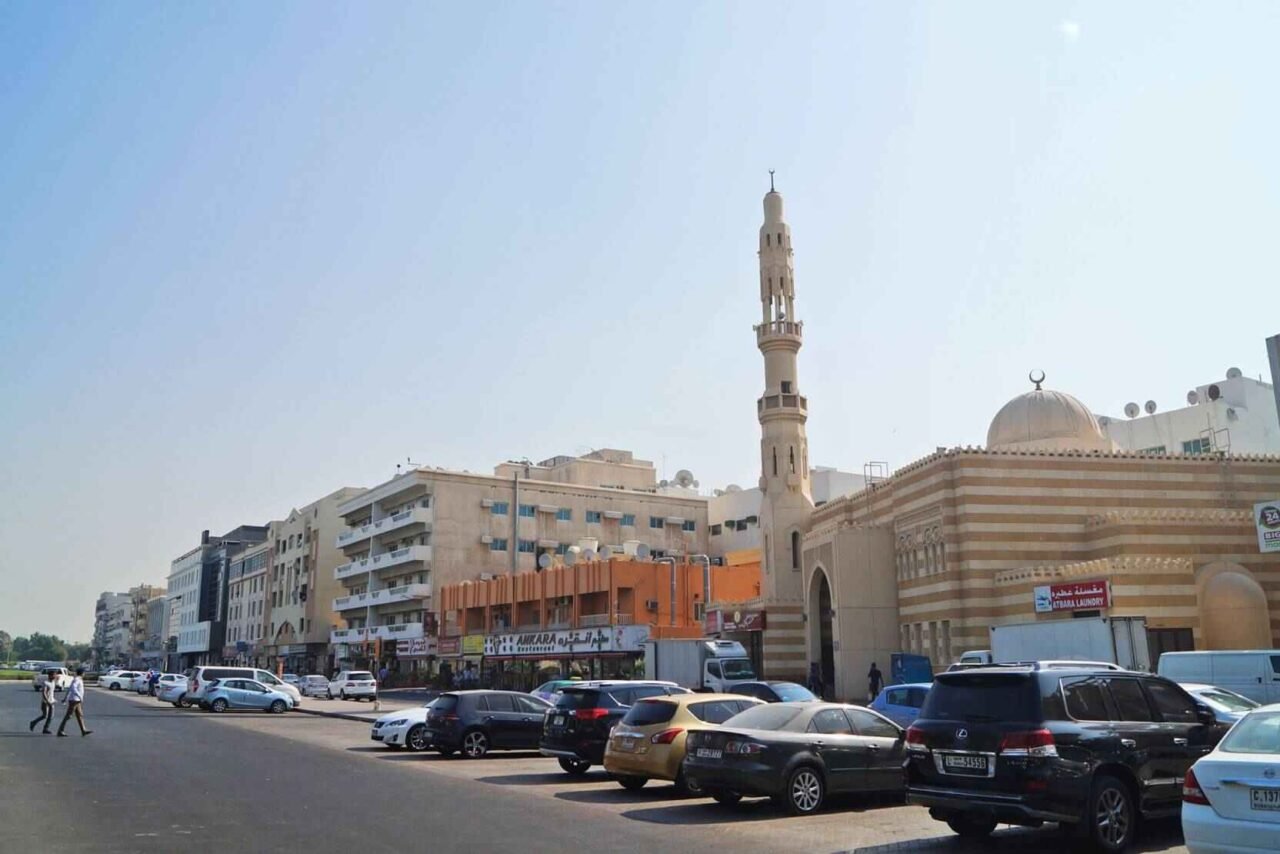

Al Baraha is a compact, well-established residential and healthcare-focused neighborhood in Deira, Dubai, known for its affordability, central location, and strong concentration of hospitals and essential services. Positioned near the Deira waterfront and Corniche, the district blends traditional urban character with practical city living.
Unlike master-planned modern communities, Al Baraha represents “working Old Dubai” – a dense, grid-structured neighborhood with low- to mid-rise buildings, local shops, mosques, clinics, and daily conveniences within walking distance. It is especially popular among healthcare professionals, long-term residents, and tenants seeking budget-friendly housing near central Dubai.
From an entity perspective, Al Baraha connects strongly with:
- Deira district
- Dubai Hospital cluster
- Deira Corniche waterfront
- Old Dubai souks and heritage zones
- Public transport corridors (Green Line Metro + bus network)
This makes it functionally important rather than lifestyle-luxury driven.
Where Is Al Baraha Located in Dubai?
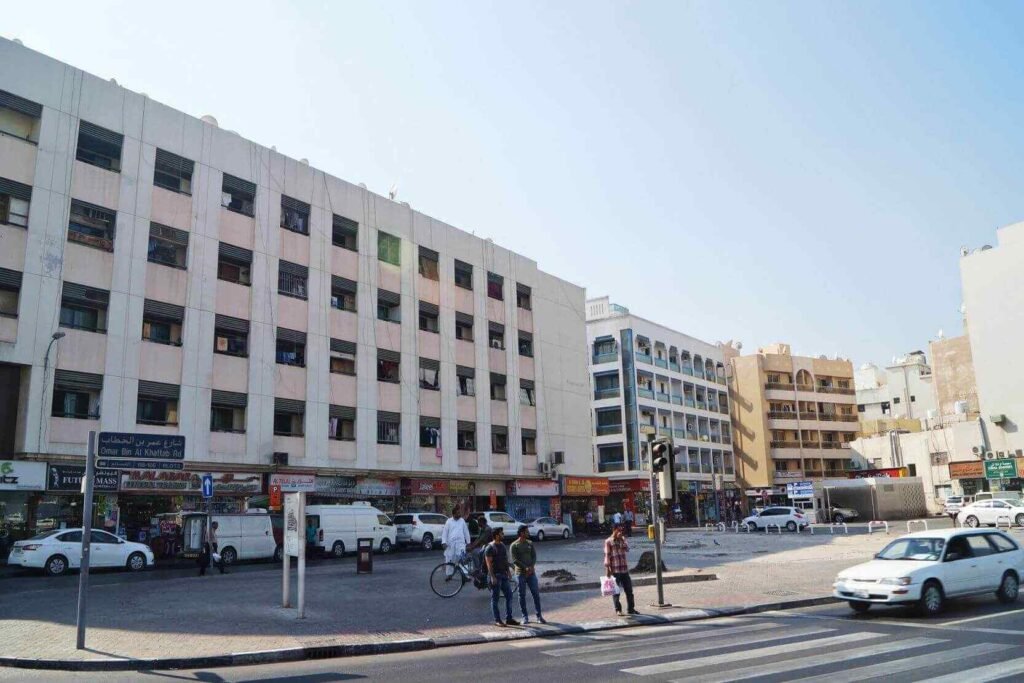
Al Baraha sits in northeast Deira, close to the Corniche and Dubai Creek side of the city.
Primary road boundaries and connectors:
- Al Khaleej Street (D92) – northern edge near the waterfront
- Al Rasheed Road (D82) – southern boundary
- Abu Baker Al Siddique Road (D78) – key city connector
- Close to Naif, Al Muteena, Abu Hail, and Al Murar
Location advantages:
- Near Deira Corniche promenade
- Close to traditional souks and heritage districts
- Quick access to central Deira commercial zones
- Reasonable drive time to Dubai International Airport
- Direct connectivity toward Sheikh Zayed Road via D78
Al Baraha’s position makes it more functionally central than visually glamorous.
Urban Character & Community Structure
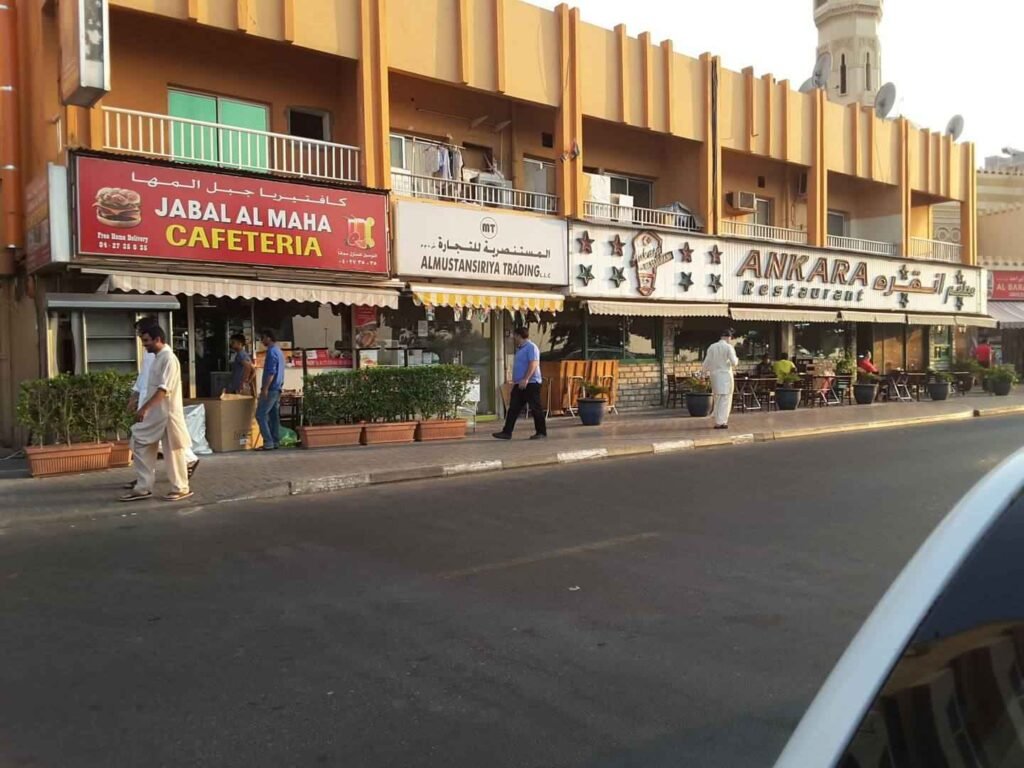
Al Baraha is defined by its grid-style street layout, dense blocks, and mixed-use street frontage.
Built Environment Characteristics
- Mostly low- to mid-rise apartment buildings
- Some independent villas and older houses
- Ground-floor retail and service shops
- High density of clinics, pharmacies, and cafeterias
- Numerous mosques integrated into residential blocks
- Walkable daily-need ecosystem
The neighborhood is typically busy during the day due to hospital activity and calmer in inner residential pockets at night.
Ownership is largely non-freehold, meaning:
- Most properties are available for rent
- Ownership is generally limited to UAE/GCC nationals
- Expats primarily access the area as tenants
Property Types in Al Baraha
Al Baraha’s residential supply is practical and budget-oriented rather than lifestyle-driven.
Main Property Categories
Apartments
- Studios to 2-bedroom units most common
- Located in low- and mid-rise buildings
- Many family-only buildings
- Some shared and bed-space rental stock
Villas / Houses
- Limited supply
- Older independent houses
- Typically occupied by families or institutional tenants
Rental Market Positioning (Trend-Level Insight)
Without relying on fixed figures, Al Baraha typically sits in the:
- Lower affordability tier for central Dubai
- More affordable than newer waterfront and mixed-use districts
- Competitive with other older Deira sub-communities
Rental demand is supported by:
- Hospital staff
- Service workers
- Budget-focused families
- Transit-dependent residents
Healthcare Hub Status – Core Identity of Al Baraha
Healthcare is the primary defining entity of Al Baraha.
The district hosts one of the highest concentrations of medical facilities in Deira, making it a natural residential choice for medical workers and patients’ families.
Major Hospitals in Al Baraha
- Dubai Hospital – major government hospital and referral center
- Al Kuwait Hospital (formerly Al Baraha Hospital) – multi-specialty public facility
- Belhoul Specialty Hospital – private multi-specialty provider
Supporting Medical Infrastructure
- Numerous specialty clinics
- Dental and optical centers
- Diagnostic labs
- Pharmacies on most main streets
- Medical supply stores
This healthcare clustering increases:
- Rental demand stability
- Daytime foot traffic
- Public transport frequency
- Short-stay accommodation demand
Transport & Connectivity in Al Baraha
Al Baraha is one of the best-connected older districts in Deira for public transport users.
Dubai Metro Access
No station sits directly inside the neighborhood, but several are within walking or short driving distance:
- Gold Souk (Palm Deira) Metro Station – Green Line
- Baniyas Square Metro Station – Green Line
- Union Metro Station – Red & Green Line interchange
This provides:
- Direct Green Line access across Deira & Bur Dubai
- Interchange access to the Red Line via Union
Bus Network
Al Baraha is served by a dense RTA bus network, including routes such as:
- C-series city routes
- Feeder routes
- Intercity connectors (including Abu Dhabi routes from nearby hubs)
Bus stops are located near:
- Hospitals
- Mosques
- Main intersections
Road Connectivity
- Direct access to D92 and D82
- Connection to Sheikh Zayed Road via D78
- Airport reachable within a short drive (traffic dependent)
Constraint: Internal streets are narrower, which contributes to congestion and parking pressure.
Lifestyle & Daily Amenities
Al Baraha supports a walk-first lifestyle built around daily convenience rather than destination entertainment.
Supermarkets & Daily Retail
Within and near the area:
- Almaya Supermarket
- Jishar Supermarket
- LuLu Centre (nearby)
- Multiple groceries and mini-marts
Most residents can complete daily errands without a car.
Malls Near Al Baraha
- Al Ghurair Centre – retail, dining, cinema, hotels
- Deira City Centre – major mall with hypermarket & entertainment
- Waterfront Market – seafood, produce, traditional trade
Dining Scene
Food options are:
- Budget-friendly
- Multi-ethnic
- Strong in South Asian and Arab cuisines
Common formats include:
- Cafeterias
- Casual restaurants
- Traditional eateries
- Small family-run kitchens
Parks, Waterfront & Outdoor Spaces
Despite its density, Al Baraha benefits from proximity to several outdoor areas.
Nearby Outdoor Options
- Deira Corniche – walking paths and waterfront views
- Al Baraha Park
- Al Baraha Sports Complex
- Al Muteena Park
- Hor Al Anz Community Park
- Al Mamzar Beach Park – short drive away
These provide:
- Walking and jogging routes
- Family picnic areas
- Children’s play zones
- Beach access (via Al Mamzar)
Schools & Education Near Al Baraha
Al Baraha supports early and secondary education through nearby institutions.
Nurseries & Early Learning
- Happy Kids Nursery (inside community)
- The Primary Nursery
- Tiny Tots Nursery
- Spectrum Nursery
Schools Nearby
- Amna Bint Wahab Secondary Girls School
- Religious Boys’ Secondary School
- Elite English School
- Omar Bin Al Khattab Model School
Additional Indian, British, and bilingual curriculum schools are accessible across Deira and Bur Dubai.
Religious & Cultural Facilities
Al Baraha has strong access to multi-faith worship facilities.
Mosques
- Rahma Al Shamsi Mosque
- Masjid Hamja Bin Abdul Muthalif
- Latifa Mosque
- Omar Ali Bin Haider Mosque (nearby major mosque)
Other Places of Worship (Nearby)
- Churches in Deira districts
- Hindu temples in Bur Dubai / Al Fahidi area
Cultural venues nearby include:
- Heritage houses
- Small museums
- Women’s museums
- Traditional souk districts
Investment Perspective – Is Al Baraha Good for Property Investors?
Al Baraha is not a luxury appreciation play – it is a yield-and-occupancy stability market.
Investment Strengths
- Consistent tenant demand from hospital workforce
- Central Deira location
- Affordable rental entry points
- Strong public transport coverage
- Essential-services-driven occupancy
Investment Constraints
- Mostly non-freehold
- Older building stock
- Limited lifestyle branding
- Parking and congestion issues
- Lower premium resale upside vs new districts
Best suited for:
- Income-focused local investors
- GCC owners
- Long-hold rental strategies
Pros and Cons of Living in Al Baraha
Advantages
- Central Deira location
- Strong healthcare infrastructure
- Affordable rents
- Excellent bus + metro access
- Walkable daily amenities
- Close to Corniche and old souks
- Practical for hospital workers
Limitations
- Older buildings dominate supply
- Parking pressure in peak hours
- Traffic congestion on main roads
- Limited modern lifestyle facilities
- Less quiet than suburban areas
Who Should Live in Al Baraha?
Al Baraha is especially suitable for:
- Healthcare professionals
- Budget-conscious tenants
- Transit-dependent residents
- Service-sector workers
- Small families wanting central access
- Short-stay medical visitors
Less suitable for:
- Luxury lifestyle seekers
- Villa-community buyers
- Residents wanting resort-style amenities
FAQs
Is Al Baraha a freehold area?
Mostly no. It is primarily non-freehold, with ownership generally limited to UAE/GCC nationals. Expats typically rent.
Which metro station is closest to Al Baraha?
Gold Souk (Palm Deira) Metro Station on the Green Line is the closest, with Union and Baniyas Square also nearby.
What is Al Baraha known for?
It is best known as a healthcare hub with major hospitals and affordable residential options in Deira.
Are there villas in Al Baraha?
Yes, but limited. Most housing consists of apartments, with a smaller number of older villas and houses.
Is Al Baraha good for families?
Yes for budget-focused families who value central access and nearby schools, but less ideal for those seeking quiet gated environments.
Conclusion – Is Al Baraha a Practical Choice in Dubai?
Al Baraha stands out as a function-driven, healthcare-centered residential district in Deira. It offers affordable housing, strong transport connectivity, and one of the city’s most concentrated medical ecosystems. While it lacks the polished lifestyle image of newer Dubai communities, it delivers daily practicality, central access, and stable rental demand.
For tenants and investors focused on utility, affordability, and location efficiency, Al Baraha remains a relevant and dependable urban choice within Old Dubai.


Leave a Reply