
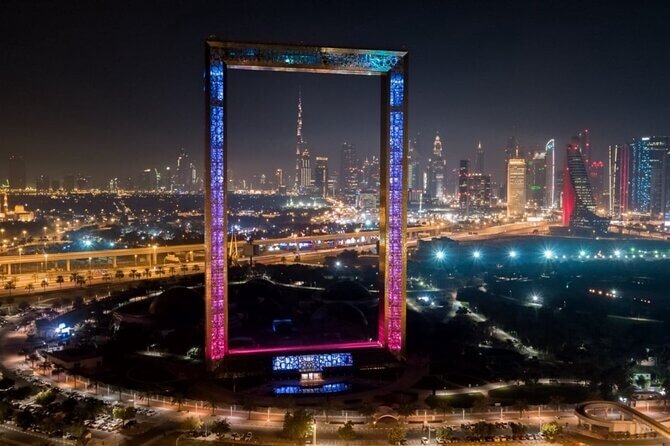

The Dubai Frame is one of Dubai’s most symbolic architectural landmarks, designed to physically and conceptually frame the city’s transformation from its historic roots to its futuristic skyline. Located in Zabeel Park, the structure stands 150 metres tall and approximately 93–95 metres wide, officially recognised by Guinness World Records as the world’s largest picture frame. More than a viewing platform, the Dubai Frame is a curated experience that connects Dubai’s past, present, and future within a single vertical journey.
From an urban development and city-planning perspective, the Dubai Frame represents Dubai’s narrative-driven approach to tourism and place branding, positioning heritage and innovation within the same visual axis.
Location & Urban
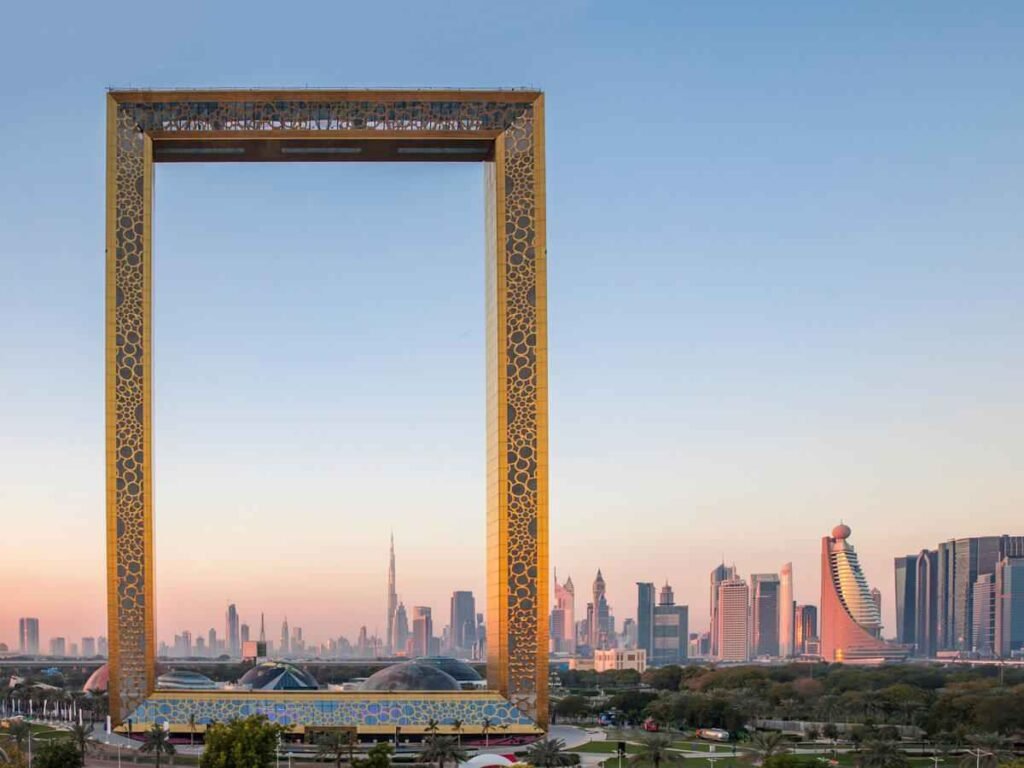
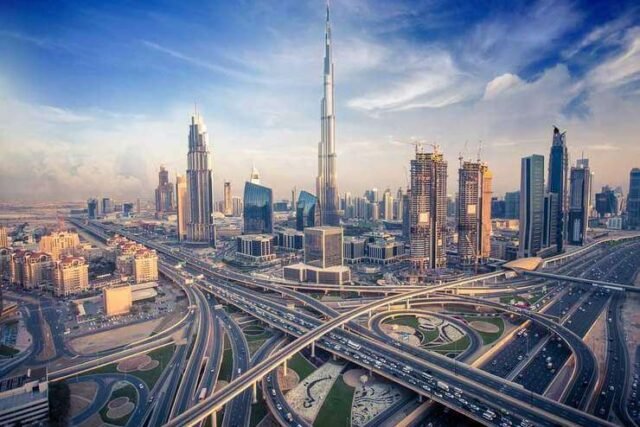
Dubai Frame is situated inside Zabeel Park, one of Dubai’s central green spaces, strategically placed between Old Dubai and New Dubai. This location is intentional: the northern view captures historic districts such as Deira, Umm Hurair, and Dubai Creek, while the southern view showcases modern landmarks including Downtown Dubai, Sheikh Zayed Road, and the Burj Khalifa skyline.
Access is straightforward:
- Entry is via Gate 4 of Zabeel Park
- The closest metro station is Al Jafiliya (Red Line), followed by a short walk
- Taxis, ride-hailing services, and private vehicles are widely used, with parking available nearby
This central positioning makes Dubai Frame easy to combine with visits to other key destinations. From a content strategy perspective, this landmark naturally connects with nearby lifestyle and tourism hubs, making it relevant to link internally with a Dubai Area Guide or Downtown Dubai Guide.
Architectural Significance & Design
The Dubai Frame was conceived by architect Fernando Donis, with a design inspired by the Golden Ratio (1.618)—a proportion historically associated with balance and visual harmony. The exterior is clad in gold-coloured stainless steel panels, featuring a geometric pattern inspired by the Expo 2020 Dubai logo.
From a construction standpoint, the scale is substantial:
- Approximately 9,900 cubic metres of reinforced concrete
- Around 2,000 tonnes of structural steel
- Over 2,900 square metres of laminated glass
- More than 15,000 square metres of gold-coloured stainless steel
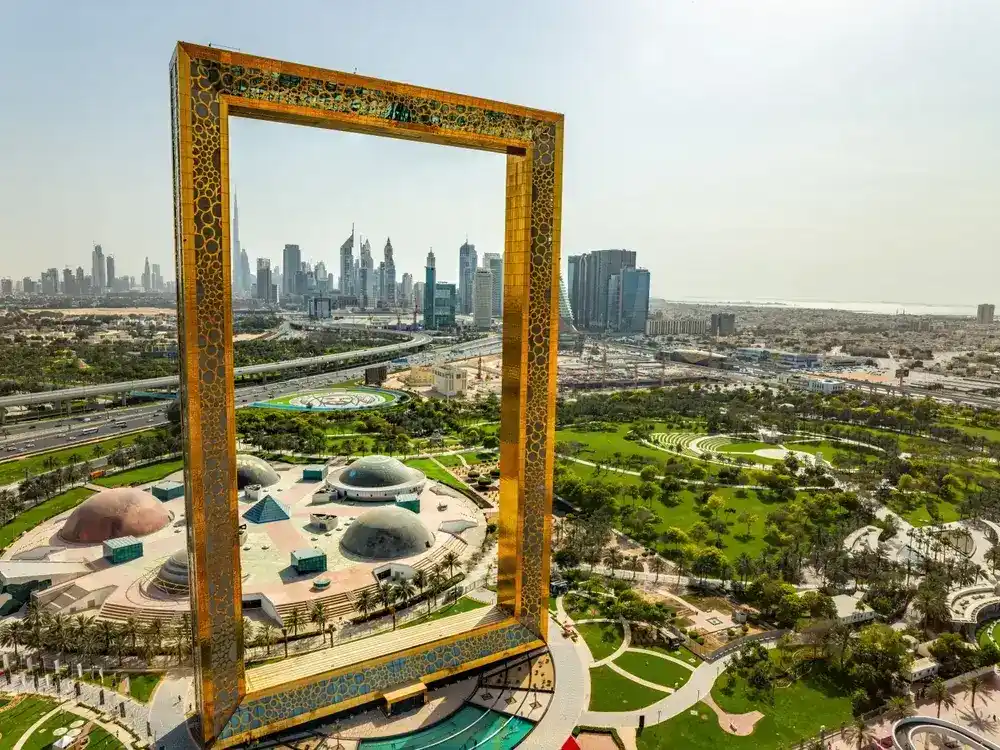
Two vertical towers are connected at the top by a sky bridge, forming the iconic rectangular “frame” silhouette visible from multiple parts of the city.
Inside the Dubai Frame: Galleries & Experiences
Old Dubai Gallery (Past Gallery)
The journey begins at ground and mezzanine level with an immersive multimedia exhibition. This section uses 3D projections, soundscapes, scents, and visual effects to depict Dubai’s early days as a Bedouin settlement and fishing village. Traditional occupations, cultural practices, and architectural styles are presented to establish historical context before the ascent.
This gallery is especially valuable for visitors and investors seeking to understand Dubai’s rapid transformation in a relatively short time frame.
Related: Aquaventure World
Sky Deck Observation Level (Present Dubai)
A panoramic glass elevator ascends 48 floors in approximately 75 seconds, delivering visitors to the Sky Deck at 150 metres above ground. The observation deck offers uninterrupted 360-degree views, clearly divided by geography and urban evolution:
- North-facing views reveal Old Dubai, Deira, and Dubai Creek
- South-facing views highlight modern Dubai, including Downtown Dubai, Emirates Towers, and Sheikh Zayed Road
Interactive augmented reality screens assist visitors in identifying landmarks and understanding urban development patterns.
Glass Walkway (Sky Bridge)
At the centre of the sky bridge lies a transparent glass walkway, suspended 150 metres above ground. This engineered glass platform can safely support hundreds of visitors at once and provides a dramatic vertical view of the city below. It is one of the most photographed and talked-about features of the Dubai Frame.
Future Dubai Gallery
The exit experience leads visitors through a high-tech tunnel often described as a “vortex,” using virtual reality and projection mapping to imagine Dubai 50 years into the future. This speculative section aligns with Dubai’s long-term urban planning vision, highlighting themes such as sustainability, mobility, and smart-city infrastructure.
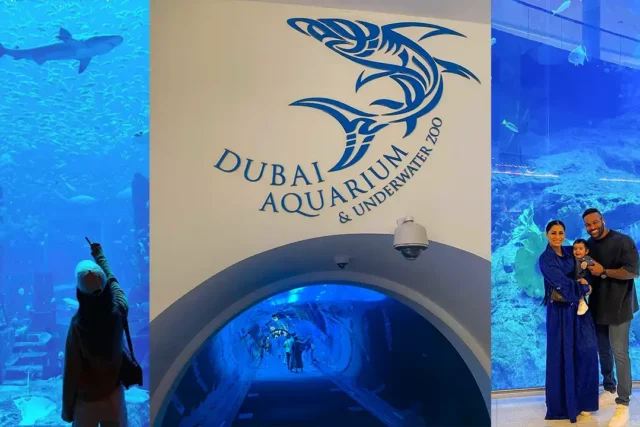
Related: Dubai Aquarium
Visitor Information & Practical Details
Opening Hours
Dubai Frame operates daily, generally from morning until evening, with minor variations during Ramadan and public holidays. Last entry is typically 30 minutes before closing.
Ticket Pricing (Indicative)
- Adults: approximately AED 50
- Children (3–12 years): approximately AED 20
- Infants under 3: free
- People of Determination: free entry, including two companions
Tickets can be purchased online or at the venue, with online booking recommended during peak seasons.
Duration & Capacity
Most visitors spend between 1 to 2 hours exploring all galleries, the Sky Deck, and the café. Capacity is managed to maintain comfort and safety, with group size limits in place.
Accessibility & Dress Code
The entire facility is wheelchair accessible, including elevators and ramps. Visitors are advised to wear respectful clothing covering shoulders and knees, in line with general UAE cultural norms. Comfortable footwear is recommended.
Best Time to Visit
From a visitor-experience perspective, timing significantly affects crowd levels and photography quality:
- Early mornings offer quieter access and clear daytime views
- Weekdays are less crowded than weekends
- Sunset hours provide dramatic lighting but attract the highest visitor volume
Seasonally, October to April offers the most pleasant outdoor conditions, while summer visits remain comfortable indoors due to full air conditioning.
Lifestyle, Tourism & Nearby Attractions
Dubai Frame complements Dubai’s broader lifestyle and tourism ecosystem. Nearby attractions include landscaped parks, family entertainment venues, and major landmarks across central Dubai. This proximity strengthens its relevance for area-based property searches and supports contextual internal links such as:
Investment & Real Estate Context
While Dubai Frame itself is not a residential development, its presence enhances the visibility and desirability of surrounding areas such as Zabeel, Karama, and parts of Downtown Dubai. Landmark proximity often contributes to:
- Increased short-term rental appeal
- Stronger tourism-driven footfall
- Long-term area branding and recognition
For investors researching location fundamentals, this landmark is best explored alongside a Dubai Property Investment Guide or Buy Apartments in Central Dubai content.
Pros & Cons of Visiting Dubai Frame
Advantages
- Unique dual-view experience of Old and New Dubai
- Strong educational and cultural narrative
- Central location with excellent transport access
- Suitable for families, tourists, and first-time visitors
Considerations
- Popular sunset hours can be crowded
- Experience duration is relatively short compared to theme attractions
- Limited dining options beyond the Sky Deck café
Who Is Dubai Frame Best For?
Dubai Frame appeals to a wide range of audiences:
- First-time visitors seeking a city overview
- Families looking for an educational attraction
- Architecture and photography enthusiasts
- Property buyers and investors wanting spatial context of Dubai’s urban layout
Related: Dubai Mall
FAQs
What is so special about the Dubai Frame?
Its uniqueness lies in framing two contrasting sides of Dubai—historic districts on one side and modern skyscrapers on the other—within a single architectural structure.
Can you go inside the Dubai Frame?
Yes, visitors can explore multiple indoor galleries, an observation deck, and a glass walkway at the top.
Is it worth going inside the Dubai Frame?
For most visitors, especially first-timers, the experience offers strong visual, educational, and photographic value in a short time.
How many floors are in the Dubai Frame?
The structure rises 48 floors, accessed via high-speed panoramic elevators.
Conclusions
The Dubai Frame is not just a landmark; it is a physical narrative of Dubai’s evolution. As both a tourism icon and an urban reference point, it plays a meaningful role in understanding the city’s spatial growth, cultural identity, and future ambitions. Whether viewed through a visitor, lifestyle, or real estate lens, the Dubai Frame remains one of Dubai’s most conceptually powerful attractions.

Leave a Reply