

Dubailand is one of Dubai’s largest master-planned districts, spanning approximately 278 square kilometers (107 square miles) in the southern part of the emirate. Launched in 2003 as an ambitious entertainment-led mega development, Dubailand has evolved into a multi-dimensional urban district that combines residential communities, world-class attractions, educational hubs, and long-term investment opportunities.
Originally envisioned as a destination to rival global theme park cities, development slowed during the 2008 global financial crisis. However, since resuming in phases from 2013 onwards, Dubailand has transformed into a thriving suburban and lifestyle-focused area. By 2026, it functions as a mature residential and tourism zone rather than a single project, making it one of Dubai’s most diverse and future-oriented districts.
From a semantic SEO perspective, Dubailand represents a macro-area entity encompassing multiple residential sub-entities, leisure landmarks, infrastructure projects, and regulatory frameworks under Dubai’s real estate ecosystem.
Dubailand Location & Strategic in Dubai
Dubailand is strategically positioned along two of Dubai’s most important arterial highways: Sheikh Mohammed Bin Zayed Road (E311) and Emirates Road (E611). This location enables efficient connectivity to key destinations such as Downtown Dubai, Dubai International Airport, Dubai Silicon Oasis, and Dubai Internet City.
Its proximity to Academic City, Meydan, and emerging suburban developments places Dubailand at the intersection of education, residential growth, and long-term infrastructure planning. While the area maintains a suburban character, it remains integrated with Dubai’s broader urban expansion strategy.
Urban Structure & Key Components
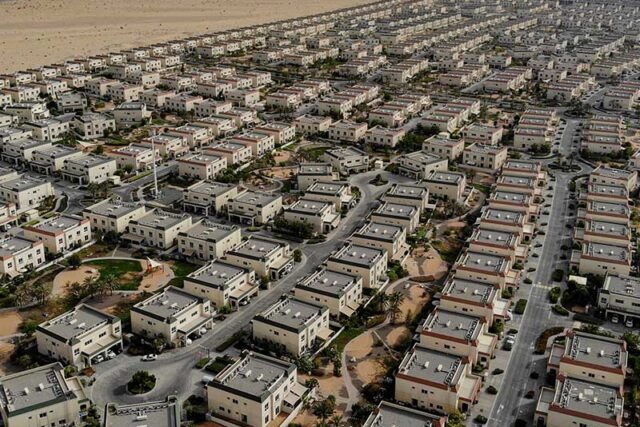
Rather than a single unified project, Dubailand is best understood as a district-level framework containing more than 26 distinct residential, entertainment, and mixed-use developments. These are organized around lifestyle clusters, gated communities, and destination attractions.
The district includes:
- Established villa communities
- Mid-rise and low-rise apartment clusters
- Large-scale leisure and tourism landmarks
- Educational institutions
- Sports and recreational complexes
This layered structure allows Dubailand to serve multiple user intents simultaneously: residential living, family recreation, tourism, and property investment.
Residential Communities in Dubailand
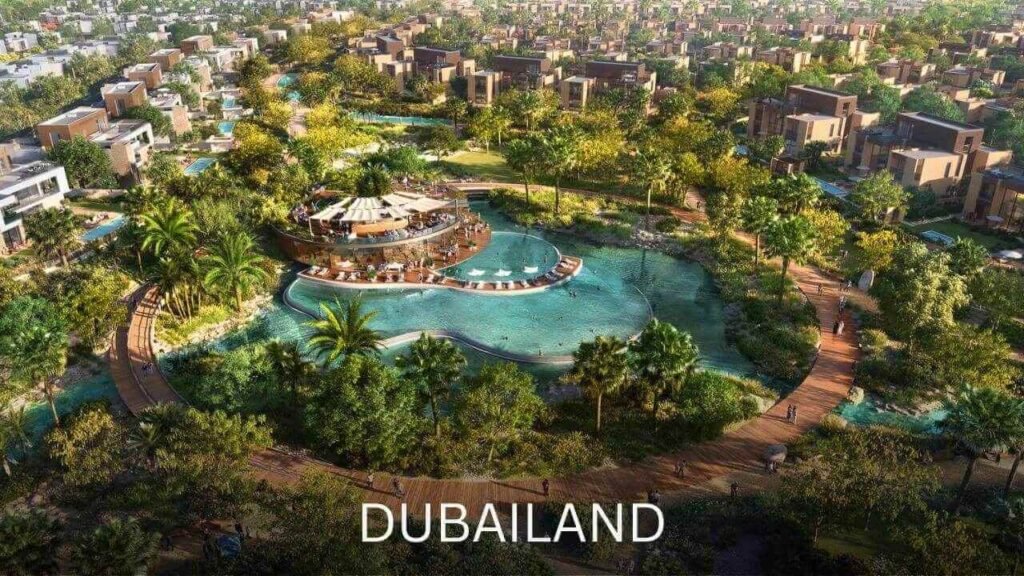
Residential development is the backbone of Dubailand’s long-term growth. Communities range from ultra-luxury nature-inspired villas to affordable family apartments, each with distinct positioning.
Arabian Ranches & Arabian Ranches 3
Arabian Ranches is one of Dubai’s most established villa communities, known for its low-density planning, mature landscaping, and premium lifestyle amenities such as the Dubai Polo & Equestrian Club and Arabian Ranches Golf Club. The community is fully gated and appeals to end-user families seeking stability and long-term residency.
Arabian Ranches 3 represents the next generation of this concept, offering modern villas and townhouses with a strong focus on parks, sports facilities, and community living. With completion extending towards 2027, it remains a key growth sub-entity within Dubailand.
Al Barari
Al Barari is a distinct luxury ecosystem within Dubailand, defined by environmental design rather than density. Over 60% of its land is dedicated to green space, lakes, and botanical landscaping. Large villas with private pools, premium finishes, and natural surroundings position Al Barari as one of Dubai’s most exclusive residential addresses.
This sub-community attracts high-net-worth families prioritizing privacy, sustainability, and space over proximity to the city core.
Dubai Land Residence Complex (DLRC)
DLRC represents the high-density, affordable residential segment of Dubailand. It consists mainly of studio, one-bedroom, and family-sized apartments supported by schools, clinics, parks, and neighborhood retail. Its location along E311 and E611 makes it particularly attractive to professionals and investors seeking rental demand.
Emerging & Off-Plan Communities
Ongoing developments such as Villanova, Cherrywoods, Rukan, DAMAC Lagoons, and DAMAC Sun City reflect Dubailand’s continued expansion. These projects focus on townhouses and villas with modern layouts, shared amenities, and phased payment plans, reinforcing the area’s appeal to both end-users and off-plan investors.
Entertainment, Leisure & Landmark Attractions
Dubailand remains one of Dubai’s most significant leisure districts, hosting globally recognized attractions that also contribute to rental demand and tourism traffic.
Theme Parks & Family Attractions
IMG Worlds of Adventure, one of the world’s largest indoor theme parks, anchors Dubailand’s entertainment identity. Alongside Motiongate, Bollywood Parks, and Legoland (within the wider Dubailand zone), these attractions reinforce the district’s family-oriented positioning.
Global Village
Global Village is one of Dubai’s most visited seasonal attractions, operating annually from October to May. It combines cultural pavilions, dining, live performances, and amusement rides, attracting millions of visitors and enhancing Dubailand’s international visibility.
Dubai Miracle Garden
The Dubai Miracle Garden adds a unique natural landmark to the district, featuring large-scale floral installations and the adjacent Butterfly Garden. These attractions support Dubailand’s reputation as more than just a residential suburb.
Education & Family Infrastructure
Education is a key supporting entity in Dubailand’s residential success. The district hosts British, IB, and hybrid curriculum schools, including GEMS FirstPoint, Fairgreen International School, South View School, and The Aquila School.
This concentration of reputable institutions significantly increases the area’s attractiveness for long-term family settlement and stabilizes rental demand.
Transportation & Infrastructure Development
Currently, Dubailand relies primarily on road connectivity, supported by bus routes linking to metro stations. Ride-hailing services and community-level mobility solutions are widely used.
A transformational infrastructure catalyst is the Dubai Metro Blue Line, approved in 2023 and expected to be operational by 2029. Once completed, it will connect multiple emerging districts to Dubai International Airport and existing metro lines, significantly improving accessibility.
From a property market perspective, metro-linked districts historically experience higher liquidity, stronger rental demand, and long-term price resilience.
Recommended: Dubai Marina Mall
Real Estate Market Trends & Price Positioning
Dubailand is widely recognized as a value-driven growth market within Dubai. Compared to central districts, it offers larger unit sizes, newer communities, and family-oriented layouts at more accessible entry points.
Market characteristics include:
- Strong absorption of newly handed-over villas
- Rising rental demand in family communities
- Competitive yields supported by affordability and lifestyle appeal
- Ongoing infrastructure investment reinforcing long-term growth
While pricing varies significantly by sub-community and property type, Dubailand consistently positions itself between affordability and lifestyle quality rather than speculative luxury.
Investment Potential & Risk Considerations
Strengths
Dubailand benefits from continuous development, population growth, and government-backed infrastructure expansion. Its diversity reduces reliance on a single demand segment, balancing end-users, tenants, and visitors.
Risks
As a suburban district, Dubailand is more car-dependent in the short term. Certain off-plan areas may experience phased delivery timelines, requiring a medium- to long-term investment horizon.
Overall, Dubailand aligns best with investors seeking stable rental income, family housing demand, and gradual capital appreciation rather than short-term speculation.
Recommended: Burj Khalifa
Lifestyle & Community Character
Life in Dubailand is defined by space, greenery, and community planning. Unlike high-density urban zones, it offers a quieter, more residential environment with access to parks, sports facilities, and family-focused amenities.
Communities such as Arabian Ranches foster strong social interaction through resident events, fitness activities, and neighborhood groups, reinforcing long-term livability.
Who Is Dubailand Best For?
Dubailand is particularly well-suited for:
- Families seeking villas, schools, and outdoor space
- Long-term residents prioritizing lifestyle over city-center proximity
- Investors targeting rental yields in emerging suburban markets
- Buyers looking for new-build properties with modern planning
FAQs
What is the Dubailand area?
Dubailand is a large master-planned district in Dubai encompassing residential communities, entertainment attractions, schools, and leisure facilities rather than a single development.
Is Dubailand open to the public now?
Yes, Dubailand is fully accessible, with operational residential communities, attractions, schools, and amenities.
What happened to Dubailand after 2008?
Development slowed during the financial crisis but resumed in phases from 2013, evolving into a residential-led district.
Is Dubailand completed?
Dubailand is not a single project, so it is continuously evolving. Many communities are complete, while others are under development through 2027 and beyond.
Conclusion
Dubailand has matured into one of Dubai’s most versatile and strategically important districts. What began as an ambitious entertainment vision has evolved into a balanced urban ecosystem offering residential stability, lifestyle amenities, and long-term investment potential.
With its diverse communities, family-friendly planning, landmark attractions, and future-ready infrastructure such as the Metro Blue Line, Dubailand stands out as a sustainable growth corridor within Dubai’s real estate landscape. For families, investors, and end-users alike, it represents a compelling alternative to high-density urban living—without sacrificing connectivity, amenities, or long-term value.

Leave a Reply