
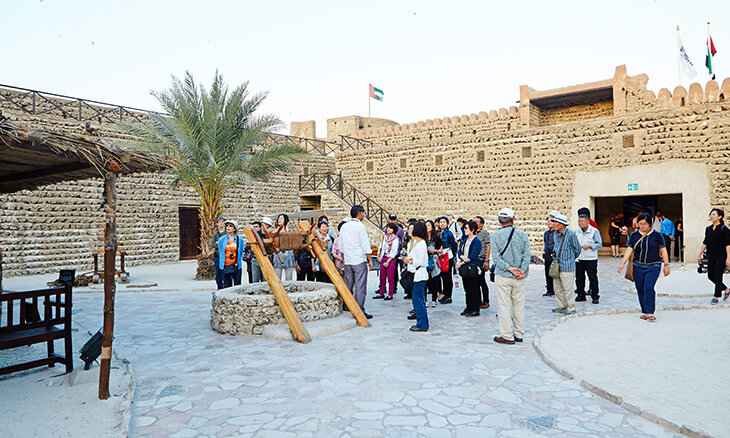

What Is Al Fahidi Historical Neighbourhood?
Al Fahidi Historical Neighbourhood, also known as Al Bastakiya, is Dubai’s best-preserved heritage district and one of the city’s most culturally significant urban areas. Located along the southern banks of Dubai Creek in Bur Dubai, this neighbourhood offers a rare and authentic window into Emirati life from the mid-19th century through the pre-oil era of the 1970s.
Unlike master-planned heritage replicas, Al Fahidi is a restored original settlement, where narrow sikkas (alleys), coral-stone houses, inner courtyards, and iconic barjeel wind towers reflect how merchants and families adapted to climate, privacy, and community long before air conditioning or skyscrapers defined Dubai.
Al Fahidi Historical Neighbourhood Location & Urban Context
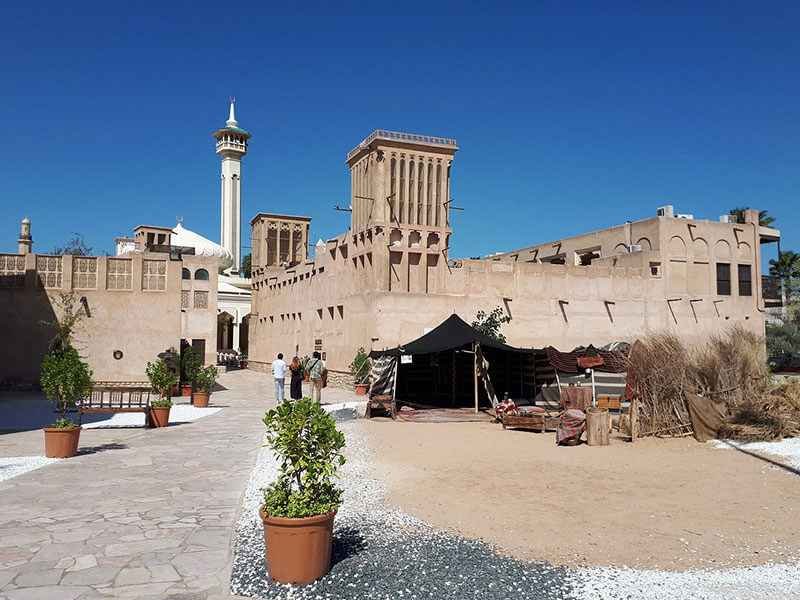
Al Fahidi Historical Neighbourhood sits in Bur Dubai, directly facing Dubai Creek and opposite Deira’s traditional souks. Its strategic position explains its historical importance: the creek once served as Dubai’s primary trading artery, connecting merchants from Persia, India, East Africa, and the Arabian Peninsula.
Key location relationships include:
- Walking distance to Al Fahidi and Al Ghubaiba Metro Stations (Green Line)
- Direct pedestrian access to Dubai Creek Abra Station
- Close proximity to Al Seef heritage waterfront
- Short drive to Downtown Dubai, DIFC, and Jumeirah
This central yet preserved setting creates a strong contrast between Old Dubai and the modern city, a theme that defines the neighbourhood’s appeal.
Architectural Identity & Heritage Significance
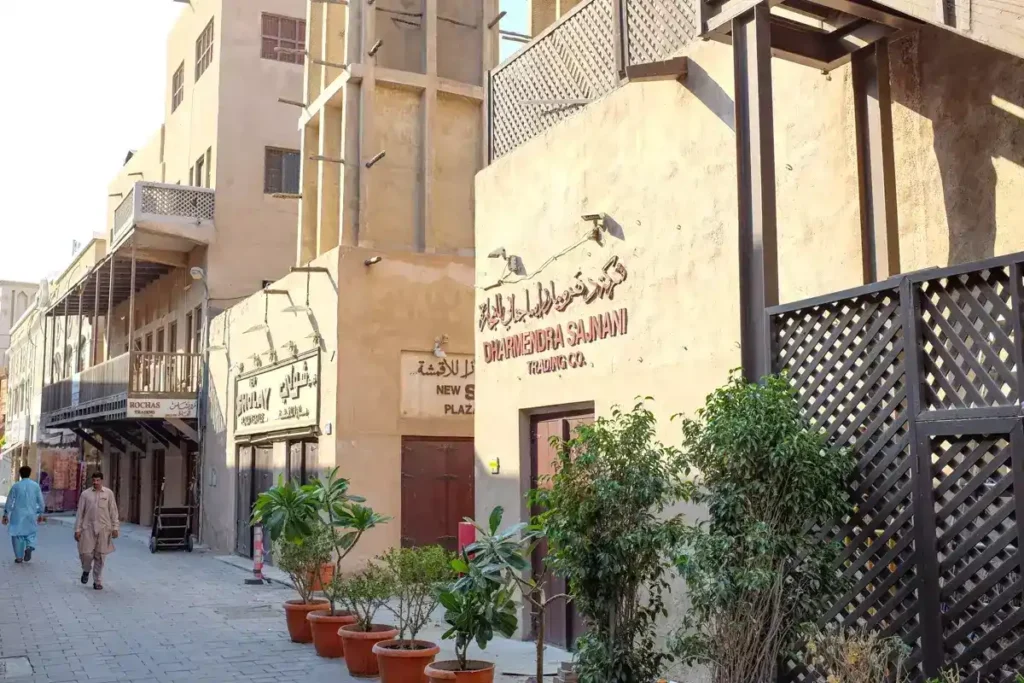
The defining feature of Al Fahidi is its traditional Gulf architecture, designed for climate control, privacy, and community living.
Wind Towers (Barjeel)
The barjeel system functioned as an early form of natural air conditioning, funneling cooler air into interior spaces. These towers are now one of Dubai’s most recognisable heritage symbols.
Building Materials
Homes were constructed using:
- Coral stone from the Gulf
- Gypsum and lime plaster
- Teak and palm wood
- Sandalwood in decorative elements
Urban Design
The neighbourhood’s layout prioritises:
- Shaded walkways
- Narrow alleys to reduce heat
- Inward-facing courtyards
- Minimal external openings for privacy
Today, more than 50 restored houses host museums, cultural institutions, galleries, cafés, and artisan spaces, preserving both form and function.
Cultural Attractions & Things to Do
Al Fahidi functions as a living cultural district, not a static museum. Visitors typically spend 1–3 hours, or up to half a day when combined with Dubai Creek activities.
Al Fahidi Fort & Dubai Museum
Built in 1787, Al Fahidi Fort is the oldest surviving structure in Dubai. Historically used as a defensive fort, residence, prison, and arsenal, it later became the Dubai Museum, documenting pre-oil life, pearl diving, and traditional trades.
(Note: museum access may vary during renovation periods.)
Sheikh Mohammed Centre for Cultural Understanding (SMCCU)
Operating under the motto “Open Doors, Open Minds”, SMCCU is one of the area’s most important institutions. It offers:
- Emirati breakfasts and lunches
- Cultural talks and Q&A sessions
- Mosque visits and heritage tours
This centre plays a key role in cultural education and community engagement.
Museums & Heritage Houses
- Coffee Museum: Explores Arabic coffee traditions, roasting methods, and Bedouin culture
- Coins Museum: Chronicles regional monetary history before independence
- Municipality House, Events House & Symposium House: Host exhibitions and cultural demonstrations
Art Galleries & Creative Spaces
Al Fahidi has evolved into a creative hub with galleries such as XVA Gallery and The Majlis Gallery, showcasing regional and international contemporary art within restored heritage homes.
Dubai Creek & Abra Experience
A short walk leads to the creek, where traditional wooden abras cross to Deira for a nominal fee. This connection reinforces Al Fahidi’s historic role in trade and daily life.
Recommended: AURA SKYPOOL
Dining & Café Culture
Food in Al Fahidi is closely tied to heritage and atmosphere rather than commercial dining.
Popular options include:
- Arabian Tea House – traditional Emirati and regional cuisine in a courtyard setting
- XVA Café – vegetarian-friendly, art-focused dining
- Small heritage cafés offering Arabic coffee (qahwa), dates, and light meals
Dining here is as much about experience and setting as it is about food.
Lifestyle Character & Daily Experience
While primarily a cultural destination, Al Fahidi also reflects a slower, more contemplative lifestyle. The ambience is quiet, walkable, and deeply rooted in history, attracting:
- Cultural tourists
- Artists and creatives
- Photographers
- Heritage enthusiasts
Unlike residential master communities, Al Fahidi is not designed for modern living but for preservation, education, and cultural continuity.
Property & Real Estate Context
Property Types
Al Fahidi is not a conventional residential investment area. Properties are:
- Government-protected heritage buildings
- Used as museums, galleries, cultural centres, or cafés
- Not available for private freehold ownership
Any real estate activity here is typically institutional or cultural, not speculative.
Market Insight
Rather than price trends, Al Fahidi’s real estate value lies in:
- Cultural capital
- Tourism footfall
- Heritage branding
- Proximity to Dubai Creek regeneration zones
For investors, nearby areas such as Al Seef or Bur Dubai offer more practical opportunities.
Investment Perspective: Opportunities & Limitations
Strengths
- High cultural and tourism relevance
- Protected heritage status ensures long-term identity
- Strong association with Dubai Culture and government initiatives
- Regular events such as Sikka Art & Design Festival and Heritage Week
Risks & Constraints
- No private freehold ownership
- Strict conservation regulations
- Limited commercial flexibility
- Returns tied to tourism cycles rather than property appreciation
Al Fahidi should be viewed as a heritage anchor, not a traditional investment zone.
Pros & Cons of Al Fahidi Historical Neighbourhood
Pros
- Authentic, preserved Old Dubai environment
- Rich cultural, architectural, and educational value
- Central location near Dubai Creek
- Free public access
Cons
- Not suitable for residential living
- Limited commercial property options
- Seasonal crowd fluctuations
- Strict photography and usage guidelines
Who Is Al Fahidi Best For?
Al Fahidi is ideal for:
- Cultural and heritage tourists
- History and architecture enthusiasts
- Art lovers and creatives
- Visitors seeking an authentic Old Dubai experience
- Content creators and photographers (with respect to guidelines)
It is less suitable for:
- Residential buyers
- Yield-focused property investors
- Luxury lifestyle seekers
Practical Visitor Information
Al Fahidi is open as a public district throughout the day, while museums and cafés generally operate during daytime hours. Entry to the neighbourhood is free, though individual venues may charge small fees. The cooler months from October to April are best for walking, with early mornings and late afternoons offering ideal conditions year-round.
Recommended: Museum of The Future
FAQs
Is Al Fahidi Historical Neighbourhood worth visiting?
Yes. It offers one of the most authentic insights into Dubai’s pre-oil history and cultural identity.
What is Al Fahidi famous for?
Its wind-tower houses, narrow alleys, museums, and preserved heritage architecture.
How long does it take to explore Al Fahidi?
Most visitors spend 1–3 hours, or half a day when combined with Dubai Creek and Deira.
Is there an entrance fee?
No. The neighbourhood itself is free to enter.
Can I take professional photos there?
Personal photography is allowed; professional shoots require prior permission.
Conclusion
Al Fahidi Historical Neighbourhood is not just a place to visit—it is a foundational chapter of Dubai’s story. As the city continues to evolve vertically and technologically, Al Fahidi remains grounded in human-scale design, cultural memory, and architectural intelligence.
For visitors, it offers authenticity and education. For the city, it acts as a cultural anchor. And within Dubai’s urban ecosystem, Al Fahidi stands as a reminder that progress and preservation can coexist—making it one of the most meaningful districts in the emirate.

Leave a Reply