
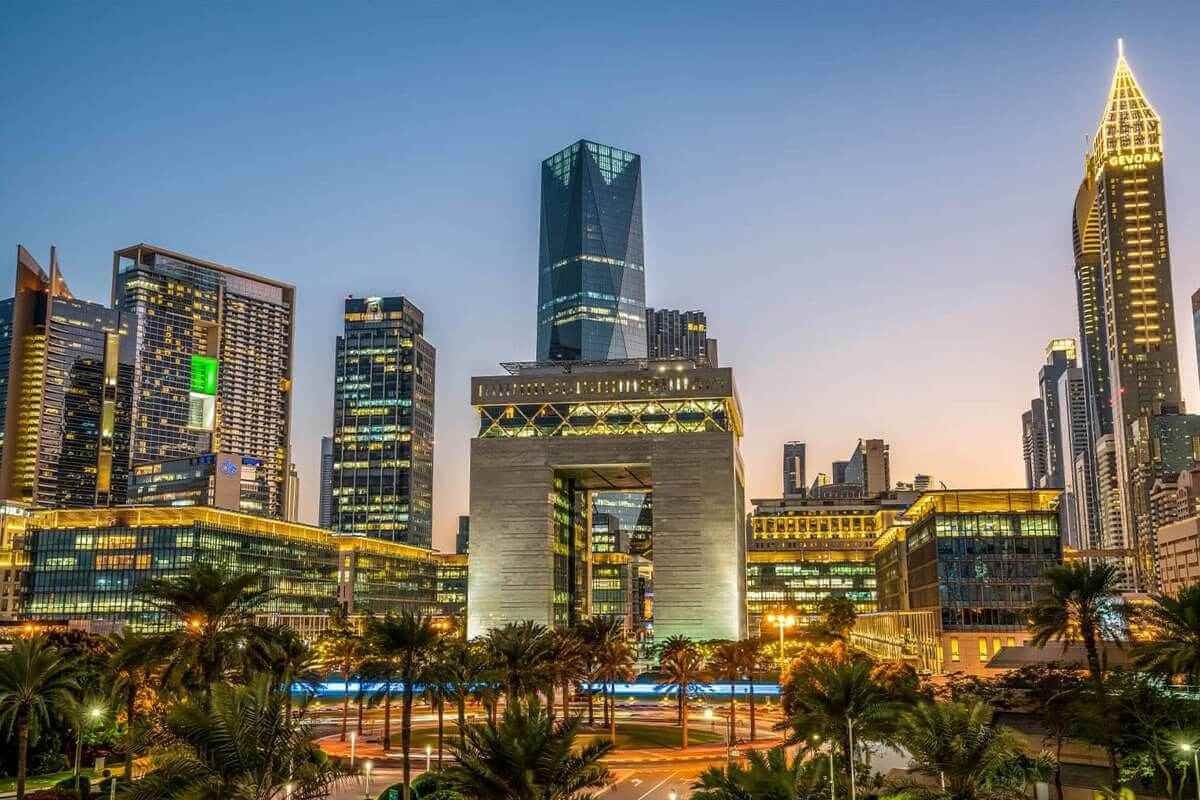

What Is Burj Daman?
Burj Daman is a landmark mixed-use development located at 16 Al Mustaqbal Street in the Dubai International Financial Centre (DIFC). Completed in 2013 at a total development cost of AED 2 billion, it occupies a 220,000 sq ft plot and brings together luxury residential apartments, Grade A commercial office space, and one of Dubai’s most celebrated five-star hotels under a single architectural statement.
Few buildings in Dubai manage to serve as a financial address, a luxury residence, and a lifestyle destination at the same time. Burj Daman does. For professionals who work in the DIFC ecosystem – bankers, lawyers, fund managers, management consultants – living here means the morning commute is a short walk across a pedestrian promenade rather than a crawl down Sheikh Zayed Road.
For investors, the building represents something rarer still: a genuinely constrained supply of apartments in a district where land availability is near zero, institutional demand is structurally strong, and the tenant profile is among the most creditworthy in the emirate.
The 118 Location and Address
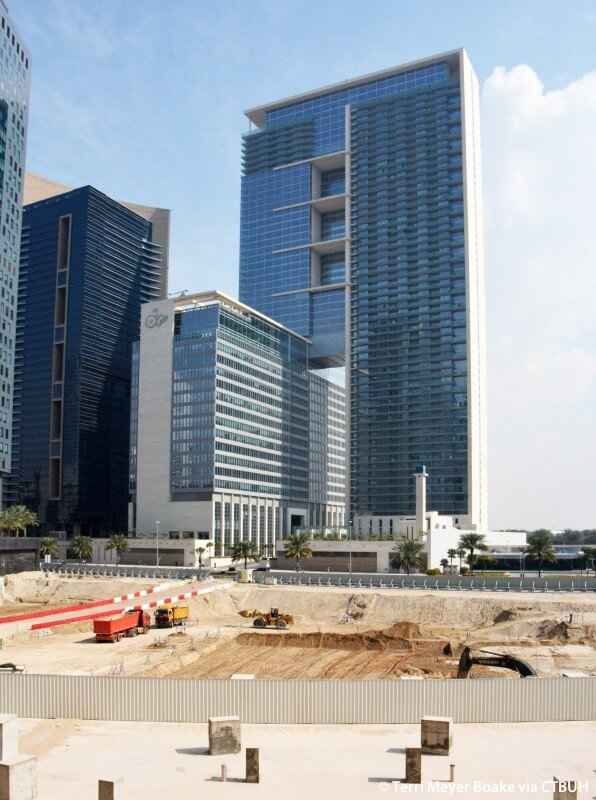
Burj Daman sits at 16 Al Mustaqbal Street, Za’abeel 2, Dubai, within the boundaries of the Dubai International Financial Centre. The precise Google Plus Code is 676J+MQF, and the building is positioned centrally between the Emirates Towers to the north and the Dubai World Trade Centre to the south.
Its geographic positioning is one of the most strategically advantageous of any residential building in Dubai. Downtown Dubai – with the Burj Khalifa, Dubai Mall, and Dubai Fountain – is approximately 1.7 km to the south. Business Bay sits directly to the west. Za’abeel Park and the Dubai Frame lie to the east, while Zabeel Palace is just a short drive away in the same direction.
This central position means residents are equidistant from old and new Dubai, giving them access to both the heritage neighbourhoods of Deira and Al Satwa as well as the global landmarks of the new city. The building faces Sheikh Zayed Road and Al Khail Road, two of Dubai’s primary arterial highways, making it exceptionally well connected by car.
Architecture and Development Facts
Burj Daman was developed by Daman Real Estate Capital Partners Limited, with architecture designed by Chicago-based Perkins & Will, one of the world’s leading architecture and design firms. Foundation work was carried out by Swissboring Overseas Piling Corporation, and the substructure includes six basement levels dedicated to parking.
Construction began in 2006 and was delivered in 2013. The complex has since earned LEED Gold certification from the US Green Building Council, recognising its energy-efficient design, sustainable materials use, and environmentally responsible operation – a meaningful credential in a city where sustainability certifications are increasingly scrutinised by institutional tenants and ESG-focused investors.
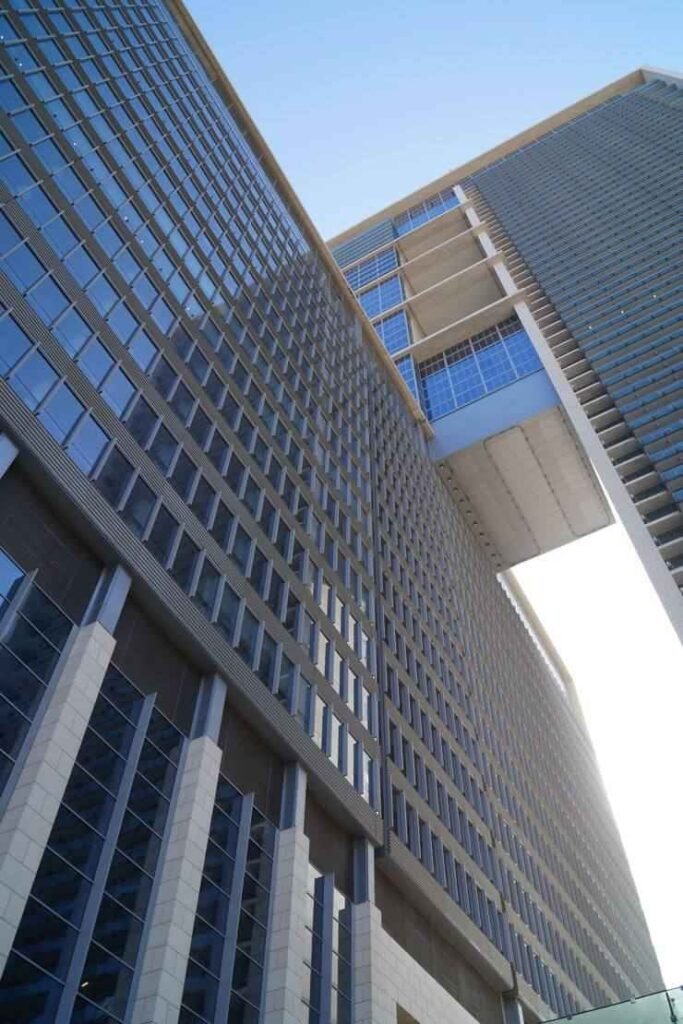
The building’s profile consists of three distinct interconnected elements of varying heights: the residential tower rises to 65 storeys, the commercial office tower spans 15 floors with column-free floorplates of approximately 27,836 sq ft each, and the Waldorf Astoria hotel occupies its own vertical expression. All three are connected through a shared podium that houses the retail and dining outlets at ground and mezzanine level.
One of Burj Daman’s most talked-about engineering features is its automated robotic parking system – a high-tech vehicle stacking mechanism capable of accommodating up to 876 cars, embedded within a total parking capacity of 2,360 spaces across the six basement levels. This intelligent system reduces the time spent parking and retrieving vehicles, a genuine quality-of-life benefit in a busy district where traditional parking is a source of daily frustration.
The Three Components: Residences, Offices & Hotel
Burj Daman Residences
The residential tower at Burj Daman contains 274 high-end apartments spread across its 65 storeys, comprising one-, two-, and three-bedroom units, along with four exclusive penthouses and 50 hotel-branded residences. The 50 branded residences are particularly significant: they are the only hotel-branded residences available for sale within DIFC, meaning owners enjoy hotel-style services from the Waldorf Astoria while holding freehold title to their unit.
Apartments range in size from approximately 930 sq ft for one-bedroom units up to over 2,100 sq ft for three-bedroom configurations. The penthouses occupy the tower’s highest floors with panoramic views stretching across the Burj Khalifa, Za’abeel Park, and the full DIFC and Downtown Dubai skyline.
Burj Daman Office Tower
The commercial component spans approximately 680,000 sq ft of Grade A office space across 15 floors. The typical floor plate is approximately 27,836 sq ft, and offices are available in both shell-and-core and fully fitted configurations. The column-free design is a particularly valued feature for large financial institutions that require trading floors and open-plan professional environments.
Accessibility from both Sheikh Zayed Road and Al Khail Road gives the office tower one of the strongest dual-highway access profiles in DIFC, and occupancy rates remain consistently high. A fully leased floor at Burj Daman has been listed with an office ROI of around 7.5%, reflecting strong institutional demand from global banks, law firms, and asset managers.
Waldorf Astoria DIFC (Rosewood Dubai)
Burj Daman houses the Waldorf Astoria DIFC – a five-star property with 251 guest rooms and suites, multiple signature dining restaurants, a large ballroom, a fully equipped business centre, and a spa with a rooftop pool. The hotel’s physical integration with the residential tower means that residents have walkable access to Waldorf Astoria amenities, including concierge services, spa facilities, and award-winning restaurants, without leaving the complex.
Note: Some earlier sources refer to this as Rosewood Dubai. The hotel has operated under the Waldorf Astoria flag, and residents benefit from whichever brand name the hotel carries at time of occupancy – the quality of service and amenity access is the defining factor, not the branding.
Apartment Types and Floor Plans
Burj Daman’s residential inventory is deliberately limited, which is part of what sustains its rental and capital values. With only 274 apartments across a 65-storey tower, the building maintains an intimate feel uncommon for a DIFC skyscraper.
One-bedroom apartments in Burj Daman typically range from approximately 930 sq ft to 1,150 sq ft. They feature large open-plan living and dining areas, fully equipped kitchens with high-specification appliances, en-suite bathrooms, and generous balconies. Almost all apartments at Burj Daman have balconies – a feature residents specifically mention as a highlight, though equally note that during summer months, the UAE heat renders them unusable for several months.
Two-bedroom apartments occupy the mid-range of the tower and typically fall between 1,400 sq ft and 1,800 sq ft. They suit couples, small families, or professionals who need a dedicated home office. The living spaces benefit from floor-to-ceiling double-glazed windows that provide panoramic views while managing heat gain efficiently.
Three-bedroom apartments are the most spacious standard units in the building, often exceeding 2,100 sq ft. They are particularly sought after by families who want DIFC proximity without sacrificing domestic space. Reviews from residents with young children note the building’s excellent kids’ play area and small lawn as features that set Burj Daman apart from comparable DIFC towers that cater almost exclusively to single professionals.
Penthouses and duplexes sit at the apex of the tower. With only four penthouses available, these units almost never come to market, and when they do, they command significant premiums reflecting their scarcity, elevation, and views.
Hotel-branded residences (50 units) are a unique product within DIFC. Owners benefit from Waldorf Astoria hotel management services – housekeeping, concierge, room service access – while holding a standard freehold title. These units appeal to buyers who want a maintenance-free ownership experience or who plan to use the apartment as a pied-à-terre between international travel.
Burj Daman Amenities
The amenity package at Burj Daman is comprehensive rather than flashy. What residents consistently highlight in reviews is that the amenities function properly and are maintained to a high standard — a distinction that sounds obvious but is, in practice, a meaningful differentiator among Dubai apartment buildings.
The swimming pool is outdoor and positioned at podium level with city views. The gymnasium is well-equipped and includes a squash court, which is uncommon in apartment buildings at this size and adds genuine value for active residents. There is a BBQ area, a dedicated kids’ play area, a small lawn and park, and a mosque within the complex for residents.
Security is round-the-clock with professional concierge coverage, and the building maintains high-speed elevators given the tower’s 65-storey height. All apartments benefit from central air conditioning and central heating systems, and the building’s overall maintenance standard is widely cited in resident reviews as consistently good.
The automatic robotic parking system – delivering vehicles on request – is a practical rather than gimmicky feature in a district where parking pressure is high and DIFC events create regular congestion on surrounding roads.
Living in Burj Daman: An Honest Picture
Burj Daman attracts a specific kind of resident: a professional working within or adjacent to DIFC who values walkability to their office, dining and lifestyle options within a short radius, and a building that feels hotel-like rather than purely residential. The community is international, English-speaking, and predominantly between their 30s and 50s.
What residents with families specifically praise is something the building doesn’t advertise loudly enough: the combination of a children’s play area, a small outdoor lawn, a mosque, and a squash court creates a more well-rounded residential environment than the purely executive-focused buildings nearby. One long-term resident with two young children described it as one of the best residential buildings in the DIFC area, specifically citing the facilities as superior to anything comparable they had seen in Dubai.
That said, Burj Daman is not without trade-offs. Residents who have lived there for several years note that traffic around DIFC has become increasingly congested, and the nighttime noise environment has worsened over time. DIFC’s arts and nightlife scene – Gate Village, the Gate Avenue promenade restaurants, the Arts Club – generates significant ambient noise on evenings and weekends. For light sleepers or those with early schedules, high-floor south-facing or east-facing units tend to be the quieter options.
Guest parking is limited and expensive. The robotic stacking system is sophisticated, but it does mean that retrieving a vehicle takes slightly longer than a traditional multistorey car park – something to account for if you regularly need rapid car access.
The overall picture is of a building that delivers on its premium positioning: well-maintained, excellently located, with a resident community that takes some pride in the address.
Connectivity and Transport
Burj Daman’s transport connectivity is genuinely excellent by Dubai standards. The building sits at the intersection of DIFC’s primary pedestrian and vehicular circulation routes, with direct access from both Sheikh Zayed Road (E11) and Al Khail Road (E44).
The nearest Dubai Metro station is Emirates Towers, on the Red Line, which is accessible within a 5–10 minute walk from the building’s main entrance. The Financial Centre Metro Station is also within walking distance in the opposite direction. Having two Red Line stations within walkable proximity makes Burj Daman one of the most transit-accessible premium residential addresses in Dubai – the only comparable buildings with equivalent metro accessibility are in Downtown Dubai and along the Sheikh Zayed Road corridor.
The Red Line connects directly to Dubai International Airport (DXB) at the Airport Terminal 1 and Terminal 3 stations, meaning a resident at Burj Daman can reach the airport without requiring a car or taxi – a convenience that the building’s frequent-travel executive tenant pool values highly.
By car, key distances from Burj Daman are approximately:
- Dubai Mall / Burj Khalifa: 6 minutes
- Dubai International Airport (DXB): 13 minutes
- Palm Jumeirah: 20 minutes
- Burj Al Arab: 18 minutes
- The Walk JBR: 23 minutes
- Al Maktoum International Airport: 45 minutes
Multiple bus routes serve the DIFC area, and the district’s pedestrian infrastructure – particularly the Gate Avenue promenade – makes walking between Burj Daman and the DIFC Gate district a pleasant 5-minute stroll.
Nearby Schools and Education
While Burj Daman is not positioned as a family community in the way that Dubai Hills Estate or Arabian Ranches would be, families who do choose to live here have access to a strong selection of schools within a 10–15 minute drive.
GEMS Wellington International School in Al Sufouh is one of Dubai’s most consistently well-regarded international schools, offering the British curriculum from Foundation Stage through A Levels. Jumeirah English Speaking School (JESS) operates multiple campuses and caters to the international expatriate community with British-aligned education. Dubai British School in Jumeirah Park is another popular option for British curriculum families.
For Indian curriculum families, The Indian High School in Oud Metha is one of Dubai’s largest and most established schools, a reasonable drive from DIFC. Dubai International Academy in Al Barsha offers the International Baccalaureate programme for families seeking an IB pathway.
Higher education options are also accessible, with the American University in Dubai and the University of Dubai both reachable within 20–25 minutes. DIFC itself hosts several professional training institutions and financial education bodies aligned with its role as a financial centre.
Healthcare Facilities
Residents of Burj Daman have good access to healthcare across multiple tiers of provision.
Mediclinic City Hospital in Dubai Healthcare City is approximately 10–15 minutes away and is widely considered one of Dubai’s leading private hospitals. American Hospital Dubai in Oud Metha is similarly accessible and has a strong reputation among expatriates for specialist care. Mediclinic Welcare Hospital serves the area for acute and specialist care needs.
For day-to-day medical consultations, there are several clinics and general practice facilities within DIFC and the immediate surrounding area, including options within the Gate Village and Business Bay districts.
Emirates Hospital on Beach Road and King’s College Hospital Dubai (Dubai Hills) are also within 20–25 minutes and are popular choices among the international residential community.
Dining and Restaurants
This is arguably where Burj Daman and its immediate surroundings genuinely distinguish themselves. The combination of on-site restaurants within the building, hotel dining at the Waldorf Astoria, and the broader DIFC restaurant ecosystem makes the dining proposition here one of the strongest in Dubai.
Within Burj Daman itself, residents have immediate access to Carnival by Trèsind – consistently rated among Dubai’s finest modern Indian restaurants and a winner at the Time Out Dubai Restaurant Awards. Miracolo Restaurant and Bar offers Italian dining, and the restaurant and bar portfolio within the connected Waldorf Astoria adds further options including Bull & Bear, a high-altitude steakhouse on the building’s upper floors.
Gate Avenue, DIFC’s 880-metre pedestrian promenade, is a five-minute walk from Burj Daman and lined with approximately 300 restaurants, cafés, and lifestyle outlets. This is where residents go for everyday dining: Amazónico for Latin-inspired sharing plates, Zuma for Japanese robata grilling, Cipriani for Italian occasion dining, and newer arrivals like Café Lapérouse and the 2026 opening of Gymkhana DIFC, the Michelin-starred London Indian restaurant now established in the district.
Gate Village – the low-rise lanes alongside the main DIFC Gate building – houses more destination-dining experiences and some of DIFC’s most acclaimed chef-driven restaurants.
For daily coffee, the cluster of café options within and immediately around Burj Daman includes strong independent operators as well as established chains. Residents mention The Croft and Toko at Gate Village as regulars for casual catch-ups and working lunches.
Shopping and Retail
Burj Daman’s podium level houses a selection of retail outlets covering fashion boutiques, specialty stores, and convenience retail. This is supplemented by the broader Gate Avenue offering, which functions as DIFC’s primary lifestyle retail promenade.
For supermarket and grocery shopping, Choithrams DIFC is a short drive (approximately 4 minutes), ZOOM is reachable within 6 minutes, and Spinneys is accessible within 9 minutes. These cover the day-to-day grocery needs of most residents.
Dubai Mall, at approximately 6 minutes by car, provides access to one of the world’s largest retail environments, including luxury brands, a full hypermarket, the Dubai Aquarium, an ice rink, and Dubai Opera across the road. For routine luxury retail, Gate Avenue handles most needs without requiring a car.
Leisure, Arts and Culture
DIFC has built one of Dubai’s most credible arts ecosystems over the past two decades, and Burj Daman residents are at the centre of it. The district is home to a high concentration of art galleries, rotating public art installations, and cultural events that give it a character distinctly different from other Dubai residential communities.
DIFC Art Nights – the district’s flagship gallery event – draws significant crowds to Gate Village and creates a genuinely community-oriented cultural atmosphere that residents cite as one of the non-property reasons they chose the area. The Leila Heller Gallery and The Empty Quarter Gallery are among the more prominent spaces within walking distance.
Zabeel Park, a short drive east, is one of Dubai’s largest public parks and offers jogging tracks, green space, and the Dubai Frame – a 150-metre observation structure that frames iconic views of old and new Dubai and is worth visiting both as a landmark and as a lifestyle amenity.
Dubai Opera is approximately 10 minutes away in Downtown Dubai, providing access to theatre, opera, ballet, and concerts from international touring productions. The Dubai Calendar regularly brings significant cultural programming to the Downtown-DIFC corridor.
The building’s pet-friendly designation is noted by residents as an advantage over many comparable DIFC towers. While DIFC’s urban high-rise environment is naturally limited in terms of outdoor pet space, the small lawn within the Burj Daman complex and its proximity to Zabeel Park make it a more viable option for dog owners than many equivalent addresses.
Burj Daman Rental Prices 2026
Burj Daman commands some of the highest residential rents in Dubai, consistent with its premium positioning within DIFC and the quality of the tenant it attracts. As of 2026, the rental market in the building has remained strong, driven by consistent demand from DIFC-registered professionals and senior expatriate executives.
One-bedroom apartments at Burj Daman are currently listed in the range of AED 135,000 to AED 175,000 per year, reflecting the unit’s floor level, view orientation, and whether the apartment is furnished. High-floor units with Burj Khalifa or city skyline views command the upper end of this range.
Two-bedroom apartments typically rent in the range of AED 195,000 to AED 280,000 per year, again dependent on floor, view, and furnishing status.
Three-bedroom apartments are the least frequently available and command rents in the range of AED 280,000 to AED 410,000 annually. Three-bedroom availability in the building is limited, and units often let quickly when they come to market.
The average rental value across all unit types in Burj Daman, as tracked on leading property portals, sits at approximately AED 225,000 per annum – significantly above the DIFC district average, reflecting the building’s premium position within the submarket.
Furnished apartments achieve rents meaningfully above unfurnished equivalents. Given DIFC’s tenant profile – professionals on corporate housing packages, executives between long-term assignments, or international residents spending six to nine months per year in Dubai – furnished supply is consistently in demand.
Short-term rental through licensed operators is also active in Burj Daman, with units available through platforms such as Mint Stay at rates aligned with five-star hotel alternatives, though at a significant discount to nightly rates in the adjacent Waldorf Astoria.
Burj Daman Sale Prices 2026
Burj Daman’s sales market operates in one of Dubai’s most liquid residential submarkets. DIFC apartment prices per square foot ranked third in Dubai in Q1 2026 at AED 2,977 – trailing only Palm Jumeirah (AED 3,512) and Jumeirah (AED 3,175) – and the district recorded one of the strongest quarterly price appreciation rates among Dubai’s premium communities in the same period at 1.87%.
Within that DIFC context, Burj Daman commands a premium over comparable buildings such as Sky Gardens and Liberty House, given the Waldorf Astoria connection, the branded residence product, and the building’s sustained track record since its 2013 delivery.
Indicative sale price ranges in Burj Daman for 2026:
- One-bedroom apartments: from AED 2.1 million, with premium high-floor or furnished units reaching AED 2.6 million and above.
- Two-bedroom apartments: from AED 3.2 million, with upper-floor units extending toward AED 4.5 million.
- Three-bedroom apartments: from AED 4.5 million, with premium units above AED 6 million.
- Penthouses: Rarely traded; when available, expect significant premiums reflecting scarcity and panoramic floor-to-ceiling views.
- Hotel-branded residences: The 50 Waldorf Astoria-branded units carry a further premium for their hotel management services and unique product positioning as the only branded residences in DIFC.
For commercial buyers, a fully leased floor of Grade A office space in the Burj Daman office tower has been listed with an approximate gross yield of 7.5%, making commercial acquisition here genuinely attractive for income-focused investors with larger capital deployment capacity.
Investment Outlook and ROI
Burj Daman’s investment case rests on a combination of structural supply constraints, high-quality tenant demand, and the macro trajectory of DIFC as Dubai’s primary financial and professional district.
On the residential side, rental yields for one-bedroom apartments in DIFC broadly sit at approximately 6.8% gross (as of 2025–2026 data), which is above the Dubai citywide apartment average and reflects the balance between high achievable rents and relatively contained purchase prices compared to Palm Jumeirah. Burj Daman, being a premium building within DIFC, will typically yield at the tighter end of the district range – indicating stronger capital value rather than highest income return.
For investors prioritising rental income, the nearby Sky Gardens and Liberty House buildings in DIFC tend to offer higher gross yields due to lower entry prices. Burj Daman makes its case on a combination of income stability, tenant quality, capital preservation, and appreciation potential.
Several market factors support a constructive outlook for Burj Daman specifically:
DIFC registered over 6,920 companies as of early 2026, representing sustained growth in the financial and professional services tenant base that underpins residential demand. The district’s ongoing expansion – including the handover of the DIFC Authority’s own DIFC Living residential tower in Q3 2026 – adds supply but also signals institutional confidence in growing the residential community, which broadens the addressable tenant pool over time.
The office ROI profile of approximately 7.5% for a fully leased floor in Burj Daman makes the commercial component attractive for larger investors who are comfortable with the commercial property management requirements. Office occupancy in DIFC has remained consistently high given the district’s status as a preferred address for global financial institutions, law firms, and consulting practices operating in the Middle East, Africa, and South Asia markets.
Dubai’s broader residential market ended 2025 having delivered AED 559.4 billion in total sales – already exceeding the full-year 2024 total – with price per square foot rising approximately 18% year-on-year from January 2025 to January 2026 on a market-wide basis. DIFC’s 1.87% quarterly appreciation in Q1 2026 tracks above many comparable premium districts in that environment.
Burj Daman vs Other DIFC Buildings
Understanding Burj Daman’s position within the DIFC residential landscape helps investors and tenants make better-informed decisions.
Index Tower is Burj Daman’s most direct comparison. Designed by Carlos Zapata Studio, it is visually more dramatic and offers similar floor-to-ceiling glazing and skyline views. Sale prices are comparable. Index Tower is perhaps better known as an architectural landmark; Burj Daman’s edge is the hotel integration and the branded residence product.
ICD Brookfield Place is DIFC’s newest and most prestigious commercial address. It is primarily an office building, not a residential one, but its proximity to Burj Daman enhances the commercial appeal of the immediate district.
Limestone House is a boutique residential building with a distinctive stone-clad aesthetic. It has fewer units, creating an even more private environment. Strong rental demand from senior executives who value the Limestone House address specifically within DIFC.
Park Towers (A & B) sit at the very heart of DIFC, directly adjacent to The Gate building. They are central, practical, and popular with executives who want to be as close as possible to the Gate Village and Gate Building cluster.
Sky Gardens and Liberty House offer more affordable DIFC entry points, with lower purchase prices and correspondingly higher gross yields. For investors prioritising income return over capital value, these buildings often screen better than Burj Daman.
DIFC Living (Q3 2026 handover) is the newest residential option within DIFC, developed by the DIFC Authority itself. Starting prices from approximately AED 2.8 million for one-bedroom units, it offers a co-working integration (Innovation Two tower) and an infinity pool. Investors who entered at launch pricing stand to benefit from the gap between construction-era pricing and 2026 comparable values.
The honest conclusion is that Burj Daman occupies the upper tier of the DIFC residential market, sharing that position with Index Tower and the boutique Limestone House, and is best suited to buyers and tenants who value the Waldorf Astoria connection, the LEED Gold sustainability credentials, the robotic parking convenience, and the building’s decade-long track record of quality maintenance.
Who Lives in Burj Daman?
Burj Daman’s resident community is predominantly international professionals working within or closely connected to the DIFC financial district. The building is popular with investment bankers, lawyers at global law firms, fund managers, management consultants, and senior executives at multinational companies with DIFC registrations.
The community is diverse in nationality but homogenous in lifestyle orientation: highly mobile, globally experienced, accustomed to hotel-standard service environments, and typically on significant expatriate packages that make DIFC rental levels accessible.
Families are present but in the minority. The building’s facilities – the play area, small lawn, squash court – suggest that Daman Real Estate Capital Partners understood the building would attract some family occupants despite its financial district setting. Residents with children consistently highlight the family-friendly amenities as a genuine differentiator.
Single professionals and couples make up the majority of the resident base. Many are on corporate leases with their employer, which contributes to the building’s high occupancy rate and relative stability of the tenant community.
The building also hosts a short-term and medium-term rental population, particularly through licensed hospitality operators, catering to senior executives visiting Dubai for weeks or months at a time rather than committing to a year-long residential lease.
Pros and Cons
Every premium property has trade-offs, and being honest about them is more useful than a purely promotional account.
The advantages of living at Burj Daman are real and distinctive: walkability to DIFC’s Gate Village and Gate Avenue, physical connection to the Waldorf Astoria, two metro stations within walking distance, a well-maintained building with a decade of operational history, the robotic parking system, the branded residence product, the children’s play area, pet-friendly policy, and views across DIFC, Downtown Dubai, Za’abeel Park, and the wider city.
The trade-offs are worth knowing: The area is dense, urban, and getting busier. DIFC’s success as a dining and nightlife destination means noise – from restaurant terraces, the Arts Club, and late-night venues – bleeds into the residential environment, particularly on evenings and weekends. Traffic on Al Mustaqbal Street and Sheikh Zayed Road is heavy and worsening. Guest parking is expensive and limited. The building was delivered in 2013, making it over a decade old – and while it has been well-maintained, newer buildings in DIFC and Downtown will carry newer finishes and technology.
The balconies are large and well-positioned, but summer heat renders them effectively unusable for five to six months of the year. Some residents note that this represents underutilised square footage that might have been better allocated to interior living space.
For buyers considering the hotel-branded residences, it is worth understanding the service charge implications and management fee structure associated with the Waldorf Astoria connection before committing.
FAQs
Where exactly is Burj Daman located?
Burj Daman is located at 16 Al Mustaqbal Street in the Dubai International Financial Centre (DIFC), Za’abeel 2, Dubai. It sits between the Emirates Towers and the Dubai World Trade Centre, directly accessible from Sheikh Zayed Road.
Who developed Burj Daman?
Burj Daman was developed by Daman Real Estate Capital Partners Limited. The architectural design was by Perkins & Will, a Chicago-based international architecture firm. The project was completed in 2013 at a cost of approximately AED 2 billion.
How many apartments are in Burj Daman?
There are 274 residential apartments in the building, comprising one-, two-, and three-bedroom units, four penthouses, and 50 hotel-branded residences affiliated with the Waldorf Astoria DIFC.
What hotel is inside Burj Daman?
Burj Daman houses the Waldorf Astoria DIFC, a five-star hotel with 251 rooms and suites, multiple fine dining restaurants, a spa, rooftop pool, ballroom, and business centre.
What are the current rental prices at Burj Daman in 2026?
As of 2026, one-bedroom apartments rent from approximately AED 135,000 to AED 175,000 per year, two-bedroom units from AED 195,000 to AED 280,000, and three-bedroom apartments from AED 280,000 to AED 410,000 annually, depending on floor level, view, and whether the unit is furnished.
What is the average sale price for an apartment in Burj Daman?
One-bedroom apartments start from approximately AED 2.1 million, two-bedrooms from around AED 3.2 million, and three-bedrooms from AED 4.5 million. Prices per square foot in DIFC averaged AED 2,977 in Q1 2026, with Burj Daman commanding a premium within the district.
What is the ROI on Burj Daman apartments?
Gross rental yields on one-bedroom apartments in DIFC generally sit around 6.8% based on 2025–2026 market data. Burj Daman’s premium positioning means yields tend to be at the tighter end of the DIFC range, reflecting higher capital values and a strong capital appreciation track record.
Which metro station serves Burj Daman?
Emirates Towers Metro Station on the Red Line is the closest, accessible within a 5–10 minute walk. Financial Centre Metro Station is also within walking distance in the opposite direction, giving residents direct access to Dubai International Airport and the full Red Line network.
Is Burj Daman pet-friendly?
Yes, Burj Daman has a reputation for being pet-friendly, which is relatively uncommon among DIFC’s high-rise residential buildings. Residents note the small lawn within the complex and proximity to Zabeel Park as practical benefits for pet owners.
Is Burj Daman suitable for families?
Yes, more so than many comparable DIFC buildings. The complex features a dedicated children’s play area, a small residential lawn, a mosque, and a squash court within the gym. Long-term resident families specifically cite these facilities as being among the best they have encountered in Dubai residential buildings.
What are the best restaurants inside Burj Daman?
Carnival by Trèsind – a celebrated modern Indian restaurant – is located within Burj Daman and is consistently rated among Dubai’s finest dining experiences. Miracolo Restaurant and Bar is another in-building option. The Waldorf Astoria restaurants, including Bull & Bear, are accessible to residents directly from within the complex.
What offices are in the Burj Daman office tower?
Burj Daman’s commercial tower houses global banks, law firms, asset management companies, and professional service firms. The 15-storey office component offers approximately 680,000 sq ft of Grade A office space with column-free floor plates of approximately 27,836 sq ft each.
Does Burj Daman have LEED certification?
Yes. Burj Daman holds LEED Gold certification from the US Green Building Council, recognising its energy-efficient design and environmentally responsible building management.
What is the parking situation at Burj Daman?
The complex has 2,360 total parking spaces across six basement levels. An automated robotic vehicle stacking system capable of handling up to 876 cars is integrated into the parking infrastructure. Residents have covered allocated parking, but guest parking is limited and costly.
How does Burj Daman compare to Index Tower in DIFC?
Both are premium DIFC residential addresses at comparable price points. Index Tower is an architectural landmark designed by Carlos Zapata Studio with dramatic aesthetics. Burj Daman’s differentiating advantages are the physical Waldorf Astoria connection, the hotel-branded residence product (the only branded residences in DIFC), the LEED Gold certification, the robotic parking system, and the family-oriented amenities including the play area and lawn.

Leave a Reply