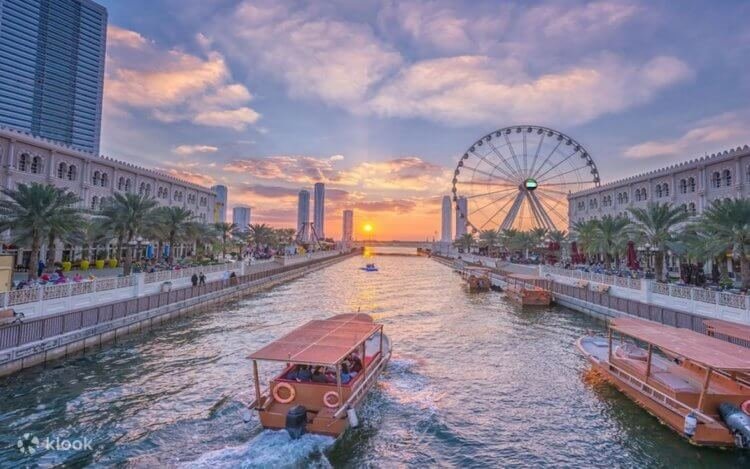

Sharjah city is the capital of the Emirate of Sharjah, the third-largest city in the UAE, and the country’s recognised cultural capital. It sits on the Arabian Gulf coast directly beside Dubai, which is why it works as both a destination in its own right and a practical, lower-cost base for people who work across the Dubai-Sharjah-Ajman metropolitan area.
The numbers explain why it keeps appearing on shortlists. The Sharjah Census 2025 counted 2,135,888 residents across the emirate, a 51 per cent rise in ten years, and 1,899,202 of them live in Sharjah city itself. About 89 per cent of residents are non-UAE nationals, so the city is used to newcomers and has the schools, clinics, supermarkets and community networks to prove it.
In practical terms, Sharjah suits three groups well. Families and professionals who want more space for their rent than Dubai offers will find it here. Students and university staff are served by University City. Property buyers and investors, increasingly from abroad, are drawn by freehold projects such as Aljada and Tilal City and by a market that logged AED 46.8 billion in transactions in the first nine months of 2026.
This guide moves from general to specific. It starts with how the city is organised, then covers each neighbourhood, daily life, transport, rents, prices, ownership rules for foreigners, investment data and the buying process, and it closes with a decision table and answers to the questions people ask most.
Sharjah city at a glance
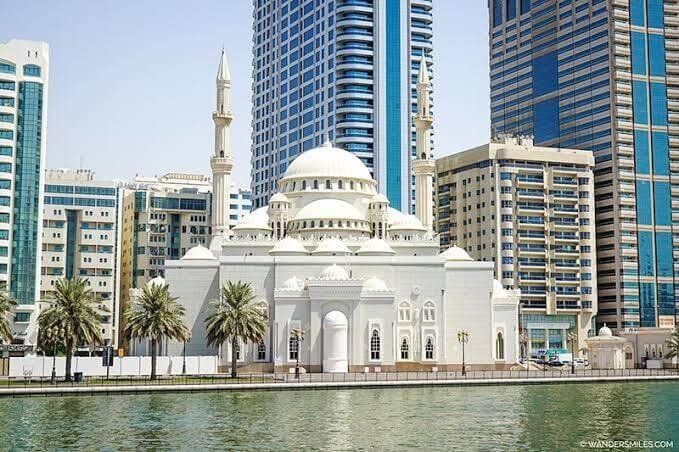
The table below gathers the facts most people look for first. Population and market figures come from official 2026 releases; rent and price levels are market-portal estimates and move month to month.
| Attribute | Value |
|---|---|
| Status | Capital of the Emirate of Sharjah; third-largest city in the UAE |
| Population (Census 2025) | 1,899,202 in the city; 2,135,888 in the emirate |
| Non-UAE residents | About 89% of the emirate |
| Location | Arabian Gulf coast, bordering Dubai to the south-west and Ajman to the north-east |
| Airport | Sharjah International Airport (SHJ), about 12 km from the city centre |
| Approximate city area | Around 235 km² |
| Climate | Hot desert; mild winters, very hot and humid summers |
| Property transactions, Jan-Sep 2026 | 91,560 transactions worth AED 46.8 billion (+14% year on year) |
| Citywide asking rent, Aug 2026 | AED 41.4 per sq ft per year (+1.8% over 12 months, Bayut) |
| Residential share of sales | 80.5% of 24,749 sales transactions, Jan-Sep 2026 |
| Foreign ownership | Allowed in designated freehold areas and approved projects only |
| Alcohol | Prohibited emirate-wide |
How Sharjah city is laid out
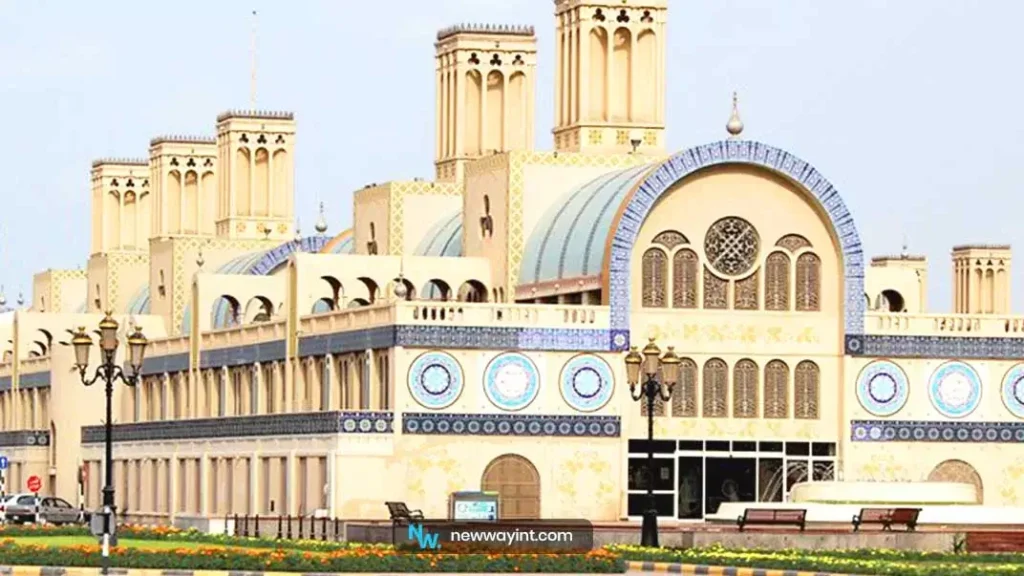
Sharjah city is easiest to understand as four bands running from the coast inland. Knowing which band a listing sits in tells you more about daily life than the area name alone.
The first band is the waterfront and old core. Al Majaz, Al Qasimia, Al Khan and the Buhaira Corniche wrap around Khalid Lagoon and the Gulf shoreline. This is where the museums, the Heritage Area, Al Qasba and the older high-rise towers are, and it is the most walkable part of the city.
The second band is the Dubai border belt. Al Nahda and Al Taawun sit right against the Dubai boundary, packed with apartment towers, supermarkets and small businesses. They exist largely because of their proximity to Dubai, and their appeal rises and falls with the state of the commute.
The third band is the university and growth corridor. Muwaileh, University City and the Aljada district, together with Sharjah International Airport and the future Etihad Rail station, form the city’s newest centre of gravity. This corridor led all Sharjah districts by transaction count and value in the first nine months of 2026.
The fourth band is the master-planned communities along Emirates Road (E611) and further east. Al Zahia, Tilal City, Masaar and Hayyan offer villas, townhouses and plots in landscaped neighbourhoods, trading closeness to the sea for space and newer infrastructure. Industrial Areas 1 to 18 occupy much of the inland land between these bands and are mainly relevant for staff housing, warehouses and workshops.
Beyond the city, the emirate also includes the Central Region (Al Dhaid, Mleiha, Al Bataeh) and three east-coast cities (Khor Fakkan, Kalba and Dibba Al Hisn). They are not covered here in depth, but they matter for context: Sharjah city accounted for 1,676 of the emirate’s 2,367 sales transactions in August 2026.
Recommended: Al Manakh Sharjah
Sharjah neighbourhood guide: where to live and what each area offers
There is no single best area in Sharjah. The right one depends on whether you prioritise the sea, the Dubai commute, a university, a villa garden or a low rent. Each profile below explains what the area is like, who it suits and what to watch for.
Al Majaz and Al Qasimia: waterfront and old-city convenience
Al Majaz is the city’s best-known waterfront address, with promenades, fountains and family attractions facing Khalid Lagoon. Al Qasimia, just behind it, feels like an older, busier part of the city, with lower rents and a dense mix of shops and eateries. Average asking rent for apartments in Al Majaz reached about AED 53,471 a year in 2026, up 3.3 per cent on the previous year, according to Bayut data reported by Arabian Business. The trade-off is parking and congestion: central districts have paid parking zones, and daily running costs are higher than the rent alone suggests.
Al Khan and Buhaira Corniche: sea views and premium towers
Al Khan combines beach access, Al Khan Lagoon views and newer high-rise stock, and it is a frequent choice for families who want a sea breeze without moving to Dubai. Average asking rents for apartments were about AED 58,925 a year in 2026, up 3.6 per cent. Al Khan also ranked third by transaction count in the first nine months of 2026, with 1,581 sales worth roughly AED 2 billion, and it recorded the largest single mortgage of August 2026. Maryam Island, the Shurooq and Eagle Hills waterfront project between downtown and Al Khan Lagoon, adds a more resort-style option with its waterfront promenade and residences.
Al Nahda and Al Taawun: the Dubai border belt
Al Nahda is the practical choice for anyone who works in Dubai. It sits on the boundary, with large supermarkets such as Carrefour and Al Maya, restaurants and a dense bus network. Asking rents for apartments averaged about AED 46,896 a year in 2026 (up 2.7 per cent), and Property Finder cites average apartment prices near AED 587,000 with a return of around 6 per cent. Al Taawun, a little closer to the corniche, averaged about AED 49,600 (up 5.3 per cent) and is consistently listed by portals among the most family-friendly districts. Expect heavier traffic at the Dubai crossing during rush hour.
Muwaileh and University City: students, staff and value
Muwaileh Commercial is the most actively traded district in Sharjah. It recorded 3,440 sales worth AED 3.9 billion in the first nine months of 2026, more than any other area. It is also considered one of the city’s lower-cost residential zones, close to University City, which houses the University of Sharjah and the American University of Sharjah. Demand from students and academic staff keeps the rental market steady, and newer towers give it a more modern look than the older core. Nearby University City will also host Sharjah’s Etihad Rail passenger station.
Aljada: Sharjah’s flagship master-planned district
Aljada, developed by Arada, is a roughly 24 million square foot mixed-use city within the city, close to University City and the airport. Its residential clusters, including Nest, East Village, Arij, Mesk, Sarab, Reyhan and Boulevard, are built around parks, retail and entertainment, and it is one of the few places in Sharjah where all nationalities can buy apartments and villas on ownership terms. Published figures suggest studio prices start around AED 420,000, and for rentals it is among the more expensive apartment areas in Sharjah. It suits people who value walkability, newer buildings and community facilities over low rent.
Al Zahia, Tilal City, Masaar and Hayyan: space and villa living
These communities sit east of the older city along or near Emirates Road. Al Zahia, developed by Majid Al Futtaim with Sharjah Holding, includes City Centre Al Zahia, a large mall with more than 360 stores and a VOX cinema, and its apartments averaged about AED 55,799 a year in rent in 2026, up 7 per cent. Tilal City, planned for around 65,000 residents near the Al Dhaid interchange and about 10 km from the airport, was Sharjah’s first large plotted community for non-Arab buyers, and it was the most-searched location for villa rentals in 2026, with average asking rents of about AED 225,515 a year (up 13.2 per cent). Masaar, by Arada, sits at around AED 984 per sq ft according to Bayut’s July 2026 index, with sub-communities ranging from roughly AED 760 to AED 1,033. These are car-dependent areas, so they suit families who value gardens and quiet streets.
Al Rahmaniya, Abu Shagara and Industrial Areas: budget-conscious options
Al Rahmaniya is a suburban pocket favoured by families; villa rents there averaged about AED 142,983 a year in 2026. Abu Shagara offers a lower-cost, central option, while Industrial Areas 1 to 18 are typically cheapest for shared staff housing but crowded with workshops and truck traffic. Budget seekers should visit at different times of day before signing a lease.
Recommended: Sajaa Sharjah
Living in Sharjah: culture, schools, healthcare, shopping and daily rules
Culture and attractions
Sharjah earns its cultural-capital title through institutions rather than slogans. The Sharjah Art Museum, which opened in 1997, and the Sharjah Art Foundation anchor the arts scene, while the Heritage Area, Al Hisn (Sharjah Fort) and the Sharjah Maritime Museum cover the city’s history as a pearling and trading port. Sharjah Aquarium, open since 2008, and the lagoon fountain at Khalid Lagoon are popular with families, and Al Qasba and the Al Majaz waterfront fill with residents in the evening once the heat eases. Alongside the museums, Sharjah hosts well-known annual events such as the Sharjah Biennial.
Safety and community life
Sharjah is widely regarded as one of the safest cities in the region, and each residential area is usually served by a nearby grocery, pharmacy and clinic. Families often choose it for that predictability. Parks, jogging tracks and play areas are common in the waterfront districts and in master-planned communities such as Aljada and Al Zahia.
Schools and universities
The city has a large number of private schools following British, American, Indian and other curricula, with new campuses opening in growth areas such as Tilal City, which hosts an Australian curriculum school. For higher education, University City is the centre of gravity: the University of Sharjah and the American University of Sharjah sit alongside several specialised colleges, which is why student housing demand stays strong around Muwaileh. Parents should check each school’s current fees and inspection rating directly, because both change annually.
Healthcare
Hospitals and clinics are spread across the city, with private hospitals and community clinics in most districts. If a school or hospital is a deciding factor, measure the real drive time at peak hours rather than the distance on the map.
Shopping, dining and beaches
Sahara Centre (Al Nahda), City Centre Sharjah and City Centre Al Zahia are the big malls, and neighbourhood hypermarkets cover daily needs. The dining scene runs from inexpensive shawarma and Indian restaurants to hotel fine dining, and the corniche is the place for waterfront cafes. Public beaches, including Al Mamzar Beach on the Dubai border, offer sea access, and several resort hotels operate private beaches.
Rules to know before you move
Sharjah is more conservative than neighbouring emirates. Alcohol is not sold or permitted anywhere in the emirate, and the emirate’s decency guidelines ask residents and visitors to dress modestly in public places. Many newcomers find the quieter nightlife a plus; those who want bars and clubs will head to Dubai. Pet owners should check building rules before renting, as policies vary by landlord and community.
Getting around Sharjah and commuting to Dubai
Most residents drive. Sharjah has no metro, so daily movement relies on cars, taxis and the bus network run by the Sharjah Roads and Transport Authority (SRTA), plus inter-emirate coaches to Dubai. Sharjah International Airport sits close to University City.
The Dubai commute: the honest picture
The commute is the single biggest quality-of-life variable for Sharjah residents who work in Dubai. Analysts note that peak-hour traffic on the Dubai-Sharjah route can stretch beyond two hours, and residents interviewed by Khaleej Times describe spending close to two hours a day in traffic. Choosing Al Nahda or Al Taawun shortens the distance, but not the queue at the border crossing, so test the route yourself at 7am and 6pm before signing a lease.
Roads under construction
Sharjah is spending AED 750 million on a package of five bridges, one tunnel and several free-flow intersections intended to ease traffic towards Dubai, with a soft opening targeted for November 2026. A new route called Noor Road, running from Al Orooba Street into Dubai via Al Nahda Bridge, is scheduled to open by the end of 2026. Until these open, expect temporary diversions, especially around University City and the Industrial Areas, where Etihad Rail station access roads are being built.
Etihad Rail: what is open and what is still coming
Etihad Rail’s passenger service began on 30 June 2026 with a first train between Fujairah and Abu Dhabi, and the network was formally launched on 30 September 2026. Stations in Dubai (at Jumeirah Golf Estates) and Al Dhaid opened on that date. Sharjah’s own station, in University City, is the last stop and is scheduled to open in March 2027. Fares were reported from AED 55 at launch. For buyers, the key point is timing: the rail benefit for Sharjah neighbourhoods near University City is real but still some months away, so avoid paying a premium today for a commute that does not yet exist.
Property types and prices in Sharjah city
Sharjah’s market is mostly apartments in the older districts and a growing stock of villas and townhouses in the master-planned communities. Published estimates put the median home price around AED 880,000 and the average near AED 1.35 million, with villas pulling the average above the median, at roughly AED 900 per sq ft overall. Treat these as orientation figures: portals use different samples, and prices differ sharply between a 2005 tower in Al Qasimia and a new villa in Masaar.
| Property type | Where you find it | Indicative entry price | Notes |
|---|---|---|---|
| Studio apartment | Al Nahda, Muwaileh, Aljada, Al Majaz | About AED 180,000 to 450,000 | Aljada studios published from around AED 420,000; older buildings sit at the low end |
| One-bedroom apartment | Al Nahda, Al Khan, Aljada, Al Zahia | About AED 350,000 to 725,000 | Waterfront and new-build units cost more |
| Two-bedroom apartment | Al Taawun, Al Majaz, Al Khan | About AED 550,000 to 1.1 million | The most liquid unit type for end-users |
| Townhouse | Al Zahia, Aljada, Masaar | Mid-range, varies by phase | Strong family demand; check service charges |
| Villa | Tilal City, Masaar, Al Rahmaniya, Sustainable City | From about AED 1.2 million; Masaar from about AED 1.1 million to over AED 20 million | Masaar has recorded Sharjah’s first super-luxury freehold sales |
| Land plot | Tilal City | Varies by plot size | Plots are sold for owners to build; confirm ownership terms |
| Commercial and industrial | Industrial Area 4, central roads | Deal-by-deal | Industrial Area 4 recorded Sharjah’s largest single sale in August 2026, a land plot worth AED 55 million |
Penthouses and branded ultra-luxury apartments are less prominent in Sharjah’s listings than in Dubai’s. Office and retail units are mostly found along main roads, in mixed-use districts such as Aljada and Al Mamsha, and in the free zones.
One cost advantage is worth noting. The sources reviewed for this guide report no annual property tax on residential property, but service charges, registration fees and, for rentals, paid parking in central districts can add up. Confirm all current fees with the developer or the Sharjah Real Estate Registration Department before you commit.
Renting in Sharjah: rents by area in 2026
Sharjah rents remain roughly 20 to 30 per cent below Dubai’s for comparable homes, which is the main reason many Dubai-based workers choose to live here. Across the whole city, Bayut put the average asking rent at AED 41.4 per sq ft in August 2026, only 1.8 per cent higher than a year earlier. That calm headline hides sharp differences: some villa areas rose by double digits while established apartment districts moved a few per cent.
The averages below are asking rents for the most-searched communities, as reported by Arabian Business from Bayut data, and they mix unit sizes, so use them to compare areas rather than to price a specific flat.
| Area | Home type | Average asking rent per year | Change over 12 months |
|---|---|---|---|
| Al Khan | Apartments | AED 58,925 | +3.6% |
| Al Zahia | Apartments | AED 55,799 | +7% |
| Al Majaz | Apartments | AED 53,471 | +3.3% |
| Al Taawun | Apartments | AED 49,600 | +5.3% |
| Al Nahda | Apartments | AED 46,896 | +2.7% |
| Tilal City | Villas | AED 225,515 | +13.2% |
| Hoshi | Villas | AED 159,935 | n/a in source |
| Al Rahmaniya | Villas | AED 142,983 | n/a in source |
| Al Mansoura | Villas | AED 114,284 | +30.6% |
| Al Sabkha | Villas | AED 81,423 | +14.5% |
| Al Qadisiyah | Villas | AED 69,521 | +19.1% |
A few practical points follow from the data. New buildings and master-planned communities such as Aljada and Al Zahia are pricing above the older core because tenants pay for newer finishes and facilities. Villa rents are rising faster than apartment rents, which suggests growing demand from families wanting more space. And because the strongest increases are concentrated in a handful of villa neighbourhoods, a tenant renewing in Tilal City or Al Mansoura should budget for a larger jump than someone in Al Nahda.
Before signing, ask about the number of cheques, whether parking and chilled water are included, and whether the building has its own paid parking. In central districts, parking can add noticeably to the true cost of a lower-rent flat.
Can foreigners buy property in Sharjah? Freehold rules explained
Yes, but only in specific areas and projects. Under Sharjah law, general property ownership is reserved for UAE and GCC nationals, and non-GCC foreigners can own only where an exception applies. That exception is the heart of the market, so it is worth understanding properly.
Before 2022, foreign buyers in Sharjah could hold only a usufruct right, meaning a right to use and benefit from a property for up to 100 years, not outright ownership. On 27 October 2022 the Ruler of Sharjah issued Law No. 2 of 2022, which amended Article 4 of Law No. 5 of 2010. The general rule still limits ownership to UAE and GCC nationals, but it now allows exceptions: ownership with the Ruler’s approval, transfer by inheritance, assignment to first-degree relatives, and ownership in real estate development areas and projects designated by the Sharjah Executive Council.
In practice, that means each project needs its own approval. The Sharjah Real Estate Registration Department said six projects received approval in the first half of 2026, adding to the pool of properties open to foreign buyers. The department also reported that investors from 121 nationalities bought in Sharjah in that period, which shows how quickly the pool has grown.
Outside approved projects, non-GCC foreigners cannot hold freehold title. Developments widely described as open to foreign ownership include Aljada, Masaar and Tilal City, among others. Tilal City first offered non-Arab buyers 100-year leaseholds on plots, and some portals now describe plots there as freehold for all nationalities, so confirm the exact title type for the specific plot or unit. Gulf News has also reported that buyers in some Arada projects can convert 100-year rights into freehold titles.
Before paying any deposit, ask the seller or developer three questions in writing. Is the project formally approved for foreign ownership by the Sharjah Executive Council? Will the title be freehold or a long lease or usufruct, and can it be sold, mortgaged and inherited? Is the unit registered with the Sharjah Real Estate Registration Department? This guide is general information, not legal advice, so have a qualified UAE property lawyer review the contract for any significant purchase.
Investing in Sharjah property: demand, yields and risks
Sharjah has moved from a commuter value market to a more established investment destination, and the official data supports that view. The Sharjah Real Estate Registration Department recorded 91,560 transactions worth AED 46.8 billion in the first nine months of 2026, a 14 per cent rise in transactions on the same period of 2025. Residential property made up 80.5 per cent of the 24,749 sales, and 22 new projects were registered. In 2025, sales reached a record AED 65.6 billion, and a Khaleej Times report counted nearly 34,000 homes due for delivery over the following five years.
Two details in the data are useful for investors. First, sales transaction growth was modest at 2.1 per cent, so the 14 per cent headline growth comes from total registry activity, including ownership certificates and mortgages, rather than from a surge in resale volume. Second, Muwaileh Commercial, Al Buleida and Al Khan led by volume and value, which tells you where liquidity is deepest: a thinly traded community may be harder to exit even if its yield looks attractive on paper.
What yields can you expect?
Published estimates vary. Market commentators put gross rental yields in the 6 to 9 per cent range depending on location and unit type, compared with roughly 5 to 7 per cent in Dubai, and mid-market apartments in Muwaileh Commercial, Al Nahda and parts of Aljada are often cited at the upper end. Property Finder cites about 6 per cent in Al Nahda, and Mada Properties cites around 6 per cent in Al Majaz. Treat all of these as gross figures: service charges, vacancy periods, maintenance and agent fees can noticeably reduce what you keep. Always calculate net yield from a specific unit’s real service charge and a realistic rent.
Where the upside and the risks sit
The upside rests on affordability, infrastructure and population growth. Etihad Rail’s Sharjah station, the AED 750 million road package and a population that grew 51 per cent in a decade all support demand, and CBRE’s Mena research head has said the completed rail network could add impetus to price growth. The risks are just as concrete. Supply is large, with tens of thousands of homes in the pipeline. The resale market in newer freehold communities is thinner than in Dubai. Ownership is limited to approved projects. And regional tensions in 2026 have disrupted some Gulf construction contracts and flight schedules, so verify handover dates and the developer’s track record, and check how buyer payments are protected on off-plan projects. Past performance and portal forecasts are not guarantees; this is not financial advice.
Off-plan or ready property, and the projects shaping Sharjah’s future
Off-plan buying is a visible part of the market. In August 2026, initial sales contracts, which usually represent off-plan or early-stage purchases, accounted for 978 of 9,139 registry transactions, or about 10.7 per cent. Off-plan suits buyers who can wait, want a staged payment plan and are comfortable with delivery risk. Ready property suits those who want rent from day one, a clear view of the building’s condition and a visible service-charge history.
The projects most often discussed are these:
- Aljada (Arada): about 24 million sq ft of homes, retail, hotels and leisure near University City, the anchor of the new city centre.
- Masaar (Arada): a villa and townhouse community; Gulf News has reported that buyers in Arada’s Sharjah projects can convert 100-year lease rights into freehold titles.
- Maryam Island (Shurooq with Eagle Hills): a waterfront development of about 3.3 million sq ft with 18 residential buildings and more than 3,500 homes, overlooking Al Mamzar Beach and Al Khan Lagoon. It was scheduled for completion in 2026, with phases handed over progressively; check the latest phase status.
- Al Mamsha (Alef Group): a roughly AED 3 billion mixed-use project of walkable apartments, retail and offices.
- Sharjah Sustainable City (Shurooq and Diamond Developers): a renewable-energy community in the Umm Fannan area near Al Rahmaniya.
- Khalid Bin Sultan City (Beeah): a sustainability-led community in Rodhat Al Sidr, east of the city, whose first phase of more than 400 freehold homes sold out.
Developers including Arada, Alef Group and IFA Hotels and Resorts launched more than 12,000 freehold units in 2025, according to Savills commentary reported by Khaleej Times. When comparing launches, look past the render. Check the developer’s delivered projects, the payment plan, the project’s approval status for foreign ownership, and whether service charges have been disclosed.
How to buy property in Sharjah: the process step by step
The sequence below applies to most purchases in approved freehold projects. Details and fees change, so confirm each step with the developer and the Sharjah Real Estate Registration Department.
- Set your budget and purpose. Decide whether you are buying to live, to rent out or to hold, and include service charges, registration fees and any mortgage costs in the budget.
- Confirm the area is eligible. If you are not a UAE or GCC national, shortlist only projects approved for foreign ownership and ask for proof of that approval.
- Shortlist and inspect. Visit at different times of day, test the commute to your workplace, and check the building’s condition, parking and service-charge history.
- Reserve the unit. A reservation form and deposit usually hold the unit while contracts are prepared. Read the refund terms first.
- Sign the sale contract. For off-plan homes this is the initial sales contract with the developer; for resale it is a sale agreement between buyer and seller. Have a lawyer review it for significant purchases.
- Pay and register. Payments follow the agreed schedule, and the transaction is registered with the Sharjah Real Estate Registration Department, which issues the ownership document. Registration fees apply, so ask for the current rate in writing.
- Take handover and set up utilities. Inspect the unit, record snags in writing and arrange electricity, water and internet. If you plan to rent it out, agree a tenancy and register it as required.
If you need finance, speak to a bank early about whether the specific project is eligible, because lenders apply their own rules to freehold projects and maximum loan-to-value limits vary for non-residents.
Which Sharjah area suits you? A quick decision table
Use this table as a shortlist, then verify rents and prices for the specific building.
| If you want… | Look at | Why | Watch out for |
|---|---|---|---|
| The shortest Dubai commute | Al Nahda, Al Taawun | Bordering Dubai, with dense services | Border congestion at peak hours |
| Sea views and a walkable waterfront | Al Majaz, Al Khan, Maryam Island | Corniche, lagoon and beach access | Higher rents; paid parking |
| Lowest rent | Al Qasimia, parts of Muwaileh, Abu Shagara, Industrial Areas | Older stock and lower asking rents | Building age, noise and traffic |
| Students and academic life | Muwaileh, University City | Close to University of Sharjah and AUS | Roadworks until Etihad Rail access roads finish |
| New buildings and community facilities | Aljada, Al Zahia | Parks, retail and modern stock | Premium rents |
| A villa with a garden | Tilal City, Masaar, Al Rahmaniya, Hoshi | Space and quiet streets | Car dependency; fast-rising villa rents |
| Liquid investment property | Muwaileh Commercial, Al Khan, Al Nahda | Highest sales volumes in 2026 | Gross yields are not net yields |
| Long-term growth bet | Areas near the future Etihad Rail station | Rail due March 2027 | Benefit not yet in place |
FAQs
Is Sharjah a good place to live?
Yes, for many people. It offers lower rents than Dubai, a family-oriented community, strong cultural life and good access to schools and universities. The main drawbacks are the Dubai commute and a more conservative lifestyle, including no alcohol.
Is Sharjah cheaper than Dubai?
Generally yes. Rents are roughly 20 to 30 per cent lower than in Dubai for comparable homes, and one-bedroom rents are commonly quoted between AED 22,000 and AED 30,000 a year in older estimates, though newer districts cost more.
What is the best area to live in Sharjah?
It depends on your priorities. Al Nahda and Al Taawun suit Dubai commuters, Al Majaz and Al Khan suit people who want the waterfront, Muwaileh suits students and budget seekers, and Aljada, Al Zahia and Tilal City suit families wanting newer communities and space.
What are the best family areas in Sharjah?
Bayut’s analysis has ranked Al Nahda and Al Majaz as popular family areas, with Al Taawun, Muwaileh and Al Khan also featuring. Master-planned communities such as Al Zahia and Tilal City suit families who want parks and villas.
Can foreigners buy property in Sharjah?
Yes, in designated freehold areas and approved projects. Under Law No. 2 of 2022, foreign ownership is allowed where the Sharjah Executive Council has approved a project. Outside those projects, non-GCC foreigners cannot hold freehold title.
Which areas of Sharjah allow freehold ownership?
Projects commonly cited include Aljada, Masaar and Tilal City, among others. Approvals are granted project by project, so confirm the specific project before paying a deposit.
How much does a home cost in Sharjah?
Published estimates put the median home near AED 880,000. Studios start around AED 180,000 to 450,000 depending on area, two-bedroom apartments from about AED 550,000, and villas from roughly AED 1.1 to 1.2 million.
What rental yield can I expect in Sharjah?
Gross yields of about 6 to 9 per cent are commonly quoted, depending on the area and unit type. Net yields are lower after service charges, vacancy and fees, so calculate them for the specific unit.
Is Sharjah a good investment in 2026?
The data is encouraging: 91,560 transactions worth AED 46.8 billion in nine months, a growing population and major infrastructure. Risks include large new supply, thinner resale markets in new communities and delivery delays, so due diligence matters.
How long is the commute from Sharjah to Dubai?
Off-peak it can be short, but peak-hour traffic on the Dubai-Sharjah route can exceed two hours. Roads such as Noor Road and a new bridge and tunnel package are planned, and Etihad Rail’s Sharjah station is due in March 2027.
When does Etihad Rail reach Sharjah?
Passenger services began on 30 June 2026, with Dubai and Al Dhaid stations opening on 30 September 2026. Sharjah’s University City station is the last stop and is scheduled for March 2027.
Is alcohol allowed in Sharjah?
No. Alcohol is not sold or permitted anywhere in the emirate. Residents who want it typically go to licensed venues in Dubai.
Is Sharjah safe?
Sharjah is widely regarded as one of the region’s safest cities, with a low crime rate and family-oriented neighbourhoods, though normal precautions apply.
What is Sharjah known for?
It is the UAE’s cultural capital, known for its museums, Heritage Area, Al Qasba, Khalid Lagoon, university district and its conservative, family-friendly character.


Leave a Reply