
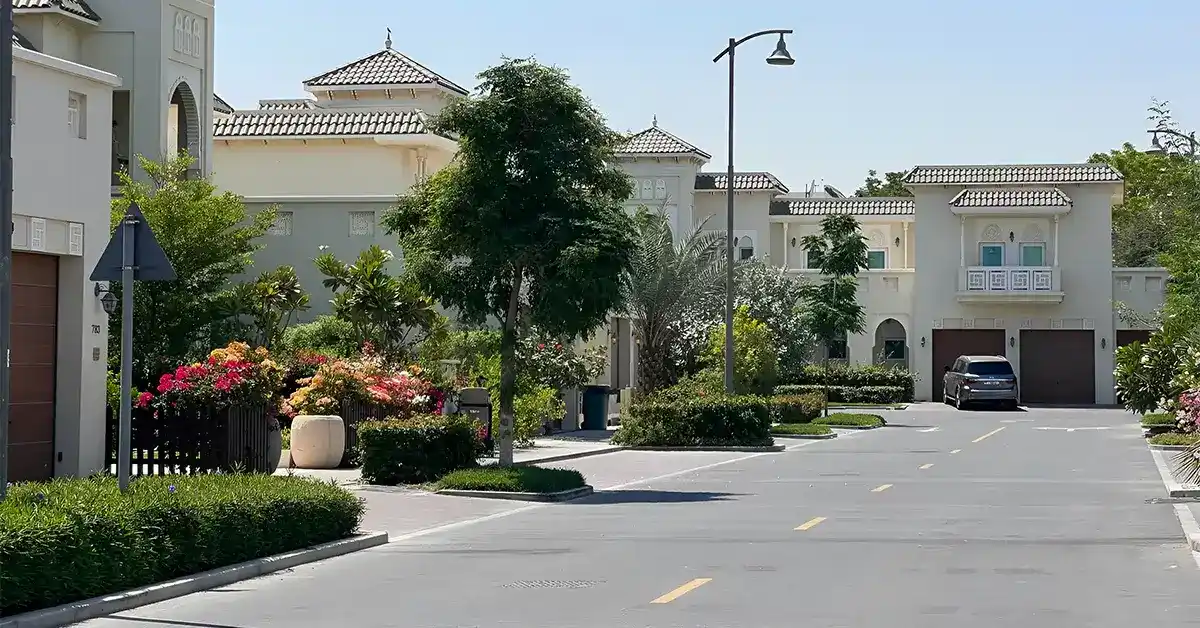

Al Furjan is a master-planned residential community in New Dubai, developed by Nakheel. It sits between Sheikh Zayed Road (E11) and Sheikh Mohammed Bin Zayed Road (E311), close to Discovery Gardens, Jebel Ali Village and Jumeirah Park. Its mix of villas, townhouses and low- to mid-rise apartments, plus schools, parks and retail, gives it a suburban, family-oriented feel.
This guide explains what living in Al Furjan is really like, what property costs in 2026, and where the community works well or falls short.
What Is Al Furjan?
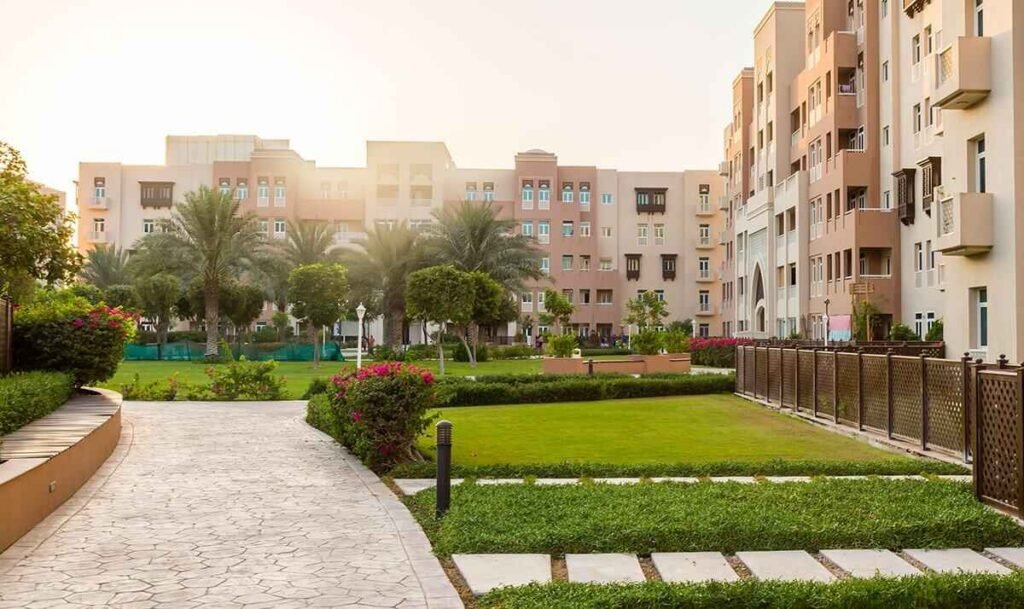
Al Furjan is a freehold residential community in Dubai, developed by Nakheel, known for affordable family housing and metro access. The name means “small villages” in Arabic, which describes its design: clusters of homes arranged into distinct neighbourhoods rather than one dense block. Nakheel’s master plan covers over 5.6 million square metres.
Al Furjan is also freehold, so foreign nationals can own property outright. That, together with prices well below waterfront areas, explains much of its popularity with first-time buyers and mid-market investors.
Al Furjan Location and Connectivity
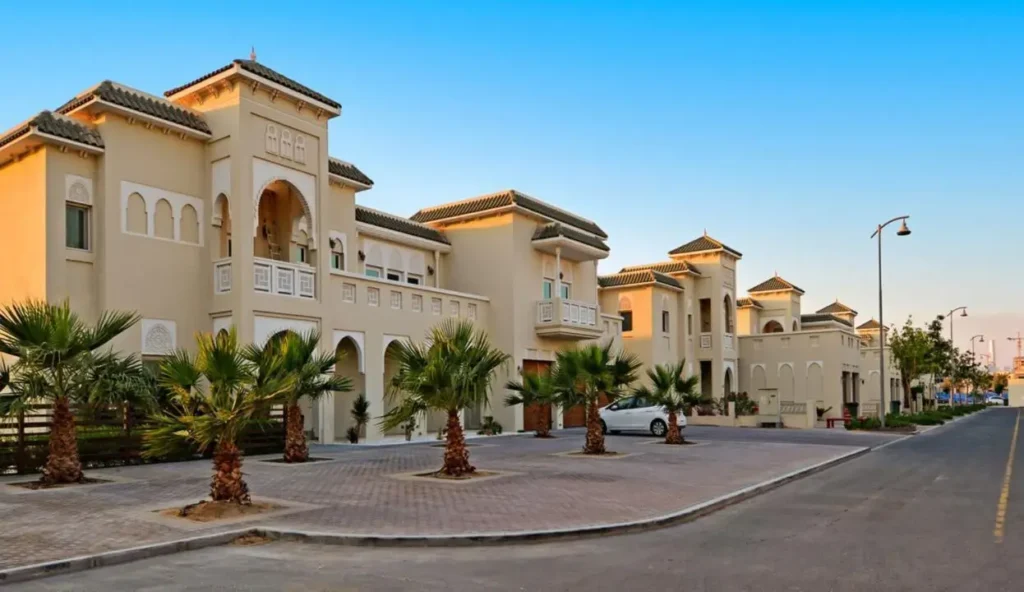
Al Furjan sits between two of Dubai’s main highways, so drivers can reach most parts of the city quickly outside rush hour. Al Maktoum International Airport is about 20 minutes away, and Dubai Sports City and Jumeirah Golf Estates are a similar drive.
The biggest change for the community was the Al Furjan Metro Station on the Route 2020 extension of the Red Line. It links residents to Expo City Dubai and the wider network. Investor sources credit the station with widening the tenant pool by connecting Al Furjan to Mall of the Emirates, Dubai Marina, Downtown and Expo City. The station sits on the community’s edge, so homes nearby command a rental premium, while those deeper inside usually need a short drive or feeder transport.
Peak-hour traffic on the main roads is the trade-off. Bayut notes that congestion at rush hour and some ongoing construction are the main drawbacks.
Al Furjan Sub-Communities Explained
Al Furjan is not one uniform product. Where you buy or rent changes the experience.
Masakin Al Furjan is the original Nakheel villa and townhouse area. It sits at the higher end of villa pricing, with consistent build quality and strong family tenant retention. Quortaj townhouses suit smaller families wanting a garden without villa costs. Dubai Style villas are a larger, popular Nakheel cluster.
Murooj Al Furjan and Tilal Al Furjan are the newer, larger-format villa communities. Tilal Al Furjan is the premium tier, with homes typically five to six bedrooms and often private pools. Apartment buildings from developers such as Azizi, Danube and MAG cluster around the retail hubs and metro side, and new projects such as Azizi Central, SPARKLZ by Danube and ZaZEN Ivy are in the pipeline.
Lifestyle, Schools and Amenities
Daily life is centred on two community retail hubs. Al Furjan Pavilion and Al Furjan West Pavilion hold supermarkets, cafes, salons and clinics. Supermarkets include Spinneys and Geant, and Medicentres operates a clinic at the Pavilion. Larger shopping is at Ibn Battuta Mall, a short drive away.
Education is a real strength. The Arbor School follows the English National Curriculum and is described as the UAE’s first sustainable school; Arcadia Global School also follows it, from FS1 to Year 8. Nurseries include Chubby Cheeks and Jebel Ali Village Nursery. Confirm fees, places and KHDA ratings directly, as they change every year.
Outdoor life is a selling point: landscaped parks, cycling and walking tracks, and shared pools. One 2026 guide describes Al Furjan as one of Dubai’s more outdoor-friendly neighbourhoods. The nearest public beaches are about 20 to 25 minutes by car, and Jebel Ali Recreation Club is a nearby leisure option. Mosques include Al Furjan West Mosque and Al Yaqeen Mosque. Churches and temples are mostly in Jebel Ali Village, about 10 minutes away.
Nightlife is limited. Al Furjan is a residential suburb, so evenings out usually mean driving to Dubai Marina or JBR.
Al Furjan Property Types and Prices
Apartments. These are mostly 1 to 3 bedrooms in low- to mid-rise buildings with pools and gyms. Studios and one-bedrooms in older stock ranged from about AED 550,000 to AED 950,000 in early 2026, at roughly AED 950 to 1,200 per square foot.
Townhouses. Three- and four-bedroom homes are the community’s practical middle ground. Asking prices for a three-bedroom townhouse start around the mid-AED 2 million range, according to recent portal data.
Villas. These are 3 to 5 bedrooms, with maids’ rooms, gardens and parking. Oliva puts villa pricing at roughly AED 1,500 to 2,100 per square foot. Tilal and larger Murooj homes sit at the top of this range.
Across all stock, Oliva reports an average asking price of about AED 1.7 million across active projects, at roughly AED 1,195 per square foot.
There is little commercial or office space and no significant plot availability. Al Furjan is primarily residential, with retail concentrated in the two Pavilions.
Rental Market
Villa rents are well documented. DLD transaction data cited by Bayut shows an average villa rent of about AED 275,334 over the last 12 months. Listing prices are higher than registered contracts, so treat asking rents as a ceiling. Portal guides show three-bedroom villas starting near AED 170,000 and four-bedroom villas near AED 200,000, rising with size and sub-community.
For apartments, one recent market summary puts one-bedroom rents at roughly AED 55,000 to 85,000 per year and two-bedrooms at AED 100,000 to 120,000. Metro proximity, furnishing and building age drive the spread.
Is Al Furjan a Good Investment?
Al Furjan is a strong mid-market investment, particularly for apartment yields, but headline numbers vary by source.
Studio yields near 8.5% are widely quoted, while one- and two-bedroom apartments are commonly cited at 6.5% to 8% and villas at 5.5% to 6.5% gross. A more conservative view exists: Oliva’s model averages about 5.9% gross, with net yield one to one and a half percentage points lower after service charges, DLD fees and agency costs. The gap comes from method: some sources only look at studios and best-case listings, others average the whole community.
For planning purposes, assume the following: apartments near the metro have the best yield and the fastest re-letting, while villas offer lower yield but stronger family demand and long-term appreciation. Sources point to Expo City, Dubai South and the Jebel Ali corridor as ongoing demand drivers.
Investors should also weigh off-plan supply. Al Furjan has a steady pipeline of new apartment projects, which can compete with resale units on both price and rent. Compare service charges before buying, since they reduce net yield.
Golden Visa. One 2026 guide states that purchases of AED 2 million or more qualify for the Golden Visa under current rules. Rules change, so confirm eligibility with the relevant authority.
How to Buy in Al Furjan
- Set a budget including the 4% DLD transfer fee, agency fees and mortgage costs.
- Choose a sub-community based on lifestyle: metro-side apartments for yield, Masakin or Quortaj for family townhouses, Murooj or Tilal for larger villas.
- Compare against DLD data rather than asking prices; one tracker notes a typical 3% to 5% gap between asking and closing prices in Dubai.
- Sign the sale agreement (Form F), pay the deposit and complete the transfer at a DLD-registered trustee office.
- For off-plan, verify the developer’s RERA registration, escrow account and payment plan.
Pros and Cons
What works: metro access, price per square foot below waterfront areas, schools inside or near the community, green space, freehold ownership and larger layouts than many central apartments.
What to weigh: peak-hour traffic on the main roads, ongoing construction in parts of the area, limited nightlife, and a distance from the beach and city centre. The metro helps, but not every home is walkable to it.
Who Al Furjan Suits
Al Furjan suits families wanting a garden and schools nearby, professionals commuting to Dubai Marina, JLT or Expo City, and investors targeting mid-market yield. It suits people seeking beachfront living, nightlife or a fully walkable urban lifestyle less well.
FAQs
Where is Al Furjan in Dubai?
Between Sheikh Zayed Road (E11) and Sheikh Mohammed Bin Zayed Road (E311), near Discovery Gardens, Jebel Ali Village and Jumeirah Park.
Who developed Al Furjan?
Nakheel master-developed it. Azizi, Danube, MAG and NED Al Ghurair have built projects within it.
Is Al Furjan freehold?
Yes. Foreign nationals can own property outright.
Is Al Furjan a good place for families?
Yes. It has villas and townhouses, schools such as The Arbor School and Arcadia Global School, parks and community retail.
Is there a metro station in Al Furjan?
Yes. Al Furjan Metro Station on Route 2020 connects to Expo City and the Red Line.
How much do apartments cost in Al Furjan?
Older studios and one-bedrooms were around AED 550,000 to 950,000 in early 2026, with newer and larger units higher.
How much does a villa cost to rent?
DLD-based data shows an average of about AED 275,000 per year, with premium Tilal homes considerably higher.
What is the rental yield in Al Furjan?
Commonly 6.5% to 8% gross for apartments and 5.5% to 6.5% for villas, with more conservative estimates near 6%. Net yield is lower.
Is Al Furjan a good investment in 2026?
It is a solid mid-market option, especially for metro-adjacent apartments, but compare net yield and upcoming supply first.
Are there malls in Al Furjan?
Al Furjan Pavilion and Al Furjan West Pavilion serve daily needs, and Ibn Battuta Mall is nearby.
How far is Al Furjan from the beach?
Roughly 20 to 25 minutes by car.
Is Al Furjan quiet?
Yes, it is a residential suburb with limited nightlife.

Leave a Reply