
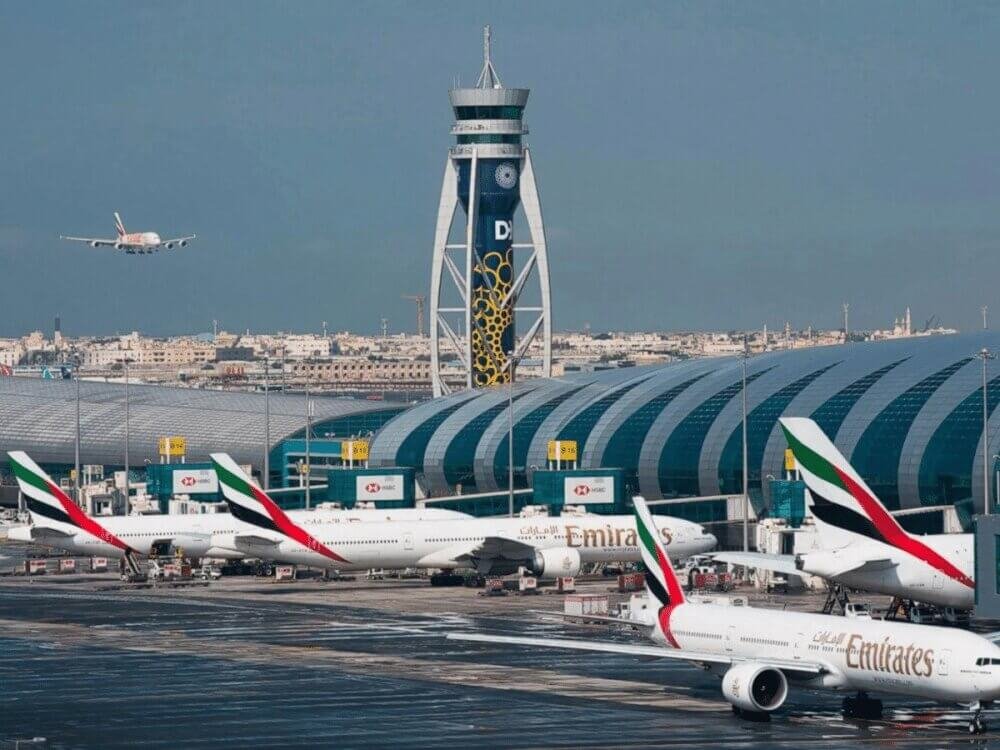

Al Maktoum International Airport, also known as Dubai World Central (DWC), sits in the Jebel Ali area of southern Dubai and forms the centrepiece of Dubai South, a 145-square-kilometre master-planned district that will eventually house more than a million residents. As of 2026, the airport is under an AED 128 billion ($35 billion) expansion, with construction underway and first-phase operations targeted for 2032. For homebuyers and investors, the airport is no longer a distant plan on a map – it is an active construction project reshaping property prices, rental demand, and connectivity across an entire corridor of southern Dubai.
This guide explains where the airport is, how its expansion is progressing, and – most importantly for anyone considering property in the area – what living or investing near Al Maktoum International Airport actually looks like in 2026.
Where Is Al Maktoum International Airport Located?
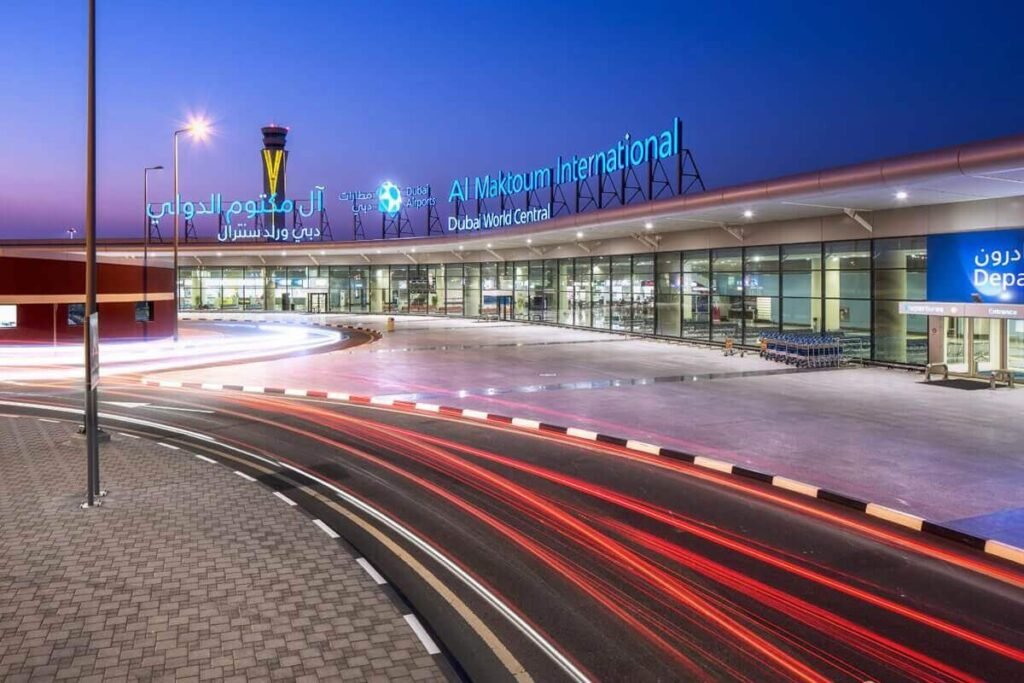
Al Maktoum International Airport sits within Dubai South, roughly 45 kilometres south of Downtown Dubai and close to the Abu Dhabi border, between Sheikh Mohammed Bin Zayed Road (E311) and Emirates Road (E611). It is directly adjacent to Jebel Ali Port, one of the busiest man-made ports in the world, which is a deliberate piece of planning: Dubai wants sea and air freight to connect through a single logistics corridor, often referred to locally as the Sea-to-Air corridor.
The airport first opened for cargo operations in June 2010 and began passenger services in October 2013. For most of the 2010s it operated as a secondary airport for low-cost carriers and cargo flights while Dubai International Airport (DXB) remained the city’s primary hub. That balance is now shifting.
Al Maktoum International Airport: 2026 Expansion Status
Dubai approved the current expansion programme in April 2024, and by June 2026 officials confirmed that first-phase construction remains on schedule, with operations due to begin in 2032. The scale of the project is difficult to overstate:
The finished airport is designed to handle up to 260 million passengers a year and 12 million tonnes of cargo annually, across five parallel runways and more than 400 aircraft stands. That would make it close to three times the size of DXB, which recorded a record 95.2 million passengers in 2025. The first major phase alone is expected to provide capacity for roughly 150 million passengers a year.
In June 2026, Dubai’s Crown Prince, Sheikh Hamdan bin Mohammed, confirmed that the government would award more than AED 55 billion in strategic project contracts in the following months – described as the largest single procurement wave in the project’s history. Design work is complete and ground construction is underway on the terminal, runways, and supporting infrastructure.
Why Dubai Is Building a Second Mega Airport
The rationale is simple: DXB has essentially run out of room. It sits inside a dense urban footprint in Garhoud, with no meaningful space left for new runways or terminal capacity. Al Maktoum International Airport, by contrast, sits on open land in southern Dubai with room to grow for decades. Dubai Airports has framed the project as giving the city “room for another generation of growth” while Emirates retains its hub-scale operations. Over the long term, Emirates and the bulk of Dubai’s commercial aviation activity are expected to relocate from DXB to Al Maktoum once the new hub reaches sufficient capacity – a transition industry sources currently place well into the 2030s.
Airport Expansion Timeline at a Glance
| Milestone | Status |
|---|---|
| Cargo operations begin | 2010 |
| Passenger operations begin | 2013 |
| Current expansion approved | April 2024 |
| Major contract awards (AED 55bn+) | 2026 |
| Phase 1 operational (approx. 150m passengers/year) | Targeted 2032 |
| Full build-out (260m passengers/year) | Long-term, beyond 2032 |
Because the airport’s own construction has already shifted timelines more than once since it was first proposed in the mid-2000s, buyers should treat these dates as the current official position rather than a guarantee. What has changed materially in 2026 is that ground construction and large-scale contract awards are now genuinely underway, which is a meaningfully different signal than the planning-stage announcements of previous years.
Dubai South: The District Built Around the Airport
Dubai South – formerly branded Dubai World Central – is the government master district that surrounds the airport. It is not a single neighbourhood but a collection of purpose-built zones, each with a different function:
- Aviation District – home to the airport itself, Emirates flight training facilities, and aviation-linked employers.
- Logistics District – one of the world’s largest integrated logistics platforms, built around the intersection of the airport and Jebel Ali Port.
- Residential District – the core housing stock of Dubai South, with parks, schools, mosques, and retail at prices that compete with the most affordable communities in Dubai.
- Business Park and Commercial District – office and light-commercial space aimed at logistics, trading, and aviation-support companies.
- Golf District – anchored by Emaar South’s 18-hole championship golf course.
A common point of confusion is the difference between Dubai South and Emaar South. Dubai South is the entire government-backed district; Emaar South is one private developer’s gated community inside it. Listings and search results frequently use the two names interchangeably, but they represent different ownership structures, price points, and product types, which matters when comparing supply and judging future value.
Dubai South’s residential sales have grown quickly alongside the airport news cycle: the district reported more than AED 19 billion in residential sales in 2024, and transactions exceeded AED 15 billion in just the first five months of 2025 – already close to the entire prior year’s total.
Connectivity: Roads, Metro, and Rail
Connectivity is the single biggest factor determining how the airport area functions day-to-day, and it is improving on three fronts.
Roads. The area is served by Sheikh Mohammed Bin Zayed Road (E311) and Emirates Road (E611), which connect southern Dubai to Downtown Dubai, Dubai Marina, and Abu Dhabi without routing through the city’s most congested corridors. Typical drive times from communities near the airport are around 20–25 minutes to Dubai Marina, 25–35 minutes to Business Bay and Downtown Dubai, and as little as 5–10 minutes to Expo City Dubai.
Metro. The Dubai Metro Blue Line, currently under construction, is planned to extend service directly toward Al Maktoum International Airport, with 14 new stations serving the wider Dubai South corridor. This is widely regarded as the development that will most improve the area’s day-to-day accessibility once complete, addressing the commute concerns that some buyers currently raise about the district.
Rail. Etihad Rail, the UAE’s national freight and passenger rail network, lists the airport as a designated stop, reinforcing Dubai South’s role as a logistics and passenger interchange linking the emirate to the wider UAE rail grid.
Communities and Property Options Near Al Maktoum International Airport
Several distinct residential communities sit within a short drive of the airport, each with a different profile.
Emaar South
Emaar South is the best-known residential address near the airport – a 700-hectare, golf-course-anchored community developed by Emaar Properties, roughly five to eight minutes from the airport and around ten minutes from Expo City Dubai. It is built around an 18-hole championship golf course and includes more than a dozen sub-communities such as Urbana, Golf Views, Golf Links, Parkside, Greenview, and Fairway Villas, alongside a retail hub known as South Village and a planned Aloft-branded hotel.
The community mixes ready and off-plan stock. Delivered projects include Urbana’s townhouses, Golf Views apartments, Golf Links villas, and the Expo Golf Villas phases; newer launches branded Golf Point, Golf Edge, and Greenway are off-plan with handovers running through 2028–2029. Construction across the wider masterplan is still ongoing, with the community currently estimated at around 40% complete, so buyers should expect an active building site in parts of the community for several more years.
Dubai South Residential District
This is the more affordable core of Dubai South, with a mix of apartments and townhouses designed with wide streets, parks, schools, and mosques rather than resort-style branding. It appeals to families and professionals who prioritise space and value over prestige, and it has become a common choice for staff working in the aviation and logistics sectors nearby.
South Bay
A newer master-planned zone within Dubai South built around a three-kilometre crystal lagoon, offering roughly 800 villas and townhouses. It has moved quickly from an “affordable” positioning toward a more premium address, with reported price growth of close to 19% over a recent twelve-month period.
Nearby Established Communities
Buyers who want more built-out infrastructure today, rather than a community still under construction, often compare the airport corridor to established areas slightly further out, such as Al Furjan and Dubai Investments Park (DIP), both within a reasonable drive of the airport and offering more mature amenities, schools, and retail while still benefiting from the wider southern Dubai growth story.
Property Types and Prices Near Al Maktoum International Airport
The area offers the full range of residential product, generally at prices well below Dubai’s established central districts.
Apartments. Studio and one-bedroom units in the wider Dubai South district start from around AED 300,000–450,000, among the most accessible entry points in the emirate. In Emaar South specifically, apartment pricing generally sits between roughly AED 1,150 and AED 1,900 per square foot, with entry-level off-plan launches such as Golf Point starting near AED 850,000.
Townhouses. Townhouse clusters are the most actively traded product type in Emaar South, with roughly 500 rental contracts registered in just the first five months of 2026. Off-plan townhouse pricing in newer phases such as Greenway starts near AED 2.9–3.15 million.
Villas. Villa pricing in Emaar South starts from roughly AED 4.48 million for newer launches such as Golf Lane, while smaller detached houses in earlier phases have historically started closer to AED 800,000–1.2 million depending on size and phase.
Off-plan vs. ready. Given that Emaar South is roughly 40% built out and Dubai South’s Residential District continues to expand, a significant share of available inventory is off-plan, typically with 10–20% down payments and post-handover payment plans. Ready stock does exist, particularly in earlier Emaar South phases like Urbana and Golf Views, and tends to command a premium over comparable off-plan units due to immediate income potential.
Across the district, average prices remain roughly 60% lower than prime areas such as Downtown Dubai or Business Bay, which is the core of the area’s investment appeal – buyers are essentially pricing in future infrastructure rather than paying for it today.
Rental Market and Investment Yields
Rental performance near the airport has been one of the strongest stories in the wider Dubai market through 2026. Gross rental yields across Dubai South are commonly cited in the 6–9% range, with some sources placing net yields in the 5–7% range once service charges are accounted for – figures that generally outperform more mature, centrally located communities where yields have compressed as prices have risen.
Demand has been reinforced by a very specific driver: the relocation of thousands of Emirates airline staff, including cabin crew and ground personnel, toward operations closer to the airport. This has been linked to reported rent increases of around 20% over a recent twelve-month period in Dubai South and neighbouring Dubai Investments Park, with particular demand for one- and two-bedroom apartments suited to shift workers who want to stay within a short commute of the airport.
Warehousing and logistics space along the Sea-to-Air corridor connecting Jebel Ali Port to the airport has also been reported as running close to full occupancy, which supports the broader thesis that this is an employment-driven property market rather than a purely speculative one.
Why Investors Are Watching This Corridor
The investment case for the Al Maktoum International Airport area rests on a few concrete pillars rather than general optimism about Dubai’s growth:
Scale of committed capital. The AED 128 billion airport expansion sits alongside more than AED 100 billion in wider government commitments to transportation and supporting infrastructure across Dubai South – a level of capital deployment that is difficult to replicate through private development alone.
Employment density. Between the airport itself, Jebel Ali Port, and the Dubai South Logistics District, the area is being built as a job centre first and a residential district second – a pattern that has historically produced more durable rental demand than communities built primarily for lifestyle appeal.
Entry pricing. Prices at roughly 60% below prime Dubai districts provide a wider margin for capital appreciation as infrastructure moves from planned to delivered, though this also means the area currently offers fewer of the mature retail, dining, and social amenities found in established communities.
Long investment horizon. Analysts covering the corridor consistently advise budgeting for a five-to-ten-year holding period to capture the value inflection points expected around Phase 1 completion and the eventual transfer of Emirates operations, rather than treating the area as a short-term flip opportunity.
It’s worth being direct about the other side of this: the original DWC expansion timetable has been revised more than once since it was first proposed, including a multi-year construction pause in the late 2010s during a period of regional economic pressure. Past appreciation in Dubai South, while strong and supported by Dubai Land Department transaction data, does not guarantee future returns, and buyers should weigh construction-zone realities – ongoing building activity, developing retail infrastructure, and a still-forming social scene – against the long-term growth thesis.
Lifestyle Near Al Maktoum International Airport
Daily life in the area is defined by open space, golf, and a steadily improving amenity base rather than the density of central Dubai.
Schools. Families in Emaar South and the wider Dubai South district typically rely on schools in neighbouring areas such as Al Furjan and Dubai Investments Park, including Greenfield International School and Bright Riders School, generally a 15–20 minute drive away, alongside nurseries operating within the Dubai South masterplan itself.
Healthcare. Community clinics handle day-to-day medical needs within Dubai South, while residents typically travel 20–30 minutes to more advanced hospital facilities in Jebel Ali, Al Furjan, or Dubai Marina.
Shopping and dining. Emaar South’s South Village retail centre provides supermarkets, pharmacies, and cafés at a neighbourhood scale, with around 53,000 square metres of retail and dining space planned across the wider community, including cinemas and indoor play areas. For larger shopping and entertainment, residents typically drive to Ibn Battuta Mall or further into Dubai.
Parks, golf, and recreation. The area’s signature amenity is Emaar South’s 18-hole championship golf course and clubhouse, complemented by landscaped parks, cycling and jogging tracks, swimming pools, and sports courts across the wider community. South Bay’s crystal lagoon adds a further recreational anchor within the district.
Expo City Dubai. Roughly 10–20 minutes from the airport corridor, Expo City Dubai – the legacy site of Expo 2020 – has developed into a hub for business, innovation, and events, adding an employment and lifestyle draw distinct from the airport itself.
Pet and family friendliness. The low-density, park-led layout of Emaar South and the Dubai South Residential District tends to suit families and pet owners who prioritise outdoor space over walkable urban density; the area is generally more car-dependent than communities like Dubai Marina or JVC, though the Blue Line metro extension is expected to shift that balance over time.
Is Buying Property Near Al Maktoum International Airport a Good Investment in 2026?
For the right buyer profile, yes – with clear caveats. The combination of confirmed construction activity, large 2026 contract awards, structural employment demand from aviation and logistics, and pricing well below Dubai’s established districts makes a reasonable case for long-term capital appreciation and above-average rental yields. This tends to suit investors comfortable with a five-to-ten-year horizon, and end users who value space, golf-course or waterfront amenities, and lower entry prices over immediate central-Dubai walkability.
It suits this profile less well for buyers who need mature social infrastructure today, want a short holding period, or are relying primarily on speculative price movement rather than the underlying infrastructure delivery. As with any area still under active construction, developer strength, project delivery track record, future supply pipeline, and property type matter as much as proximity to the airport itself in determining which specific assets convert this infrastructure growth into sustainable value.
How to Buy Property in the Al Maktoum Airport Area
The buying process follows Dubai’s standard freehold procedure. For off-plan purchases, buyers typically reserve a unit directly through the developer or a registered agent, sign a Sale and Purchase Agreement (SPA), and pay a deposit – commonly 10–20% – followed by construction-linked or post-handover instalments. For ready properties, buyers arrange financing if needed, sign a Memorandum of Understanding (MOU) with the seller, and complete transfer of title through the Dubai Land Department (DLD), which involves a standard 4% transfer fee plus applicable registration charges. Working with a RERA-registered agent is strongly recommended given how quickly the area’s masterplan and pricing continue to evolve.
FAQs
Where exactly is Al Maktoum International Airport located?
It is located in Dubai South, in the Jebel Ali area of southern Dubai, roughly 45 kilometres from Downtown Dubai and close to the Abu Dhabi border.
When will Al Maktoum International Airport be fully operational?
The first major phase, with capacity for roughly 150 million passengers a year, is officially targeted for 2032. Full build-out to 260 million passengers annually will take considerably longer and continues beyond that date.
How big will Al Maktoum International Airport be compared to DXB?
At full capacity it is designed to handle up to 260 million passengers annually – nearly three times DXB’s 2025 record of 95.2 million passengers – across five runways and more than 400 aircraft stands.
Will Emirates airline move to Al Maktoum International Airport?
Yes, over the long term Emirates and the bulk of Dubai’s commercial aviation activity are expected to relocate from DXB to Al Maktoum International Airport, though the timeline extends well beyond the current 2032 Phase 1 target.
What is the difference between Dubai South and Emaar South?
Dubai South is the entire 145-square-kilometre government-backed district built around the airport. Emaar South is one private developer’s gated golf-course community located inside that district – the two names are often used interchangeably but refer to different things.
Which communities are closest to Al Maktoum International Airport?
Emaar South is the closest well-established residential community, roughly five to eight minutes away, followed by the Dubai South Residential District and South Bay, all within the wider Dubai South masterplan.
What are property prices like near Al Maktoum International Airport?
Prices are among the most accessible in Dubai, with studios and one-bedroom apartments starting from roughly AED 300,000–450,000, and Emaar South pricing generally ranging from about AED 1,150 to AED 1,900 per square foot depending on unit type and project.
What rental yields can investors expect in the area?
Reported gross yields across Dubai South generally range from 6% to 9%, with some communities such as Emaar South and South Bay trending toward the higher end as infrastructure and amenities mature.
Is Dubai South a good area to invest in for 2026?
It is well suited to investors with a five-to-ten-year horizon who want exposure to Dubai’s largest infrastructure project, entry pricing well below prime districts, and structural rental demand from aviation and logistics employment – but less suited to those seeking a short-term flip or mature, walkable urban infrastructure today.
How will I get to and from Al Maktoum International Airport once it’s built?
Via Sheikh Mohammed Bin Zayed Road (E311) and Emirates Road (E611) by car, and eventually via the Dubai Metro Blue Line extension, currently under construction with 14 new stations planned for the Dubai South corridor.
Are there good schools near Al Maktoum International Airport?
Families typically use schools in neighbouring Al Furjan and Dubai Investments Park, such as Greenfield International School and Bright Riders School, generally a 15–20 minute drive, alongside nurseries within the Dubai South masterplan.
What amenities does Emaar South offer?
An 18-hole championship golf course and clubhouse, landscaped parks, cycling and jogging tracks, swimming pools, sports courts, and the South Village retail centre with supermarkets, pharmacies, and cafés.
Is it risky to buy property near a still-under-construction airport?
There is genuine construction-phase risk, and the project’s timeline has shifted before, including a multi-year pause in the late 2010s. Buyers should treat current 2026 momentum – active construction and large contract awards – as a stronger signal than earlier planning-stage announcements, while still budgeting for a long holding period and verifying developer delivery track records.
What is driving current demand in Dubai South and Emaar South?
Confirmed construction progress on the AED 128 billion airport expansion, the relocation of thousands of Emirates staff toward the area, growing logistics activity along the Sea-to-Air corridor linking Jebel Ali Port to the airport, and continued growth at Expo City Dubai.
Can I get an off-plan property near Al Maktoum International Airport?
Yes, off-plan is the dominant product type across much of the area, typically with 10–20% down payments and post-handover payment plans, with handovers on newer Emaar South launches running through 2028–2029.

Leave a Reply