
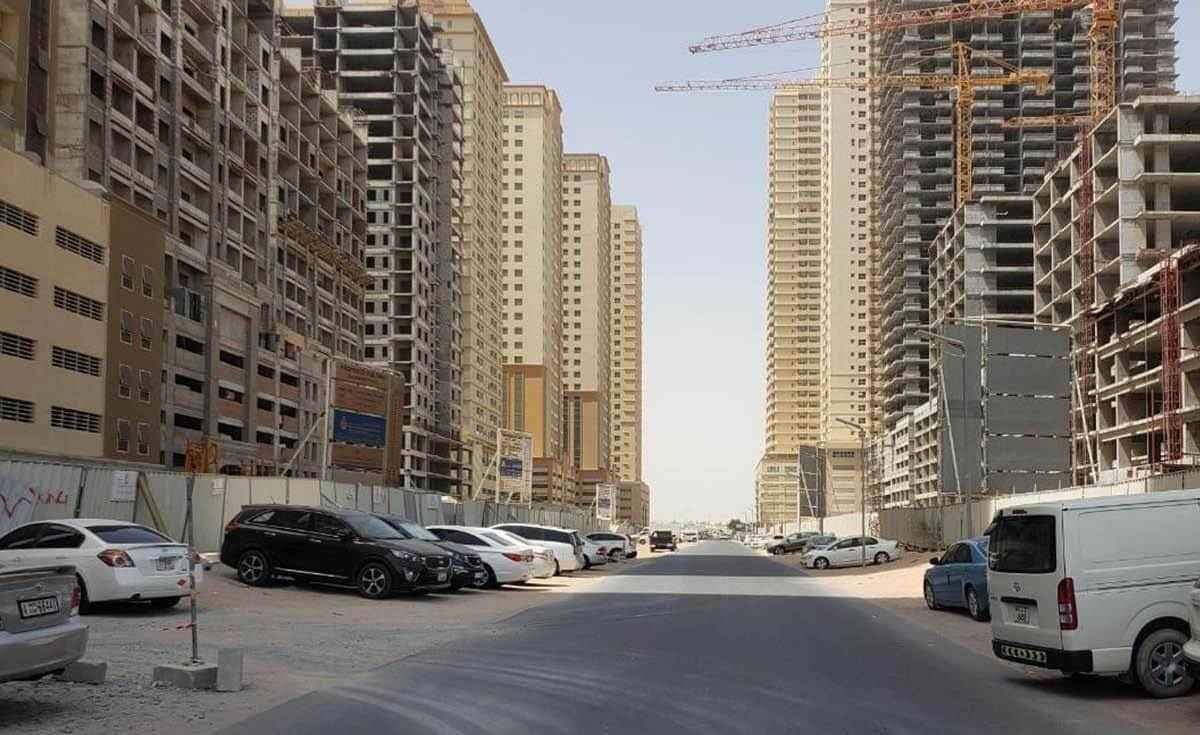

Emirates City is one of Ajman’s largest and most talked-about residential communities, known for putting spacious, freehold apartments within reach of budgets that would struggle to compete in Dubai or Sharjah. Built by R Holding along Sheikh Mohammed Bin Zayed Road (E311), the development spans roughly 5 million square feet in Al Amerah, on the eastern side of Ajman near the Sharjah border. If you’re weighing up whether to rent, buy, or invest here, this guide walks through the location, the towers, the lifestyle, the numbers, and the legal steps you’ll actually need.
Where Is Emirates City Located in Ajman?
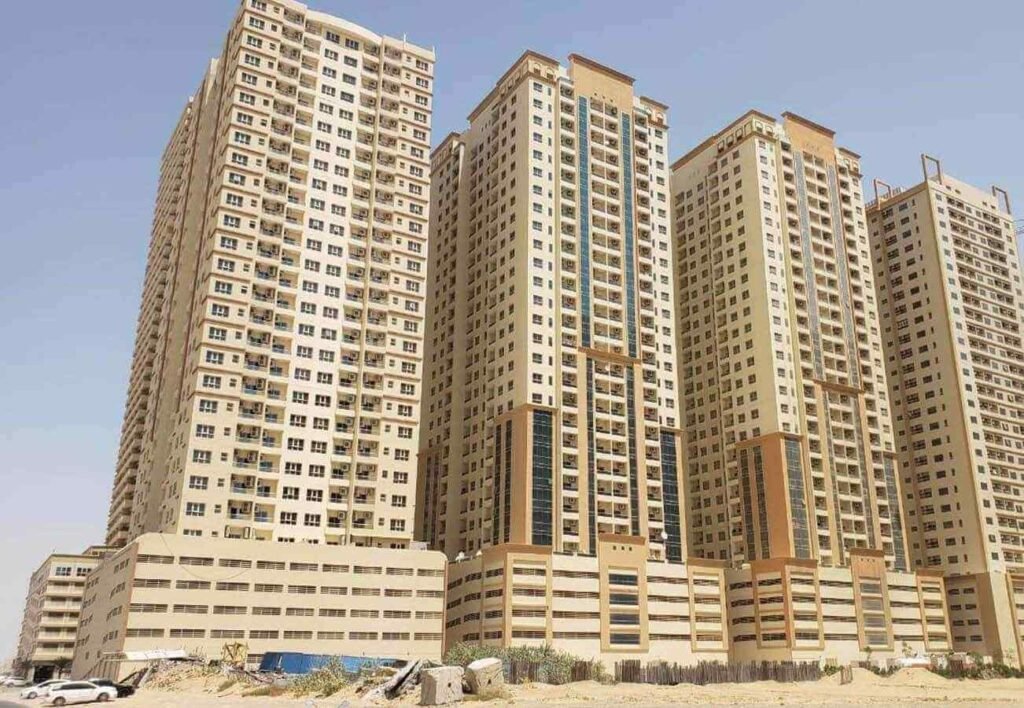
Emirates City sits in Al Amerah, on Ajman’s eastern edge, directly along Sheikh Mohammed Bin Zayed Road. This single highway is the community’s biggest practical asset: it links Emirates City to Sharjah, Dubai, Umm Al Quwain, Ras Al Khaimah, and Abu Dhabi without needing to cut through central Ajman traffic first. The community sits opposite Humaid City and is separated by the highway from the neighbouring Al Aaliah district, with Ajman Uptown and Al Helio a short drive further north.
Because of this positioning, Emirates City functions almost like a satellite town rather than a downtown neighbourhood – self-contained in its day-to-day essentials, but reliant on nearby districts such as Al Jurf and Ajman Downtown for larger shopping, hospitals, and government services.
Connectivity: Getting To and From Emirates City
Sheikh Mohammed Bin Zayed Road runs directly past the community, and Emirates Road (E611) is close enough to add a second route toward Sharjah’s interior and onward to Dubai’s northern emirates corridor. In practical terms:
Dubai is generally a 35–45 minute drive depending on traffic and the exact tower, while central Sharjah is closer to 20–25 minutes. Dubai International Airport sits roughly 45–50 minutes away, and Sharjah International Airport is considerably closer, typically 17–25 minutes depending on the route taken.
Public transport does reach the community. RTA-operated Ajman buses, including services such as the AJ3F-1 route, stop at the Emirates City Bus Stop within the development, and residents without a car can also rely on taxis, which are readily available at stands throughout the towers. That said, most residents describe Emirates City as a car-dependent community – public transport works for reaching central Ajman, but daily errands and cross-emirate commuting are far easier with a vehicle.
The Developer and the Master Plan
Emirates City is R Holding’s flagship project, and it was conceived with a clear brief: deliver larger, well-specified apartments at prices that undercut comparable units in Sharjah and Dubai. The masterplan groups high-rise residential towers around landscaped walkways, internal lakes, and ground-floor retail, creating a cluster-style layout rather than a single tower or a low-density villa suburb. Construction has progressed in phases since the mid-2010s, with several towers – including Lavender Tower, completed in 2015 – now well-established, while other pockets of the development are newer or still finishing out retail space.
The Main Towers in Emirates City
Rather than a handful of standalone buildings, Emirates City is really a cluster of tower groups, each with a distinct identity:
Lavender Tower is a 40-plus storey residential building on Al Aamra Street offering 1, 2, and 3-bedroom apartments, along with a gym, swimming pool, prayer room, and ground-floor retail that includes a supermarket, salon, and café.
Lilies Tower, positioned between Lavender and Rose Tower, rises around 44–46 floors and is one of the more recognised addresses in the community, with studio through 2-bedroom layouts and dining options at street level.
Paradise Lakes Towers is a large complex of roughly 26–29-storey buildings offering 1 and 2-bedroom apartments with views over the community’s internal lake – the feature the towers are named after.
Goldcrest Dream Towers, Lake Towers (including Lake Tower C4), Pearl Tower, Majestic Towers, Emirates Lake Towers, and Fortune Residency round out the rest of the community, together offering studio to 4-bedroom configurations across a wide range of budgets.
Most towers share a similar formula: podium-level parking, 24-hour security, a gym and pool, and a small retail strip on the ground floor covering groceries, food, and personal care – enough for daily convenience without residents needing to leave the community.
What It’s Like to Live in Emirates City
Life here has a distinctly practical, mid-density urban feel rather than a resort atmosphere. The towers face each other across internal roads and the community lake, with landscaped walkways and small parks breaking up the concrete. It’s a popular choice for young professionals commuting to Sharjah or Dubai, for families who need more square footage than a Dubai studio budget allows, and for long-term tenants who prioritise value over prestige.
Because Emirates City is still filling out its retail and civic infrastructure in parts, residents are honest that larger shopping, top-tier hospitals, and reputable private schools generally mean a 15–20 minute drive rather than a walk downstairs. For self-contained daily life – groceries, a gym, a pharmacy, casual dining – the community mostly covers itself.
Schools Near Emirates City
Families typically look toward Ajman Downtown, Al Nuaimia, and Al Jurf for schooling. Options within reasonable driving distance include British International School Ajman (Cambridge curriculum, Al Nuaimia), Al Nuaimia Private School, Al Ameer English School (CBSE-affiliated), and City School Ajman, alongside higher-education options such as Ajman University and City University College of Ajman.
Healthcare Near Emirates City
The nearest hospitals and clinics are concentrated in Ajman’s more established districts. Thumbay Hospital and Ajman Specialty Hospital in Ajman Downtown, along with Amina Hospital, are among the facilities residents most commonly use, typically reached within a 15–20 minute drive. Smaller clinics and pharmacies operate inside several of the towers and nearby retail clusters for day-to-day needs.
Shopping and Everyday Amenities
Ajman China Mall, one of the region’s best-known wholesale and retail destinations, sits within reasonable reach in Al Jurf Industrial Area. City Centre Ajman – the emirate’s largest mall, with roughly 79 stores, a Carrefour hypermarket, VOX Cinemas, and Magic Planet – is about 17–20 minutes away in Al Jurf. Closer options include Leptis Mall and Safeer Mall, along with the grocery and service outlets built into the ground floors of Lavender, Lilies, and Paradise Lakes towers.
Leisure and Nearby Attractions
There’s no beach directly in Emirates City – the community sits inland on Ajman’s eastern side – but Al Hamriyah Public Beach and Ajman Corniche are both within a 20–25 minute drive. Golf enthusiasts can reach Al Zorah Golf Club, nature lovers can head to Wasit Nature Reserve, and car enthusiasts often make the short trip to the Sharjah Classic Cars Museum. Within the community itself, residents rely on internal parks, jogging paths, and the tower-level pools and gyms for day-to-day recreation.
Property Types and What You’ll Actually Get
Emirates City is almost entirely an apartment market rather than a villa or townhouse community. Available layouts run from studios up to 4-bedroom units, with most demand concentrated in studio, 1-bedroom, and 2-bedroom apartments. Typical covered areas for a 1-bedroom unit run from roughly 950 to 1,300 square feet – noticeably larger than an equivalent unit in many Dubai communities at a similar price point. Retail and small commercial units are also available at the base of several towers, aimed at residents’ daily-service businesses (salons, grocers, cafés) rather than large-format retail.
Emirates City Ajman Property Prices in 2026
Pricing varies significantly by tower, floor, and finish, but current listings give a workable picture. Apartment asking prices across the community range broadly from the low AED 200,000s for smaller or older units up to well over AED 1 million for larger, higher-floor apartments in newer towers, with an average asking price sitting around the mid-AED 500,000s across all bedroom counts. On a price-per-square-foot basis, listings commonly fall in the AED 250–460 range depending on the tower and view.
Annual rents follow a similar spread: studios typically rent for roughly AED 16,000–25,000, one-bedroom apartments for around AED 22,000–32,000, and two-bedroom units for approximately AED 32,000–45,000 per year, with larger or premium-tower units commanding more.
Rental Yields and Investment Potential
Ajman as a whole has consistently posted some of the strongest gross rental yields in the UAE, and Emirates City is often cited as a standout within that trend – investors in the community can see gross rental yields of up to roughly 6.8%, well above the UAE’s broader average yield in the mid-4% to mid-5% range. The combination of a low entry price and consistently strong tenant demand – driven by the community’s affordability relative to Sharjah and Dubai – is the core investment thesis here.
That said, capital appreciation has historically been slower and more cyclical than in Dubai’s headline communities, and buyers should treat Emirates City as a yield-focused, income-generating investment rather than a short-term flip. Off-plan opportunities do surface periodically as later phases of the masterplan complete, typically at a discount to comparable ready units, but buyers should verify a developer’s ARRA registration and escrow arrangements before committing.
Is Emirates City a Good Fit for You?
It genuinely depends on what you’re optimising for. Emirates City works well for budget-conscious tenants who want more space for their money, for first-time buyers entering the UAE market without a large capital outlay, and for yield-focused investors comfortable prioritising rental returns over prestige or immediate capital growth. It’s also a practical option for professionals working in Sharjah or northern Dubai who’d rather avoid that commute from central Dubai.
It’s a weaker fit if you want walkable access to major hospitals, top-tier private schools, or large malls, or if you’re chasing a beachfront or resort-style lifestyle – those needs are better served by communities closer to Ajman Corniche or Al Zorah.
Buying Property in Ajman: The Legal Basics
Ajman opened its property market to foreign buyers under Amiri Decree No. 7 and 8 of 2008, which introduced freehold ownership for non-GCC nationals in designated zones – Emirates City is one of them. The Ajman Real Estate Regulatory Agency (ARRA) is the governing body here, functioning much like Dubai’s RERA: it licenses developers and brokers, oversees off-plan escrow requirements, and registers all completed transactions.
In practice, the process looks like this: confirm the unit sits within a freehold zone and that the developer or seller is properly registered with ARRA, agree terms and sign a Sale and Purchase Agreement (SPA), verify the title deed is free of mortgages or disputes through the Ajman Land Department, and register the final transfer to receive your title deed. UAE and GCC nationals can buy anywhere in Ajman without restriction; other foreign nationals are limited to freehold-designated areas like Emirates City, though leasehold arrangements (up to around 50–99 years depending on the agreement) remain available elsewhere in the emirate. No UAE residency visa is required simply to purchase.
FAQs
Where exactly is Emirates City located?
Emirates City is in Al Amerah, on the eastern side of Ajman, directly along Sheikh Mohammed Bin Zayed Road (E311), near the Sharjah border and opposite Humaid City.
Who developed Emirates City Ajman?
R Holding, a UAE real estate group, developed Emirates City as its flagship project, spanning approximately 5 million square feet.
Is Emirates City a freehold area?
Yes. Emirates City is one of Ajman’s designated freehold zones, meaning non-GCC foreign nationals can legally own property there, subject to registration with the Ajman Real Estate Regulatory Agency (ARRA).
How far is Emirates City from Dubai?
The drive is typically 35–45 minutes depending on traffic and the exact route, with Dubai International Airport around 45–50 minutes away.
How far is Emirates City from Sharjah?
Central Sharjah is generally 20–25 minutes by car, and Sharjah International Airport is closer still, often reachable in 17–25 minutes.
What types of apartments are available in Emirates City?
Studios through 4-bedroom apartments across towers such as Lavender, Lilies, Paradise Lakes, Goldcrest Dream, and Lake Towers, with 1- and 2-bedroom units in highest supply.
What is the average rent for a 1-bedroom apartment in Emirates City?
Annual rent for a 1-bedroom apartment typically runs from around AED 22,000 to AED 32,000, depending on the tower, floor, and finish.
What rental yield can investors expect in Emirates City?
Gross rental yields of up to roughly 6.8% have been reported for the community, above the UAE’s broader average yield.
Are there beaches near Emirates City?
Not directly within the community. Al Hamriyah Public Beach and Ajman Corniche are both roughly 20–25 minutes away by car.
What schools are near Emirates City?
Nearby options include British International School Ajman, Al Nuaimia Private School, Al Ameer English School, and City School Ajman, mostly a 10–20 minute drive away.
Is Emirates City a good place for families?
It suits budget-conscious families who prioritise space and value, though those wanting walkable schools, hospitals, and malls may prefer central Ajman communities.
What is the nearest major mall to Emirates City?
City Centre Ajman, the emirate’s largest mall, is around 17–20 minutes away in Al Jurf, while Ajman China Mall, Leptis Mall, and Safeer Mall are also within reasonable reach.
Can foreigners buy property in Emirates City without UAE residency?
Yes. Ownership in Ajman’s freehold zones does not require a UAE residency visa, though all transactions must be registered with ARRA and the Ajman Land Department.

Leave a Reply